

The Most Popular High School Films of All Time: A Parent's Guide
TL;DR: High school movies are a rite of passage, but they range from genuinely insightful coming-of-age stories to problematic time capsules. Here's what you need to know about the classics your teen is probably watching (or asking to watch), from The Breakfast Club to Mean Girls to Lady Bird.
Your teenager just asked to watch a "classic" high school movie with friends, and you're trying to figure out if this is a wholesome John Hughes situation or if you're about to approve something that aged like milk. The good news? High school movies can actually be great conversation starters about identity, friendship, and social dynamics. The less good news? Many beloved classics have content that makes modern parents wince.
The thing about high school films is they're essentially time capsules of teenage culture—which means they reflect both the timeless struggles of adolescence AND the specific (sometimes cringeworthy) attitudes of when they were made. A movie from 1985 is going to have different takes on consent, diversity, and acceptable behavior than one from 2017.
High school films occupy a weird space in teen culture. They're simultaneously:
- Aspirational (teens want to see what high school "should" be like)
- Anxiety-inducing (reinforcing fears about cliques, popularity, and fitting in)
- Comforting (showing that everyone struggles with identity and belonging)
- Reference material (seriously, so many memes and cultural touchstones come from these)
Your kid watching Ferris Bueller's Day Off isn't just entertainment—it's cultural literacy. But that doesn't mean every classic deserves a free pass.
The Breakfast Club (1985)
Ages 13+ | The gold standard of high school movies, but...
Five stereotypes (brain, athlete, basket case, princess, criminal) spend Saturday detention together and discover they're more than their labels. It's genuinely moving, the dialogue still holds up, and the themes about identity and parental pressure are timeless.
The catch: There's a scene where Bender (Judd Nelson) sexually harasses Claire (Molly Ringwald) by looking up her skirt, and the movie treats it as... flirtatious? Ringwald herself has written about how uncomfortable this makes her now. Also, some outdated language around mental health and a casual use of homophobic slurs.
Parent move: Watch it with them. When Bender does something creepy, pause and ask "how do you think Claire felt in that moment?" Use it as a conversation about how our understanding of consent has evolved.
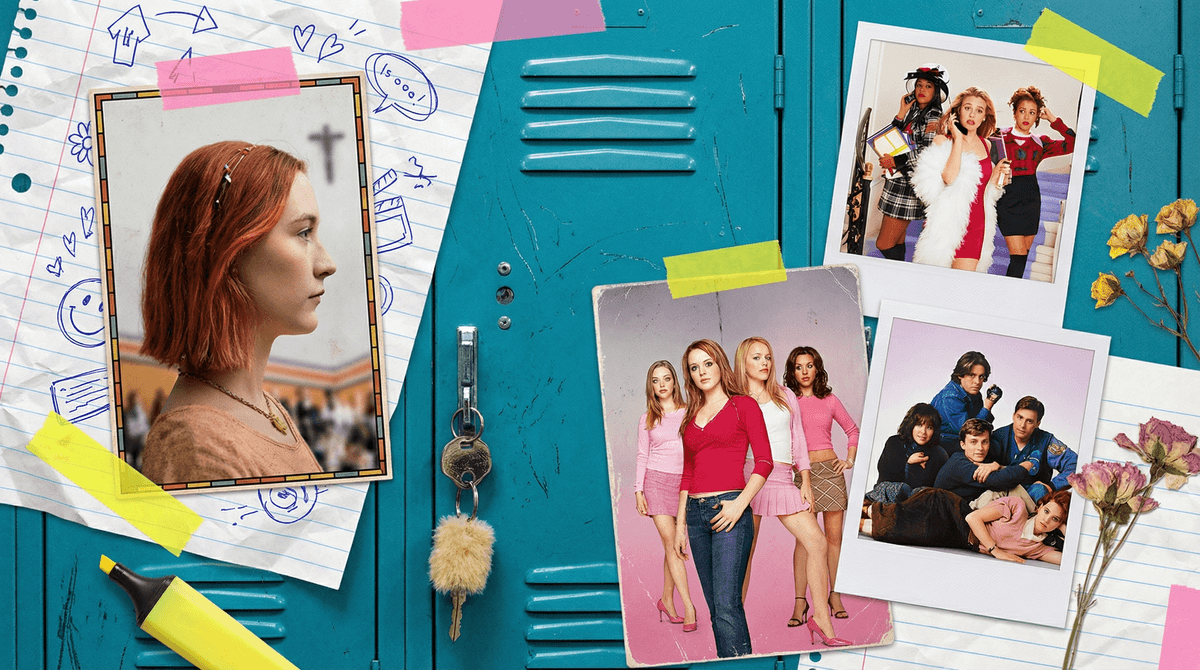
Mean Girls (2004)
Ages 13+ | Still the most quotable high school movie
Tina Fey's sharp script about social hierarchies, girl-on-girl cruelty, and the impossibility of fitting in while staying authentic. It's satirical enough to critique the behavior it depicts, and teens generally get that the Plastics aren't role models.
The catch: Some sexual content (the "health class" scene, discussions of hookups), and while it critiques mean girl behavior, it also makes it look kind of fun? Also, the casual fatphobia directed at Regina after her "downfall" hasn't aged great.
Parent move: This one actually works as a teaching tool. The film explicitly shows how social manipulation works and why it's toxic. Good for discussions about how social dynamics play out online too.
too.
Ferris Bueller's Day Off (1986)
Ages 11+ | The most parent-friendly classic
A charismatic slacker convinces his best friend and girlfriend to skip school for an adventure in Chicago. It's genuinely fun, relatively innocent, and has real heart beneath the hijinks.
The catch: It's literally about lying to parents and ditching school, which... fine, but be aware your kid might quote this when arguing for a mental health day. Also, Ferris is kind of a manipulative narcissist if you think about it too hard (don't tell your teen I said this—they'll write a 10-page defense of him).
Parent move: This is actually a good one to watch together without heavy conversations. It's fun! Sometimes movies can just be fun!
Clueless (1995)
Ages 13+ | Smarter than it looks
A Beverly Hills teen plays matchmaker while navigating her own romantic confusion. Based on Jane Austen's "Emma," it's actually clever social satire wrapped in valley girl aesthetics.
The catch: Lots of sexual references and innuendo, a subplot about a teacher-student relationship (played for laughs but yikes), and the materialism is... a lot. Also, the main romance is between step-siblings, which the movie goes out of its way to establish as "not weird" but is definitely a thing to be aware of.
Parent move: Good for talking about how privilege and self-awareness (or lack thereof) shape our worldview. Cher's character arc is actually about becoming more empathetic and less self-centered.
Lady Bird (2017)
Ages 14+ | The new gold standard
Greta Gerwig's semi-autobiographical film about a Sacramento teen's senior year, her complicated relationship with her mother, and her desperation to escape to somewhere more "cultured." It's painfully accurate about the push-pull of wanting independence while still needing your parents.
The catch: Sexual content (a fairly explicit scene, though not gratuitous), underage drinking, and some strong language. Also, it will make you cry about your relationship with your own mother, so... be prepared.
Parent move: If you have a daughter ages 14+, this might be the best co-watch on this list. The mother-daughter dynamic is so real it hurts.
The Edge of Seventeen (2016)
Ages 14+ | Honest about how hard it is
Nadine's junior year implodes when her best friend starts dating her older brother. It's refreshingly honest about depression, social anxiety, and the specific hell of being 17.
The catch: Sexual content, strong language, and discussions of suicide. The protagonist is also pretty unlikeable at times, which is realistic but might be hard for some teens to watch.
Parent move: Great for kids who feel like outsiders or struggle with anxiety. The film doesn't offer easy answers, which is actually its strength.
Booksmart (2019)
Ages 15+ | Party movie with heart
Two overachieving best friends realize on the eve of graduation that they could have had fun AND gotten into good colleges. They attempt to cram four years of partying into one night.
The catch: This is rated R for a reason—drug use, sexual content, and pervasive strong language. But it's also sex-positive, features diverse characters (including a gay main character whose sexuality isn't her only trait), and is genuinely funny.
Parent move: Not for younger teens, but for older high schoolers, it's actually a nice counter to the "you must choose between fun and success" narrative.
Sixteen Candles (1984)
Ages 14+ with serious conversations
Everyone's family forgets her 16th birthday while she pines for a popular senior. It has sweet moments about feeling invisible, but...
The catch: There's a scene involving a drunk girl being photographed and essentially traded between guys. There's also a character literally named "Long Duk Dong" who is a racist Asian stereotype. John Hughes himself later expressed regret about this portrayal, but the damage is done.
Parent move: Honestly? There are better John Hughes options. If your teen wants to watch it for cultural literacy, fine, but co-watch and pause frequently to discuss why certain scenes are deeply not okay.
10 Things I Hate About You (1999)
Ages 13+ | Shakespeare adaptation with issues
A modern take on "The Taming of the Shrew" where the "shrew" is a feminist who reads Sylvia Plath. It's fun, the soundtrack is great, and Heath Ledger is charming.
The catch: The entire premise is a guy being paid to date a girl so her sister can date his client. When you lay it out like that, it's pretty gross. Also, the "angry feminist gets tamed by love" narrative is... not great.
Parent move: Good for discussions about how romantic comedies shape our expectations about relationships and grand gestures.
Superbad, American Pie, Fast Times at Ridgemont High—these are the ones teens really want to watch because they're "hilarious." And look, they have funny moments, but they're also rated R for a reason.
The reality: These movies are about teens trying to have sex before graduation/college/whatever milestone. They're raunchy, often feature nudity, and have attitudes about women that range from "questionable" to "absolutely not."
Parent move: If your 16-year-old is asking about Superbad, they've probably already seen it at a friend's house. The question isn't whether to allow it (that ship may have sailed), but whether you can create space for conversations about the difference between movie comedy and real-life consent and respect.
Superbad, specifically, actually has more heart than most in this category—the core story is about two best friends facing separation—but there's still a LOT of sexual content and objectification.
Ages 11-12: Stick with Ferris Bueller or consider middle school movies instead. High school films often deal with sex, drugs, and social dynamics that are just beyond where most kids this age are developmentally.
Ages 13-14: The Breakfast Club, Mean Girls, Clueless, and 10 Things I Hate About You are reasonable with co-viewing and conversation. Skip the raunchier options.
Ages 15-16: Most of the modern options like Lady Bird and The Edge of Seventeen work well. You can consider Booksmart for mature 16-year-olds.
Ages 17+: At this point, they're probably watching whatever they want at friends' houses. Your role shifts to being available for conversations about what they're seeing and helping them think critically about the messages.
The "everyone's watching it" argument is sometimes true: High school movies are genuinely part of teen cultural literacy. Your kid's friends are quoting Mean Girls, referencing Breakfast Club, and making TikToks about Lady Bird. Letting them participate in this shared culture has value.
But you can still set boundaries: Just because something is popular doesn't mean it's appropriate for your specific kid at this specific time. A 13-year-old who's anxious about starting high school might not be ready for the social cruelty in Mean Girls. A teen who's struggling with self-esteem doesn't need Superbad's objectification right now.
Co-viewing is your superpower: Watching together lets you:
- Gauge their reactions in real-time
- Pause for questions or to point out problematic content
- Hear what they think without it feeling like an interrogation
- Share your own high school experiences (if you're brave)
These movies aren't instruction manuals: The biggest risk isn't that your kid will see a sex scene or hear swearing—it's that they'll absorb unrealistic expectations about high school social hierarchies, romance, or what's "normal" teenage behavior. Talk about the difference between movie high school and actual high school.
Instead of a formal "we need to discuss this movie" conversation (guaranteed eye rolls), try:
During the movie:
- "Would that actually work at your school?"
- "How do you think they could have handled that differently?"
- "That was funny, but also kind of messed up, right?"
After the movie:
- "Which character did you relate to most?"
- "Did anything surprise you about how different high school was back then?"
- "Would you want to go to that high school?"
If they saw it without you:
- "I heard that movie is really popular—what did you think?"
- "Were there any parts that made you uncomfortable?"
- "Did it make you more or less nervous about [starting high school/being a senior/whatever's relevant]?"
High school movies are a mixed bag of genuine insight, problematic content, and cultural touchstones your teen needs to understand their own social world. The best approach isn't to ban the classics or blindly approve everything—it's to be an active guide through the content.
The movies that hold up best are the ones that:
- Show realistic consequences for bad behavior
- Feature diverse characters with actual personalities
- Acknowledge that high school is hard without glorifying cruelty
- Have something real to say about identity and belonging
The ones that aged poorly tend to:
- Treat sexual harassment as romance
- Feature racist or homophobic stereotypes
- Show adults as completely clueless or absent
- Resolve everything with a makeover or a grand gesture
Your teen doesn't need to watch every high school movie ever made. But watching a few together—even the flawed ones—can open up conversations about relationships, consent, social pressure, and identity that are way easier to have when you're talking about fictional characters instead of their actual life.
- Check out coming-of-age movies for more options beyond just high school settings
- If your kid loved Lady Bird, explore movies with strong mother-daughter relationships
- For younger teens not ready for these, try middle school movies instead
- See which high school movie is right for your teen which specific high school movie might be right for your teen's age and interests
And remember: if your teen asks to watch Ferris Bueller and you end up having a great time together without any heavy conversations about consent or social dynamics, that's okay too. Sometimes a movie is just a movie, and connection is the whole point.