

Dragons, Unicorns, and Manananggals: Mythical Creatures Your Kids Are Discovering
Your kid's sudden obsession with phoenixes or their deep-dive into Japanese yokai isn't random—mythical creatures are having a major moment across books, games, and YouTube. Here's what's capturing their imagination and which ones need a heads-up conversation:
Top picks by age:
- Ages 5-8: How to Train Your Dragon, Unicorn Academy, Dragons Love Tacos
- Ages 8-12: Percy Jackson, Wings of Fire, Pokémon Legends: Arceus
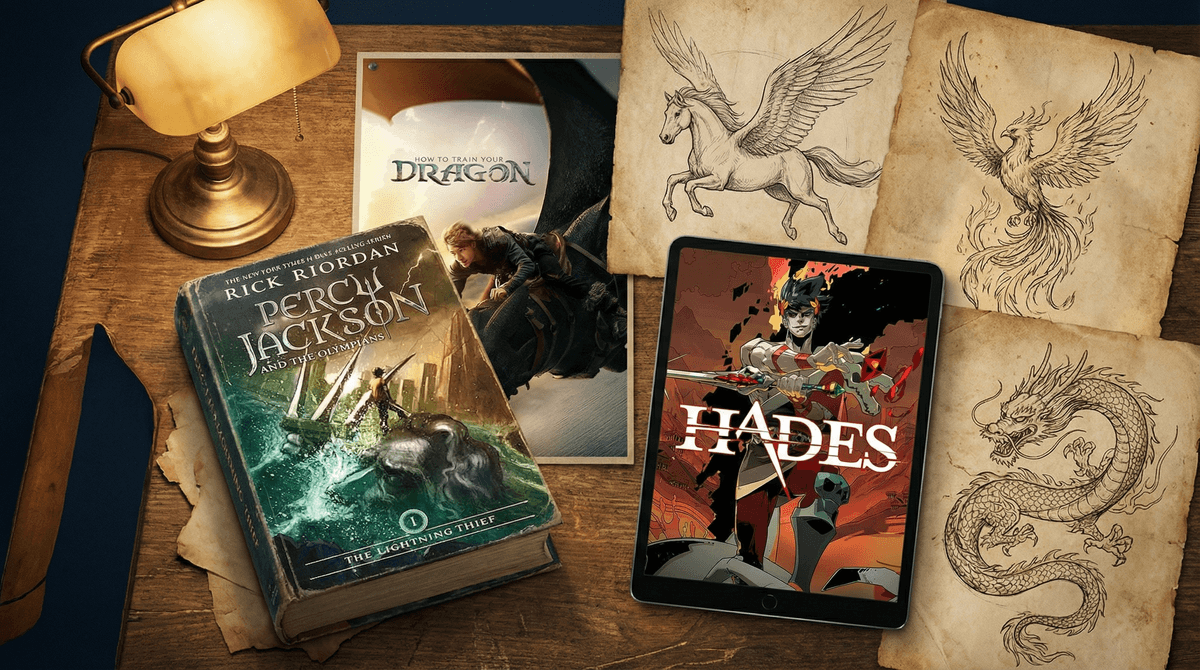
- Ages 12+: The Last Unicorn, Hades, Shadow and Bone
Mythical creatures are everywhere in kids' media right now, but they're not just entertainment—they're cultural education. When your 9-year-old can explain the difference between a Chinese dragon (benevolent, water-associated, no wings) and a European dragon (treasure-hoarding, fire-breathing, definitely has wings), they're learning about how different cultures express values through storytelling.
The catch? Not all mythical creatures are created equal in terms of age-appropriateness. A cute unicorn is one thing. A Filipino manananggal (a creature whose upper body detaches and flies around at night looking for pregnant women to feed on) is... something else entirely. And kids are discovering both through the same YouTube algorithm.
Gaming is the gateway. Minecraft introduced a generation to dragons as end-game bosses. Pokémon normalized collecting and battling creatures inspired by mythology. Roblox has hundreds of creature-collecting games. Once kids are hooked on gameplay mechanics, they want to learn more about the lore.
YouTube deep-dives feed the obsession. Channels explaining mythology, creature tier lists, "what if X creature was real" videos—the algorithm loves this content because it keeps kids watching. And honestly? A lot of it is genuinely educational. The problem is when a video about Greek mythology's Pegasus auto-plays into something about Slavic folklore's Baba Yaga, who lives in a house that walks on chicken legs and sometimes eats people.
Books are having a fantasy renaissance. Rick Riordan basically created an entire generation of mythology nerds with Percy Jackson, and publishers noticed. Now there are incredible series featuring creatures from every culture imaginable.
Ages 5-8: Friendly Dragons and Sparkly Unicorns
Dragons Love Tacos by Adam Rubin is the perfect entry point—silly, harmless, and weirdly memorable. Your kid will quote it for years.
How to Train Your Dragon (the movie franchise) is genuinely excellent. Yes, there's some peril, but the core message about understanding rather than fearing the "other" is beautiful. The dragons have distinct personalities, and Toothless is basically a flying cat.
Unicorn Academy on Netflix is... fine. It's not going to win awards, but if your kid is in their unicorn phase, it's harmless friendship-and-magic content. Better than a lot of the YouTube unicorn content, which can get weirdly commercial (so many toy unboxings).
Pokémon (the show, not the games yet) introduces creatures inspired by real mythology in bite-sized, kid-friendly packages. A Ninetales is based on the Japanese kitsune (fox spirit), but in Pokémon it's just a pretty fire-type that's nice to trainers who treat it well.
Ages 8-12: Deep Mythology Dives
Percy Jackson series by Rick Riordan is the gold standard. Greek mythology gets the middle-grade treatment with humor, heart, and surprising accuracy about the source material. Yes, there's violence (it's Greek mythology), but it's age-appropriate. The books also launched Riordan's other series covering Egyptian, Norse, and Roman mythology.
Wings of Fire by Tui T. Sutherland is the series for dragon-obsessed kids. It's told from the dragons' perspective, features multiple dragon tribes with distinct cultures, and has genuinely good world-building. Some violence (dragons are at war), but nothing gratuitous.
Pokémon Legends: Arceus takes the creature-collecting formula and adds actual mythology. The legendary Pokémon in this game are based on Japanese deities and folklore, and the game doesn't shy away from the more serious themes. Good for kids ready to think about how myths explain natural phenomena.
Avatar: The Last Airbender weaves creatures from Asian mythology throughout—sky bison, dragon-spirits, the moon and ocean as koi fish. It's a masterclass in how to use mythical creatures to deepen world-building rather than just as cool visuals.
Beasts of Olympus series by Lucy Coats focuses specifically on the creatures of Greek mythology from their perspective. Lighter than Percy Jackson, great for kids who want more creature content but aren't ready for the heavier stuff.
Ages 12+: The Darker Stuff
The Last Unicorn is a genuine work of art that traumatized every kid who watched it in the '80s and continues to do so today. It's melancholic, beautiful, and deals with themes of mortality and loss. Not a fun sparkly unicorn movie—this is existential unicorn content. Watch it with them.
Hades is the game for teens ready for Greek mythology in all its messy, dysfunctional glory. The creatures and gods are portrayed with personality and nuance, the writing is sharp, and yes, some characters are attractive in a way that's definitely intentional. But it's also one of the best games of the past decade and treats mythology with real respect.
Shadow and Bone on Netflix incorporates Slavic folklore creatures in a fantasy world. There's romance, violence, and some pretty dark themes. The Grishaverse books by Leigh Bardugo go even deeper.
American Gods by Neil Gaiman is for older teens only (violence, sex, mature themes), but if you have a 16+ who's obsessed with mythology, Gaiman's exploration of what happens to gods and creatures when people stop believing in them is incredible. The show is TV-MA for good reason—stick with the book first.
Here's where things get tricky. YouTube has amazing mythology content—channels like Overly Sarcastic Productions, Mythology & Fiction Explained, and Ted-Ed create genuinely educational videos about creatures from world mythology.
But the algorithm doesn't distinguish between "educational content about the Minotaur" and "creepy animated videos about SCP creatures" (which are internet-created horror entities that borrow from mythology). Or between "fun facts about dragons" and "top 10 most disturbing creatures from folklore" with thumbnails designed to give nightmares.
What to watch for:
- Videos with all-caps titles and scary thumbnails (clickbait that leads to content that's way too intense)
- "Creepypasta" creature content (internet horror stories, not actual mythology)
- SCP Foundation content (collaborative horror fiction project—interesting for older teens, nightmare fuel for younger kids)
- Channels that mix real mythology with horror game creatures without clear distinction
Better alternatives:
- Crash Course Mythology (John Green's educational series)
- Extra Mythology by Extra Credits (thoughtful, well-researched)
- The Exploring Series (for older teens who can handle darker content with context)
This is important: when kids discover creatures from other cultures, they're getting a window into how different societies understood the world. A Japanese kappa isn't just a "weird turtle creature"—it's a water spirit that taught lessons about respecting rivers and the dangers of drowning. A Mexican nahual isn't just a shapeshifter—it's tied to indigenous beliefs about the connection between humans and animals.
Some questions worth discussing:
- "Why do you think different cultures have different dragon stories?"
- "What do you think this creature was meant to teach people?"
- "How is this similar to or different from creatures in other stories we know?"
The goal isn't to turn every creature discussion into a cultural studies lesson, but to help kids understand that these aren't just cool monsters—they're meaningful to real people and cultures.
Some folklore is genuinely disturbing because it was meant to be. The Japanese kuchisake-onna (slit-mouthed woman) is a horror entity. The Filipino aswang has multiple terrifying forms. European fairy tales featured creatures that ate children as cautionary tales.
Red flags that content is too intense:
- Nightmares or new fears (won't go in the dark, afraid of specific things)
- Obsessive watching/reading about scary creatures
- Acting out violent creature behavior
- Asking questions about death or harm that seem anxious rather than curious
If they've already seen something too scary:
- Don't dismiss it ("it's not real" doesn't help when they're already scared)
- Talk about why people created these stories (usually to explain something or teach a lesson)
- Focus on the fact that humans have always made up creatures, and our brains are really good at imagining things
- Redirect to lighter creature content that they can control
Here's something interesting: the creature obsession is teaching kids about world-building and creative development. Kids who are deep into creature lore often start creating their own—drawing them, writing about them, even designing games around them.
Roblox has dozens of successful creature-collecting games made by teenagers who started by being obsessed with Pokémon or dragon books. Some kids are making decent money from creature-themed content.
If your kid is creating creature content:
- Encourage the world-building (what does it eat? where does it live? what's its role in the ecosystem?)
- Help them think about what makes creatures memorable (personality, design, purpose in story)
- Talk about respecting source material when they're inspired by real mythology
- Learn about how Roblox can teach game design if they're building creature games
The mythical creature phase is actually pretty great. It's getting kids interested in world cultures, teaching them about storytelling across civilizations, and often leading to reading (even reluctant readers will devour creature encyclopedias).
The key is staying aware of what they're consuming and being ready to provide context. A 7-year-old watching cute dragon videos is very different from a 10-year-old discovering SCP horror creatures through the YouTube algorithm.
Quick parent moves:
- Ask what creatures they're into and why (you'll learn a lot)
- Watch/read some of the content with them (at least enough to know what they're talking about)
- Keep the mythology books coming—even "just" creature encyclopedias build knowledge
- Set up YouTube with age-appropriate restrictions (yes, even for older kids)
- Use their creature obsession as a gateway to cultural discussions
And if your kid can now explain the difference between a griffin, a hippogriff, and a peryton? That's actually pretty cool. They're learning that humans across time and space have always imagined impossible things—and that's a pretty human thing to do.
Next steps: Check out our guide to fantasy books for kids or learn more about managing YouTube content if the algorithm is getting too wild.