

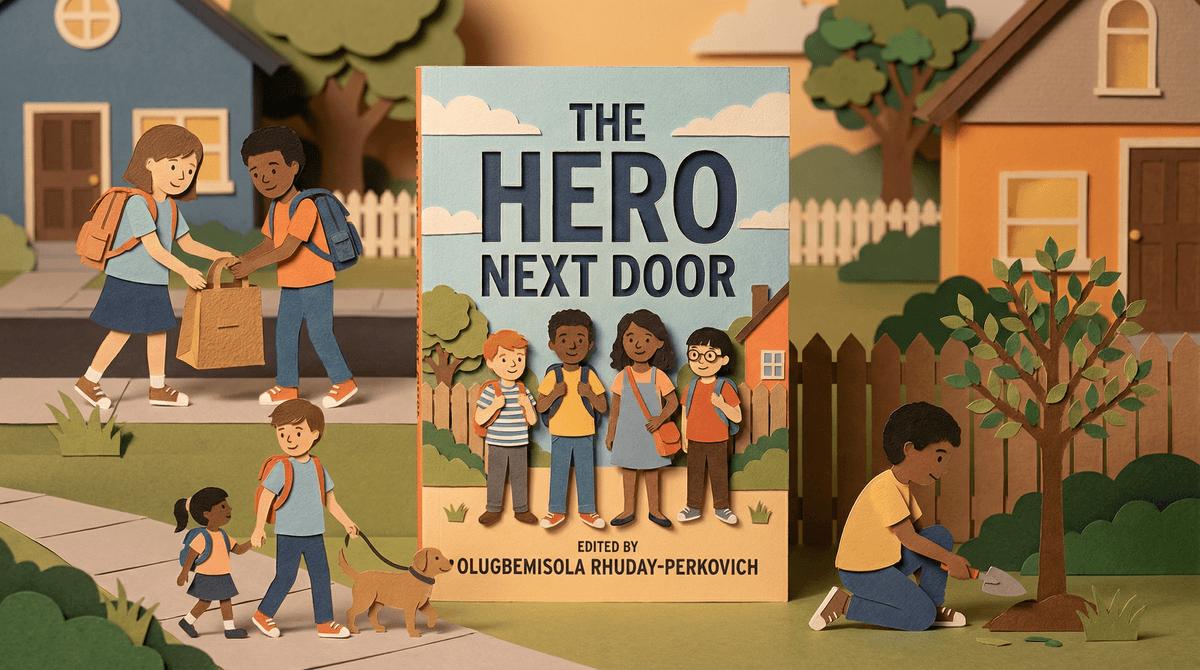
The Hero Next Door: Teaching Kids That Everyday Kindness Is a Superpower
TL;DR: The Hero Next Door is a middle-grade anthology that redefines heroism through thirteen diverse short stories. Perfect for ages 8-12, it shows kids that heroes don't need capes—they can be siblings, neighbors, inventors, or martial arts students. Features stories from heavy-hitters like R.J. Palacio (Wonder), Hena Khan, and Linda Sue Park. Heads up: Contains mild language and touches on domestic/physical abuse themes, so preview if your kid is sensitive to heavier topics.
In a media landscape dominated by Marvel movies and superhero franchises, it's refreshing to find a book that tells kids the truth: real heroism looks a lot more like standing up for your autistic classmate than it does flying around in a metal suit.
The Hero Next Door, edited by Olugbemisola Rhuday-Perkovich and published in partnership with We Need Diverse Books, is exactly what the title promises—a collection of stories about ordinary kids doing extraordinary things in their everyday lives. No superpowers required.
The premise is beautifully simple: heroes are everywhere, and they look like all of us. Across 272 pages and thirteen stories, kids meet characters who reflect the actual diversity of the world—different ethnicities, gender identities, family structures, abilities, and economic backgrounds.
What's particularly smart about this collection is that it doesn't just pay lip service to diversity. These are "own-voices" stories, meaning each author brings lived experience to their narrative. When Hena Khan writes about Aleena navigating life with a newly adopted brother in "Home," or when Mike Jung writes about Stevie, an autistic martial arts student learning aikido in "Thrown," these aren't outsider perspectives. They're authentic voices telling authentic stories.
The lineup includes some serious talent: R.J. Palacio (yes, the Wonder author), Linda Sue Park, Lamar Giles, and ten other accomplished writers. Each brings their unique style, which means the anthology never feels monotonous—some stories are funny, some are contemplative, some will make your kid think hard about what it means to be brave.
Without spoiling too much, here's what your kid will encounter:
Everyday heroism in action. In Lamar Giles's "Ellison's CORNucopia," twin girls solve a market theft using their inventions. It's part mystery, part celebration of STEM skills, and entirely about kids using their brains to help their community.
Navigating neurodiversity. Mike Jung's "Thrown" follows Stevie through aikido classes, exploring what courage looks like when you're autistic and the world doesn't always make sense. It's the kind of representation that can be life-changing for kids who rarely see themselves in books.
Family complexity. Hena Khan's "Home" tackles the messy reality of blended families and adoption—showing that sometimes being a hero means making space in your heart when it's hard.
The collection doesn't shy away from showing that heroism can be uncomfortable, confusing, or downright scary. These aren't sanitized "very special episode" stories. They're real kids dealing with real situations where the right choice isn't always obvious.
The book is marketed for ages 8-12 (grades 3-7), which feels about right. The Junior Library Guild lists it as "Upper Elementary/Middle," and that tracks with the content complexity.
Content warnings you should know about:
- Mild language - Nothing that would make a sailor blush, but more than "darn it"
- Domestic/physical abuse themes - Some stories touch on family violence or difficult home situations
If your kid is sensitive to heavier emotional content or has experienced trauma, you'll want to preview the stories first. The abuse themes aren't gratuitous, but they're present and treated seriously. For many kids, seeing these realities acknowledged in age-appropriate ways is validating. For others, it might be too much right now. You know your kid best.
That said, the overall tone isn't dark. These are ultimately hopeful stories about agency, community, and the power of small actions. But they earn that hope by not pretending the world is always easy.
Here's what makes this book valuable beyond just being a "good read":
It expands the definition of heroism. In a culture that tells kids heroes are billionaires with high-tech suits or genetically modified super-soldiers, this book says: actually, the kid who includes the lonely classmate at lunch is also a hero. The sibling who shows patience with their annoying little brother is a hero. The neighbor who notices when someone needs help is a hero.
That's not just feel-good fluff. Research on prosocial behavior shows that kids who see everyday kindness modeled and celebrated are more likely to engage in it themselves. When heroism feels achievable rather than fantastical, kids are more likely to try.
It provides mirrors and windows. Kids of color, kids with disabilities, kids from all kinds of family structures—they get to see themselves as heroes in these pages. And kids from majority backgrounds get windows into experiences different from their own, building empathy and understanding.
It's a conversation starter. Each story offers natural entry points for discussions about ethics, courage, community, and what it means to do the right thing when it's hard. Way better than lecturing about values—you can just read a story together and ask, "What would you have done?"
For independent readers (ages 10+): Hand it over and let them go. The short story format is perfect for kids who struggle with longer novels or who want variety. They can read one story before bed or power through several in a sitting.
For younger readers (ages 8-9): Consider reading it together, especially if they're on the younger end of the age range. You can preview stories, skip any that feel too heavy, and be there to process the themes together.
For reluctant readers: The short format is clutch. A kid who feels defeated by 300-page novels might find success with 15-20 page stories. Plus, the diversity of styles means if one story doesn't click, the next one might.
For families seeking diverse books: This is an easy win. Instead of trying to find thirteen separate diverse books, you've got them all in one anthology. It's also a great way to introduce your kid to authors they might want to explore further—if they love Linda Sue Park's story, you can dive into her other work.
The Hero Next Door is exactly the kind of book we need more of—one that treats kids as capable of handling complex themes while celebrating the everyday heroism they're already capable of. It doesn't talk down to young readers, and it doesn't pretend the world is simpler than it is.
Is it perfect? No anthology is—your kid will probably love some stories and feel meh about others. That's fine. The point isn't that every story resonates equally; it's that the collection as a whole expands what heroism can look like.
For families trying to raise kind, empathetic kids who understand their power to make a difference, this book is a solid investment. It's not preachy, it's not saccharine, and it doesn't require a radioactive spider bite to show kids they can be heroes right where they are.
Price point: Typically $7-17 depending on format (paperback/hardcover/ebook)
Where to find it: Available through major booksellers, your local library, and Penguin Random House
Looking for more books that celebrate everyday heroism and diverse perspectives? Check out our guides on middle grade books for empathy building and diverse books for elementary readers.