

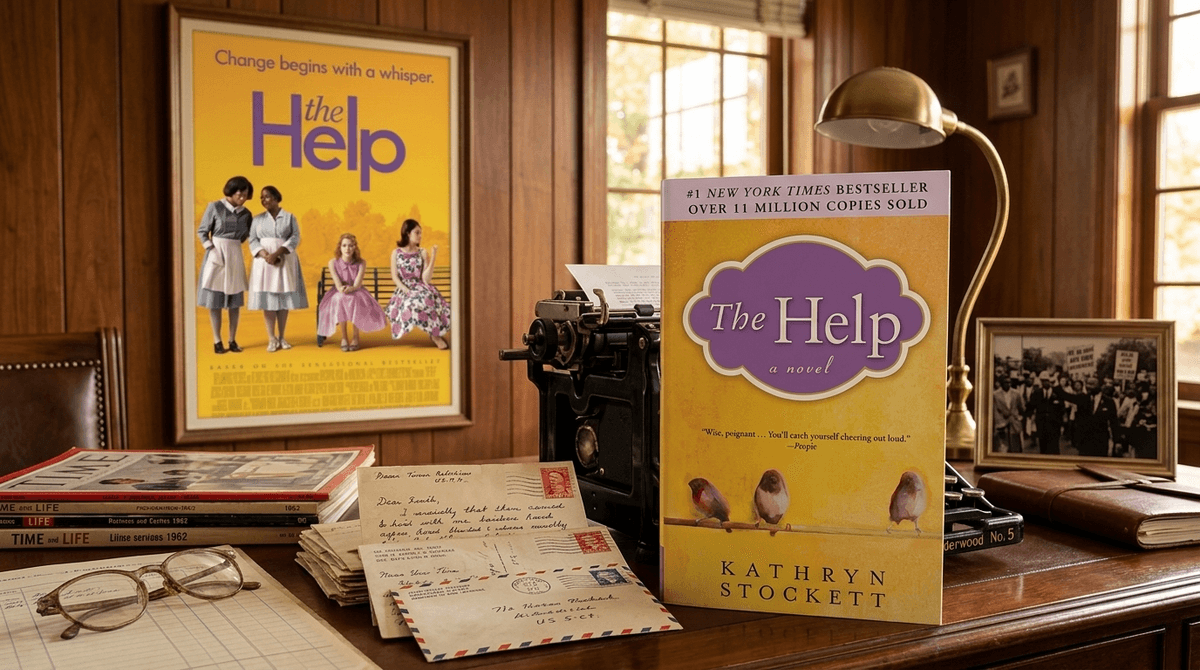
TL;DR: The Help (movie) is a beautifully acted, emotionally heavy drama set in 1960s Mississippi. It’s a great "entry point" film for discussing the Civil Rights movement with tweens and teens, but it comes with some heavy baggage regarding the "white savior" trope. It’s best for ages 12+ due to racial slurs, period-accurate (but disturbing) discrimination, and one very famous, very gross revenge plot involving a pie.
If you’re looking for more historically rigorous options, check out our guides on movies about the Civil Rights Movement or Hidden Figures.
Released in 2011 and based on the massive bestseller The Help by Kathryn Stockett, the movie follows Skeeter, a young white woman in Jackson, Mississippi, who decides to write a book from the point of view of "the help"—the Black maids who raise white children but aren't allowed to use the same bathrooms as their employers.
The story centers on Aibileen (played by the incomparable Viola Davis) and Minny (Octavia Spencer), who risk their lives and livelihoods to share their stories. It’s a mix of "Southern charm" aesthetics and the brutal, systemic reality of Jim Crow laws. It’s funny in parts, heartbreaking in others, and features a powerhouse cast that basically owns every awards season.
For intentional parents, The Help is a bit of a double-edged sword. On one hand, it’s a highly watchable movie that makes empathy easy. It’s not "brain rot" content; it requires active engagement. Your kids will feel the injustice. They will root for Aibileen. They will loathe Hilly Holbrook.
On the other hand, we have to talk about the "White Savior" narrative. This is the Hollywood trope where a white character (Skeeter) is the catalyst for Black liberation or the "hero" of a story that isn't actually hers. Even Viola Davis has famously expressed regret about the film, noting that the voices of the maids were still filtered through a white lens.
If you’re watching this with your kids, the goal isn't just to say "racism is bad," but to ask, "Whose story is being told, and who is getting the credit for telling it?"

We generally recommend The Help for ages 12 and up. Here’s the breakdown of why:
- Language: The film uses period-accurate racial slurs. They are used to depict the cruelty of the time, not as "flavor," but they are jarring and require a conversation beforehand.
- The "Terrible Awful": There is a subplot involving a character being beaten by her husband (off-screen, but we see the bruises). There’s also the constant, looming threat of the KKK and the real-life murder of Medgar Evers, which is a major plot point.
- The Pie Scene: Look, if your kid has been on the internet, they might have heard of "The Terrible Awful" pie. Minny gets revenge on a socialite by baking... well, human excrement into a chocolate pie. It’s played for laughs and catharsis, but it’s definitely "gross-out" humor that parents should be ready for.
- Thematic Complexity: Younger kids might understand that "the mean lady is mean," but they might miss the systemic nature of the laws. Middle schoolers are at the perfect age to start deconstructing how laws (like the ones Hilly tries to pass) enforce social hierarchies.
If The Help sparks a deeper interest in your household about history or social justice, don't stop there. Here are some excellent follow-ups that offer different perspectives:
A fantastic "companion" movie. It’s also set in the 60s, also deals with segregation, but focuses on Black joy, brilliance, and the actual math that put humans on the moon. It’s a bit more "rah-rah" and generally safer for slightly younger audiences (Ages 10+).
If you want to move away from the "filtered" version of history and see a gritty, realistic portrayal of the voting rights marches, this is the one. It’s much more intense than The Help but far more historically grounded. (Ages 13+).
For older teens (14+), this movie based on Bryan Stevenson’s memoir is a masterclass in understanding the legacy of the Jim Crow era in our modern legal system. It’s powerful, frustrating, and essential.
If you have younger siblings (Ages 8-11) who want to be part of the conversation, this Disney movie is a solid, age-appropriate introduction to school integration.
Check out our guide on historical dramas for middle schoolers
Don't let the credits roll and then everyone just goes back to their phones. This movie is a "conversation starter" goldmine. Here are a few prompts to use:
- The Bathroom Issue: Hilly Holbrook claims she wants "separate but equal" bathrooms for "health reasons." How do people today use "safety" or "health" as an excuse to exclude certain groups of people?
- Skeeter’s Role: Do you think the book would have been published if Aibileen had written it herself? Why or why not? What does that tell us about the publishing world in 1963?
- The Ending: Aibileen walks away at the end, saying she feels free. Is she actually free? She lost her job and her reputation in town is complicated. What does "freedom" look like for her compared to Skeeter?
- Real History: After the movie, look up the real Medgar Evers or the Green Book. How does the Hollywood version differ from the reality?
One thing to watch out for is the "nostalgia trap." The movie is shot in warm, golden hues. The dresses are beautiful. The houses are grand. It’s easy for kids to walk away thinking the 1960s were "pretty but mean."
Make sure to emphasize that for the people living it, it wasn't a "brave adventure" like it was for Skeeter—it was a daily, exhausting struggle for survival.
Also, a quick heads-up on the "Minny’s husband" subplot. It’s a very realistic depiction of domestic abuse, even if it’s mostly off-camera. If your child is sensitive to themes of domestic violence, you might want to pre-screen those scenes or be ready to pause and check in.
The Help is a "good" movie that provides a "great" opportunity for parenting. It’s not perfect—it simplifies a lot of very painful history and centers a white protagonist in a Black story—but it’s a powerful tool for building empathy.
Use it as a stepping stone. Watch it for the incredible performances by Viola Davis and Octavia Spencer, but then follow it up with resources written and directed by Black creators to get a fuller picture of the story.
Next Steps:
- Watch the movie (available on most streaming platforms like Netflix or Hulu).
- Compare it to the The Help (book) — the book goes much deeper into the internal lives of the characters.
- Check your Screenwise dashboard to see what other historical dramas families in your community are watching.
See more recommendations for intentional family movie nights