

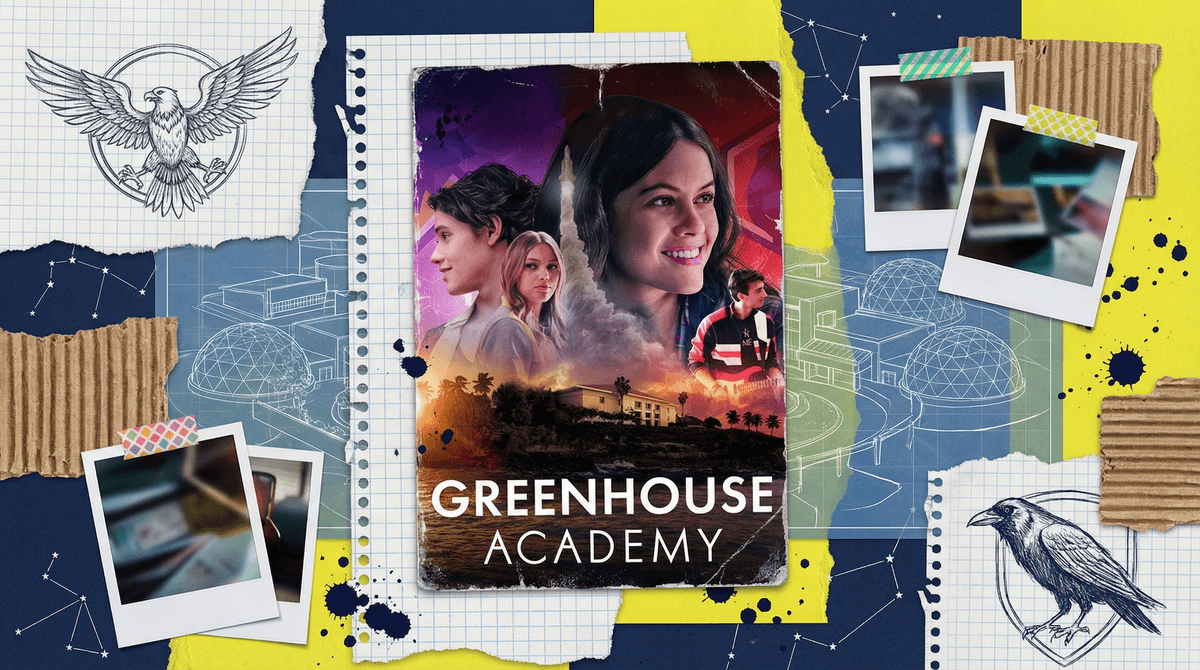
Greenhouse Academy: What Parents Need to Know About Netflix's Tween Mystery Drama
Official Rating: TV-PG
Screenwise Take: Best for ages 10-14
The Vibe: Think Zoey 101 meets a mystery thriller with a dash of sibling rivalry
Greenhouse Academy ran for four seasons on Netflix (2017-2020) and follows two siblings who enroll at an elite Southern California boarding school after their astronaut mother dies in a space shuttle accident. The show splits students into two competing "houses" (very Harry Potter-esque) and weaves together teen romance, family drama, environmental themes, and an ongoing mystery about what really happened to their mom.
The Quick Parent Brief:
- Romantic relationships are front and center, but physical content stays at kissing
- Some underage drinking and references to partying
- Mild language (occasional "damn," "hell," "ass")
- Themes of grief, loss, and family secrets
- Positive messages about teamwork, environmental responsibility, and perseverance
- Production quality is... let's just say it's no Stranger Things
Greenhouse Academy is an Israeli format adapted for American audiences (the original show, Ha-Hamama, was hugely popular in Israel). The show centers on Alex and Hayley Woods, teenage siblings who attend an elite STEM-focused boarding school where students are divided into two rival houses: the Ravens (focused on leadership and arts) and the Eagles (focused on athletics and science).
The school itself is called the Greenhouse because of its massive glass structure and environmental focus. Students compete academically and athletically while navigating typical teen drama—crushes, friendships, betrayals, and the occasional sabotage plot.
The overarching mystery involves their mother's death and a shadowy conspiracy that unfolds across the series. Think of it as a gateway show for kids who aren't quite ready for the intensity of Stranger Things but want something with more plot than your average Disney Channel fare.
The boarding school fantasy is real. Kids in the 10-14 range are obsessed with the idea of living away from parents in a cool dorm with their friends. The Greenhouse's high-tech campus, secret tunnels, and house rivalry system tap directly into that Harry Potter-influenced dream of belonging to something special.
Romance without the cringe. Unlike shows aimed at older teens, Greenhouse Academy keeps the romantic tension at a level that feels exciting but not overwhelming for middle schoolers. There's hand-holding, jealousy, first kisses, and relationship drama—but it doesn't venture into territory that makes 11-year-olds (or their parents) uncomfortable.
Mystery keeps them hooked. Each season has an ongoing conspiracy that unfolds episode by episode. Kids love trying to figure out who's behind the sabotage, who can be trusted, and what really happened to the characters' parents. It's engaging without being scary.
Relatable friend drama. Beyond the mystery plot, the show deals with friendship conflicts, feeling left out, trying to fit in, and navigating social hierarchies—all very real middle school concerns wrapped in a more glamorous setting.
Best for: Ages 10-14
This is solidly tween territory. Here's the breakdown:
Ages 8-9: Probably too young. The romantic relationships are a major focus, and younger kids might find the conspiracy elements confusing or the emotional intensity around the mother's death too heavy.
Ages 10-12: The sweet spot. Kids this age can follow the plot, relate to the characters' struggles, and handle the mild content. The show's themes about teamwork, environmental responsibility, and dealing with loss can spark good conversations.
Ages 13-14: Still appropriate, though some teens might find the production quality and acting a bit cheesy compared to higher-budget shows. That said, plenty of middle schoolers binged all four seasons, so the entertainment value clearly holds up despite the occasionally cringey dialogue.
Ages 15+: Most high schoolers will probably find it too juvenile, though if they watched it when it was coming out, they might have nostalgia for it.
Romantic Content: The show revolves heavily around teen relationships. Expect:
- Multiple romantic pairings across all four seasons
- Kissing (closed-mouth, brief)
- Hand-holding, hugging, some cuddling
- Jealousy and relationship drama
- Love triangles galore
- No sexual content beyond kissing
Language: Mild by Netflix standards. You'll hear occasional "damn," "hell," "ass," and "oh my God." No F-bombs or serious profanity. Honestly, they'll hear worse at lunch in the school cafeteria.
Substance Use: This is where parents might have concerns:
- High school party scenes with implied alcohol use
- A few scenes show teens drinking at parties (not glorified, but present)
- No drug use
- Characters face consequences when caught
Violence: Minimal and not graphic:
- Some physical fights (punching, shoving)
- Sabotage attempts (cutting ropes, tampering with equipment)
- The mother's death in a space shuttle accident (not shown graphically)
- Occasional threatening situations but nothing gory
Themes:
- Grief and loss: The siblings are processing their mother's death throughout the series
- Family secrets and lies: Parents keeping information from their kids
- Competition and rivalry: Sometimes taken to unhealthy extremes
- Environmental responsibility: The school's mission centers on sustainability
- Teamwork and collaboration: Despite the house rivalry, characters learn to work together
The production quality is... budget Netflix. Let's be honest: this isn't prestige television. The acting ranges from decent to "did they just do one take?" The sets look like sets. The dialogue can be clunky. But here's the thing—kids don't care. They're invested in the story and characters, not whether the cinematography is Emmy-worthy.
It's a gateway to more complex shows. If your kid has been watching Bluey and Disney Channel sitcoms, Greenhouse Academy is a solid bridge to shows with serialized storytelling and more mature themes. It introduces concepts like ongoing mysteries, character development across seasons, and more nuanced relationships without jumping straight into the intensity of shows like The Umbrella Academy.
The sibling relationship is actually great. Alex and Hayley have a realistic sibling dynamic—they fight, they support each other, they process grief differently, and they ultimately have each other's backs. It's one of the show's strongest elements.
Diversity is present but not perfect. The cast includes characters of different races and backgrounds, which is positive. However, the show has been criticized for some stereotypical portrayals and for not giving diverse characters as much depth or screen time as white leads.
It ends on a cliffhanger. Netflix canceled the show after Season 4, and while some storylines wrap up, others don't. If your kid gets invested, prepare for some disappointment that there's no Season 5 resolution. This is the Netflix way , unfortunately.
If your kid is watching (or wants to watch) Greenhouse Academy, here are some discussion points:
About relationships: "The characters spend a lot of time focused on who's dating who. How do you think that compares to real middle school? Do you think the show makes relationships seem more dramatic than they are?"
About competition: "The Ravens and Eagles are always competing. When is competition healthy and when does it go too far? Have you ever felt like someone sabotaged you or took competition too seriously?"
About grief: "Alex and Hayley handle their mom's death really differently. Why do you think that is? How do people in real life deal with losing someone?"
About trust: "A lot of the show is about figuring out who to trust. How do the characters decide who's trustworthy? What would you do in their situation?"
About environmental themes: "The Greenhouse is all about environmental science and sustainability. Do you think your school does enough to teach about environmental issues? What would you want to learn more about?"
If your kid likes Greenhouse Academy, they might also enjoy:
For similar vibes:
- The A List - Another mystery-thriller at a teen summer camp
- Alexa & Katie - Lighter tone but similar age range, deals with serious topics
- Julie and the Phantoms - Music-focused with a supernatural twist, similar production quality
For better production quality at similar ages:
- The Baby-Sitters Club - More grounded, excellent character development
- Anne with an E - Period drama with deeper themes, beautifully made
- The Mysterious Benedict Society - Mystery-focused, smarter writing
For kids ready for something more intense:
- Stranger Things - If they can handle the horror elements (ages 13+)
- Locke & Key - More sophisticated mystery with fantasy elements
Greenhouse Academy is perfectly fine for most middle schoolers. It's not going to win any awards for acting or writing, but it's also not going to keep you up at night worrying about what your kid is watching.
Watch it with your kid if: You want to understand what they're talking about, enjoy some lighthearted mystery, or want natural conversation starters about relationships, competition, and grief.
Let them watch solo if: You trust them with TV-PG content, they're in the 10-14 age range, and you've established that they'll come to you with questions or concerns.
Skip it if: Your family avoids shows with teen romantic relationships, underage drinking (even if not glorified), or you're looking for higher-quality production values.
The show's heart is in the right place—it promotes teamwork, environmental awareness, processing emotions, and sibling bonds. The content concerns are mild enough that most parents of tweens won't find dealbreakers. Just know what you're getting: a fun, bingeable tween drama that's more about the journey than the destination.
If you're trying to figure out whether your specific kid is ready for it, See questions to check their media maturity. And if they love it and finish all four seasons, you've got a great opportunity to introduce them to shows with better storytelling that match their growing sophistication.