

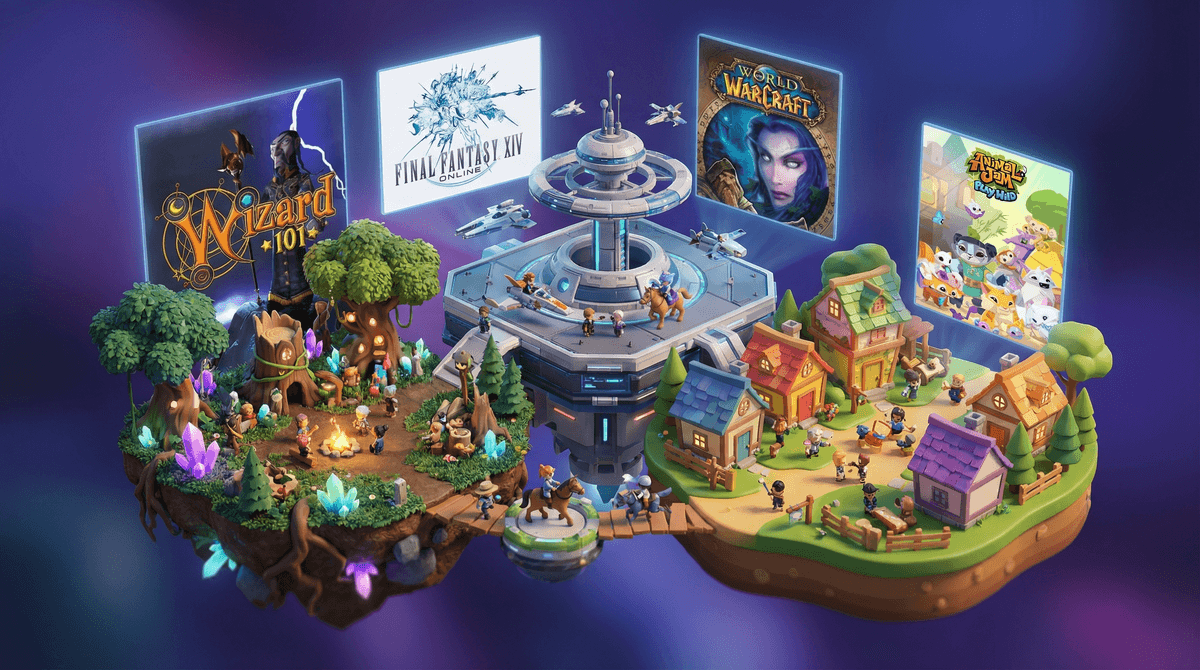
The Definitive Guide to MMO Games: Meaning, Types, and What Parents Need to Know
TL;DR: MMO stands for "Massively Multiplayer Online" game—virtual worlds where thousands of players interact simultaneously. Your kid isn't just playing a game; they're participating in a living, breathing digital society. The good news? Not all MMOs are created equal, and understanding the differences helps you figure out which ones align with your family's values.
Quick recommendations by age:
- Ages 8-12: Wizard101, Animal Jam, Club Penguin Journey
- Ages 13+: Guild Wars 2, Final Fantasy XIV, Elder Scrolls Online
- Teen gamers (15+): World of Warcraft, Destiny 2, Warframe
MMO stands for "Massively Multiplayer Online" game. The key word is massively—we're not talking about 10 friends in a Minecraft server. We're talking hundreds or thousands of players sharing the same game world at the same time, all doing their own thing while occasionally crossing paths.
Think of it like a digital theme park that never closes. Some people are on the roller coasters (combat missions), others are running shops (crafting and trading), some are just hanging out by the fountain chatting (social areas), and everyone's experience is happening simultaneously.
The most common type is the MMORPG—that's "Massively Multiplayer Online Role-Playing Game"—where players create characters, level them up, complete quests, and interact with other players in a persistent fantasy or sci-fi world.
MMOs scratch several developmental itches that are totally normal for kids and teens:
Social connection: These aren't just games—they're third places. Your kid might have a guild (team) they raid with every Tuesday night, friends they've never met IRL but genuinely care about, and inside jokes that would make zero sense to you. For socially anxious kids or those who struggle to connect at school, MMOs can provide meaningful friendships with lower social pressure.
Progression and achievement: MMOs are masterclasses in dopamine delivery. Every quest completed, level gained, or rare item dropped provides a hit of accomplishment. The progression systems are visible, measurable, and—unlike school or sports—feel entirely within the player's control.
Identity exploration: Creating and customizing a character lets kids try on different identities. The shy kid might play a bold warrior. The rule-follower might experiment with being a rogue. It's developmental play, just digital.
Complex systems mastery: Good MMOs have depth. Learning optimal character builds, understanding market economies, coordinating 20-player raids—these require genuine cognitive skills. Some kids who struggle with traditional academics absolutely thrive in these complex systems.
Traditional MMORPGs
Examples: World of Warcraft, Final Fantasy XIV, Elder Scrolls Online
These are the classic fantasy worlds with elves, dragons, and magic. Players create characters, choose classes (warrior, mage, healer), complete quests, and team up for dungeons and raids. The endgame usually involves challenging group content that requires coordination and commitment.
Time commitment: High. These games are designed to be second jobs. Raids can require 2-3 hour sessions multiple times per week.
Social intensity: Very high. Success often requires joining a guild and coordinating with 10-40 other humans.
Best for: Teens who love fantasy, enjoy strategic thinking, and have the schedule flexibility for regular group activities.
Action MMOs
Examples: Destiny 2, Warframe, The Division 2
These blend MMO elements with shooter or action combat. Less about character stats and more about player skill. Missions are typically shorter (20-45 minutes) and more accessible for casual play.
Time commitment: Moderate. You can hop in for a quick mission or grind for hours.
Social intensity: Flexible. Most content works solo or with small groups (3-6 players).
Best for: Kids who prefer action over strategy, want more flexible play sessions, and enjoy sci-fi settings.
Sandbox MMOs
Examples: EVE Online, Albion Online, Star Wars Galaxies
These are player-driven economies and politics. Less about following quest lines, more about creating your own story. Some players become traders, others build empires, some wage war. These are genuinely complex simulations.
Time commitment: Variable but potentially consuming. The political intrigue alone can be a part-time job.
Social intensity: Extremely high, but different. It's less about raiding and more about alliances, betrayals, and actual politics.
Best for: Older teens (16+) interested in economics, strategy, and emergent gameplay. Not recommended for younger kids—the social complexity and potential for genuine emotional harm (scams, betrayals) is real.
Social/Virtual World MMOs
Examples: Animal Jam, Wizard101, Toontown Rewritten
These prioritize social interaction and creativity over combat. Players decorate homes, play mini-games, chat, and explore. Combat exists but is simplified and non-violent.
Time commitment: Low to moderate. Sessions can be as short as 20 minutes.
Social intensity: High but age-appropriate. Built-in chat filters and moderation.
Best for: Younger kids (8-12) who want multiplayer experiences without intense competition or mature themes.
Time Sink Reality
MMOs are specifically designed to keep players engaged. Daily login bonuses, limited-time events, guild commitments—the FOMO is engineered. This isn't accidental; it's the business model.
What to do: Set clear time boundaries before the game starts. "You can play 90 minutes on school nights, 3 hours on weekends" is way more effective than negotiating every single session. Use the game's own systems—many MMOs now have parental time limits built in. Check out how to set healthy gaming boundaries.
Social Complexity and Drama
MMOs have real social consequences. Guild drama, romantic relationships, friend betrayals—all of it happens and feels very real to kids. A 13-year-old getting kicked from their guild might genuinely grieve that loss.
What to do: Stay curious about their social world. "Tell me about your guild" should be as normal as "how was school?" If they're upset about game drama, validate it—those feelings are real even if the world is digital. Help them develop the same social skills they'd need IRL: communication, boundary-setting, recognizing manipulation.
Strangers and Safety
Yes, your kid is playing with strangers. Some of those strangers are genuinely kind humans. Some are not. Most MMOs have chat systems, voice chat, and private messaging.
What to do:
- For kids under 13, stick to games with robust moderation and chat filters like Wizard101 or Animal Jam
- Disable voice chat for younger players or require it to be in shared family spaces
- Have the "never share personal information" talk, but make it specific: no real names, no school names, no location beyond state level, no social media handles
- Periodically check in: "Who are you playing with? How did you meet them? What do you talk about?"
Learn more about online gaming safety for kids.
The Money Problem
Most MMOs are "free-to-play" with optional subscriptions and in-game purchases. Some are genuinely fair; others are predatory. Your kid will want the cool mount, the rare costume, the premium currency.
What to do:
- Decide upfront: is this a subscription game ($10-15/month) or a free game with occasional purchases?
- For free games, set a monthly budget: "You get $10/month for in-game stuff, spend it however you want"
- Require gift cards instead of linking credit cards—it creates a natural spending boundary
- Talk about how free-to-play games make money so they understand the psychology at play
Addiction vs. Passion
Here's the hard part: the line between "really into it" and "problematic" isn't always clear. Some warning signs that it's crossed into concerning territory:
- Declining grades or abandoned activities they previously loved
- Lying about time spent playing
- Extreme emotional reactions when asked to stop
- Neglecting hygiene or sleep
- Withdrawal from family and IRL friends
If you're seeing these, it's worth talking to someone who specializes in gaming and digital wellness. This isn't about demonizing the game—it's about understanding what need it's meeting that isn't being met elsewhere.
Ages 8-12: Social MMOs with Training Wheels
Stick to games designed for this age group with strong moderation:
- Wizard101: Turn-based combat, filtered chat, genuine educational content woven in
- Animal Jam: Social focus, animal conservation themes, National Geographic partnership
- Prodigy Math: MMO mechanics meet math practice (yes, really)
Time limits: 60-90 minutes on school days, 2-3 hours on weekends Supervision: Check in regularly, know their username, periodically watch them play
Ages 13-15: Stepping Into Bigger Worlds
They're ready for more complex games but still need guardrails:
- Guild Wars 2: Cooperative focus, beautiful world, less toxic than some competitors
- Final Fantasy XIV: Known for one of the kindest communities in gaming, great story
- Minecraft multiplayer servers: Technically an MMO if they're on large public servers
Time limits: 90-120 minutes on school days, flexible on weekends with the understanding that other responsibilities come first Supervision: Less direct oversight but maintain open communication about who they're playing with and what they're experiencing
Ages 16+: Near-Adult Territory
At this age, they can probably handle most MMOs, but you're still the parent:
- World of Warcraft: The classic, still going strong, requires time management skills
- Destiny 2: Shooter MMO with excellent moment-to-moment gameplay
- Elder Scrolls Online: Rich lore, solo-friendly if they want it
Time limits: Negotiate together based on their other responsibilities Supervision: Trust but verify—you should still know generally what they're playing and with whom
"Grinding" is the point: Much of MMO gameplay is repetitive tasks to earn rewards. This isn't a bug; it's the feature. Some kids find this meditative and satisfying. Others will burn out. Both are fine.
Raids require commitment: If your kid joins a raiding guild, they're making a commitment to 10-40 other humans. Missing raid night isn't like skipping a pickup basketball game—it can prevent the entire group from playing. This is actually a decent responsibility lesson, but it also means you're not just negotiating with your kid; you're negotiating with their digital community.
The language is... colorful: Even in moderated games, kids will encounter language you don't use at home. They'll also encounter gaming slang that sounds worse than it is. "That's so toxic" is a legitimate description of negative behavior, not just teen dramatics.
Not all guilds are created equal: Some guilds are genuinely supportive communities with adults who model good behavior. Others are toxic cesspools. Your kid's experience will vary dramatically based on who they play with. If they're in a guild that makes them feel bad, encourage them to find a different one—there are literally thousands.
The time zones are global: Your kid's best in-game friend might be in Australia. Their raid team might have members across three continents. This is actually pretty cool from a global citizenship perspective, but it also means their "friends" might be online at 2 AM their time.
MMOs aren't inherently good or bad—they're powerful social platforms that can provide genuine connection, challenge, and growth, or become time-sucking dopamine traps that interfere with real life. Usually, they're a bit of both.
The key is active parenting, not prohibition. Know what they're playing, who they're playing with, and how it's affecting the rest of their life. Set clear boundaries, but also recognize that for many kids, their MMO community is as real and meaningful as their school friends.
If your kid is maintaining grades, showing up for family time, has at least some IRL activities they care about, and seems generally happy, then their MMO hobby is probably fine. If those things are slipping, the game isn't the problem—it's the symptom. Something else is going on that needs attention.
-
If your kid is asking to start an MMO: Have the conversation now about time limits, money limits, and safety rules. Check out how to choose age-appropriate games.
-
If they're already playing: Spend 30 minutes watching them play. Ask questions. Learn the names of their friends and what they like about the game.
-
If you're concerned about time: Track it for a week without judgment, then look at the data together. Sometimes seeing "23 hours last week" hits different than vague worry.
-
If you want alternatives: Check out single-player RPGs that offer similar progression and story without the social pressure and time commitment.
-
If you want to play together: Final Fantasy XIV and Guild Wars 2 are both excellent for parent-kid co-op play. Nothing builds understanding like experiencing it yourself.
The digital worlds your kids inhabit are real to them. Your job isn't to dismiss that reality—it's to help them navigate it with the same wisdom and care you'd bring to any other part of their lives.