

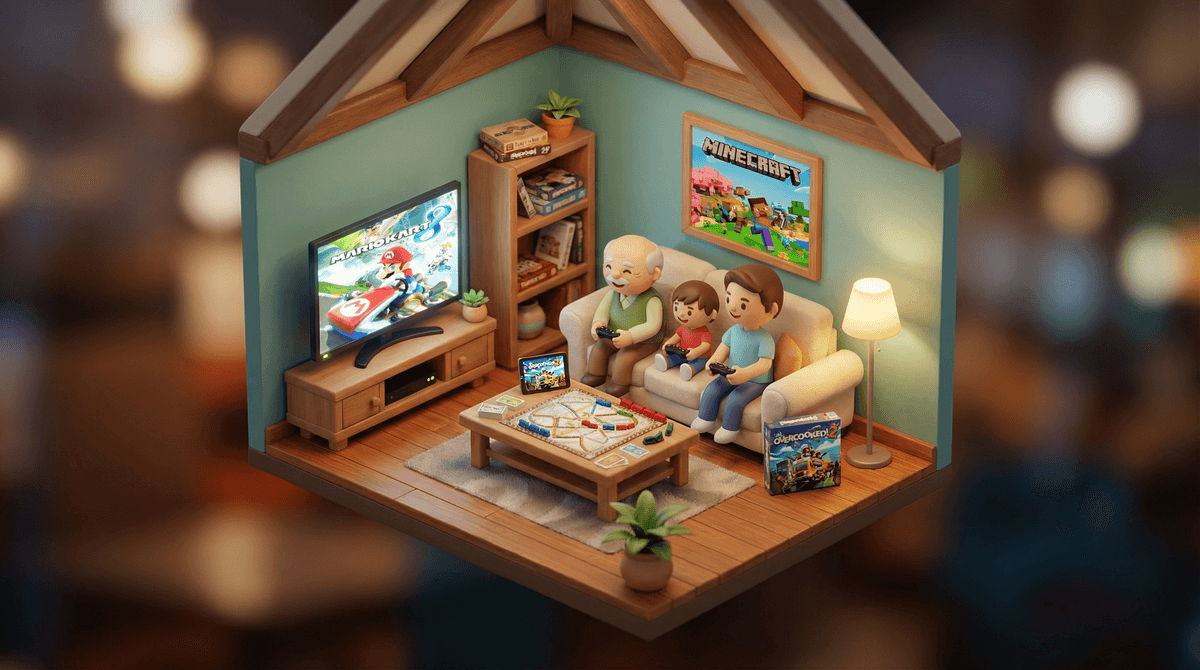
The Best Multiplayer Games for Family Game Night
Look, I'm going to level with you: finding a game that keeps a 7-year-old, a teenager, and Grandma equally engaged is like trying to find a show everyone agrees on for movie night. Someone's always going to be bored, someone's going to dominate, and someone's going to rage-quit before dessert.
But here's the thing—it's actually possible. And I'm not talking about forcing everyone to play Monopoly for three hours while passive-aggressively bankrupting each other. There are legitimately great multiplayer games out there that work across generations without making anyone feel like they're just there to lose.
Before we dive into specific recommendations, let's talk about what actually works. The best family games have a few things in common:
Low skill ceiling, high fun ceiling. Everyone needs to feel like they have a shot at winning, even if they've never touched a controller before. Games that rely purely on reflexes or prior gaming experience? Those are out.
Short rounds or easy save points. Nobody wants to commit to a 4-hour campaign when you've got homework and bedtime looming. The best family games let you play for 20 minutes or 2 hours.
Built-in chaos that levels the playing field. A little randomness helps. When a well-timed banana peel can take down the "good gamer" in the family, everyone stays engaged.
Actually fun for adults. This is critical. If the grown-ups are just tolerating the game while scrolling their phones, that energy spreads. You need games that have enough depth or humor to keep everyone genuinely entertained.
Mario Kart 8 Deluxe (Ages 5+)
This is the gold standard for a reason. Mario Kart 8 Deluxe has an "auto-accelerate" and "steering assist" mode that means even a kindergartener can stay on the track while Grandpa (who hasn't played a video game since Pong) can actually compete. The chaos of items keeps it unpredictable, and honestly? It's just pure fun. No violence, no complicated mechanics, just racing and the occasional well-placed shell.
Pro tip: Turn on teams mode if you've got a big skill gap. Pair your 6-year-old with your teenager and suddenly everyone's invested.
Overcooked! 2 (Ages 8+)
Overcooked! 2 is controlled chaos in the best way. You're working together to run a kitchen, chopping vegetables, cooking orders, and plating food before time runs out. It requires communication, coordination, and inevitably results in someone yelling "WHO BURNED THE SOUP?!"
It's cooperative rather than competitive, which can be a nice change of pace. And it's genuinely challenging enough that adults aren't bored. Fair warning: this game can test relationships. If your family doesn't handle stress well, maybe start with the easier levels.
Minecraft (Ages 7+)
I know, I know—Minecraft isn't traditionally a "family game night" pick. But hear me out. Creative mode or a cooperative survival world can be amazing for families. Build a castle together, explore caves, work on a massive project. It's open-ended enough that everyone can contribute at their own level.
The key is setting up a private realm or world where you control who's playing. No randos, no chat drama, just your family building ridiculous structures and accidentally setting things on fire.
It Takes Two (Ages 10+)
It Takes Two is designed for exactly two players working together, which makes it perfect for parent-kid duos or siblings. It's creative, funny, and has constantly changing gameplay that keeps things fresh. The story is about a couple going through a divorce (which sounds heavy but is handled in a surprisingly kid-friendly way), and you literally have to cooperate to progress.
Fair warning: this is a longer commitment (10-15 hours total), so it's more of a "weekly family game night" situation than a one-shot.
Super Smash Bros. Ultimate (Ages 8+)
Super Smash Bros. Ultimate is fighting-game-lite. It's chaotic, colorful, and has enough randomness with items that skill doesn't completely dominate. Up to 8 players can play at once (though 4 is more manageable), and there are so many characters that everyone can find someone they like.
The learning curve can be steep for total gaming newbies, but the "Smash" mode with items on is forgiving enough that everyone can button-mash their way to occasional victories.
Sometimes you just want to get away from screens entirely. Here are the physical games that actually work across ages:
Codenames (Ages 10+)
Codenames is perfect because it's team-based and rewards different kinds of thinking. You're trying to get your teammates to guess words based on one-word clues. Kids can be surprisingly good at the creative connections, and it doesn't require reading speed or hand-eye coordination. Games are quick (15-20 minutes), and there's a Pictures version for younger kids.
Ticket to Ride (Ages 8+)
Ticket to Ride is the gateway drug to modern board gaming. You're building train routes across a map, and it's simple enough to teach in 5 minutes but strategic enough to stay interesting. The longest route competition keeps things spicy, and there's a satisfying tactile element to placing those little train pieces.
Sushi Go Party! (Ages 7+)
Sushi Go Party! is a card-drafting game that plays quickly and scales well from 2-8 players. You're picking sushi dishes to build the best meal, and the art is adorable. Rounds are fast (15 minutes), so if someone's not into it, you're not locked in for hours.
Just One (Ages 8+)
Just One is cooperative and brilliant. One person tries to guess a word while everyone else writes down one-word clues. The catch? If anyone writes the same clue, both get eliminated. It's simple, quick, and creates hilarious moments when someone writes "yellow" and "banana" for the same word.
Wavelength (Ages 10+)
Wavelength is a social guessing game where you're trying to figure out where your teammate's thinking falls on a spectrum (like "cold to hot" or "underrated to overrated"). It sparks great conversations and works beautifully across generations because everyone's perspective is valid.
If you've got a crowd or want something lighter, Jackbox Party Packs are legitimately great. Everyone plays using their phones as controllers, so no need for extra equipment. Games like Drawful, Quiplash, and Fibbage are funny without being too crude (though check the content settings—some can get spicy with the wrong crowd).
Among Us can also work for families with older kids (10+), especially if everyone's in the same room. The social deduction element is fun, though be warned: accusing your siblings of being the impostor can get heated.
Ages 5-7: Stick with games that have assist modes or are inherently simple. Mario Kart with assists, Minecraft Creative mode, or board games like Sushi Go or Outfoxed work well. Avoid anything that requires fast reading or complex strategy.
Ages 8-10: This is the sweet spot where a lot more games open up. They can handle Overcooked's chaos, Ticket to Ride's strategy, and Smash Bros' button-mashing. Just watch for frustration levels—some kids this age are still learning to lose gracefully.
Ages 11+: Pretty much everything on this list works. You can start adding games with more complex rules or slightly edgier content. Just be mindful of competitive dynamics if you've got a wide age range.
The skill gap is real. If you've got one kid who games daily and another who barely touches a controller, competitive games can be rough. Look for team-based options or games with built-in handicaps (like Mario Kart's assist mode or giving the less experienced player a head start).
Not every game night needs to be an event. Sometimes 20 minutes of Sushi Go after dinner is better than trying to force a 2-hour Minecraft session when everyone's tired.
It's okay to ban certain games. If Smash Bros consistently ends in tears or Monopoly brings out everyone's worst qualities, just... don't play them. Life's too short.
Screen time rules can be flexible for family time. If your normal rule is "no screens after dinner," making an exception for family game night is fine. The context of screen time matters more than the raw minutes.
The best family game night game is the one everyone actually wants to play. That might be Mario Kart for your family, Codenames for another, or a rotation that keeps things fresh.
Start with games that have low barriers to entry and high fun potential. Pay attention to what works—if everyone's laughing and engaged, you've found a winner. If someone's on their phone or visibly miserable, try something else next time.
And remember: the goal isn't perfect family bonding moments for Instagram. It's spending time together doing something that doesn't involve everyone staring at separate screens in separate rooms. If you can pull that off, even with a few rage-quits along the way, you're winning.
Not sure where to start? Try Mario Kart 8 Deluxe if you've got a Switch, or grab Codenames if you want to go screen-free. Both are widely available, relatively inexpensive, and have high success rates across different family dynamics.
Want more specific recommendations based on your kids' ages and interests? Find multiplayer games for your family setup and get personalized suggestions.
And if you're looking for more ways to make screen time work for your family instead of against it, that's exactly what Screenwise is here for. Because intentional doesn't mean perfect—it just means you're paying attention.