

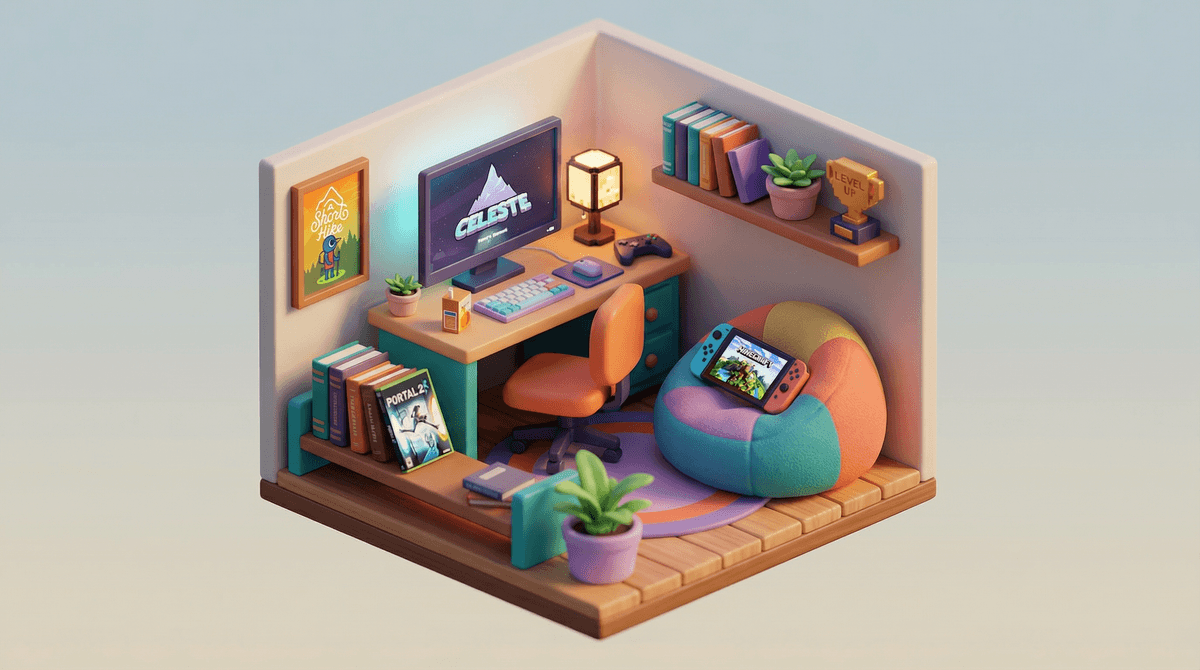
Here's the thing about video games that makes some parents nervous: kids fail. A lot. They die, lose, restart, and try again—sometimes dozens of times before succeeding. But here's the secret: that's exactly what makes certain games incredible teachers of resilience.
The best first video games for 8-10 year olds aren't the ones that let kids win easily. They're the ones that create a safe space to experience failure, frustration, and the genuine satisfaction of finally figuring it out. These games teach perseverance not through lectures but through experience—the kind where your kid yells "ONE MORE TRY!" at 8pm on a school night.
According to Screenwise community data, about 55% of families with kids in this age range are already gaming. Of those, 60% are playing on servers in games like Roblox, while 35% stick to offline experiences like Minecraft. Both approaches can build resilience—it just depends on the specific game and how it's designed.
Before we dive into specific recommendations, let's talk about what makes a game actually good for developing resilience:
Problem-solving under pressure: Games that require kids to think creatively when their first (or fifth) approach doesn't work
Clear cause and effect: When failure happens, kids can understand why and adjust their strategy
Incremental progress: Even when they don't "win," they're learning patterns, building skills, or unlocking new abilities
Low stakes failure: Unlike real life, game failure doesn't hurt. It's the perfect training ground for "try, fail, adjust, repeat"
Intrinsic motivation: The best games make kids want to persist, not because of external rewards but because the challenge itself is engaging
Portal 2
This puzzle game is basically a masterclass in resilience disguised as a hilarious sci-fi adventure. Kids use a "portal gun" to solve increasingly complex spatial puzzles, and here's the beautiful part: there's no way to die from enemies. Failure means trying a different approach to the puzzle, not losing progress. The co-op mode is particularly brilliant for siblings or parent-child play, requiring communication and collaborative problem-solving. Ages 9+ (some mild cartoon violence and sarcastic humor).
Celeste
This platformer is explicitly about climbing a mountain as a metaphor for overcoming anxiety and self-doubt. It's genuinely challenging—kids will fail hundreds of times—but respawns are instant and the game actively celebrates persistence. The assist mode lets you adjust difficulty without shame, teaching that asking for help is strength, not weakness. The story resonates deeply with kids dealing with big feelings. Ages 8+ (some themes about anxiety and self-doubt that might need context).
Stardew Valley
This farming sim teaches resilience through a different lens: long-term planning and recovering from mistakes. Planted crops in the wrong season? You'll learn for next time. Ran out of energy before finishing your tasks? Tomorrow's a new day. There's no real "losing," just opportunities to optimize and improve. It's also genuinely relaxing, which is a nice counterbalance to more intense games. Check out why Stardew Valley is such an amazing example of a cozy game for more. Ages 8+.
Minecraft (Survival Mode)
Sure, 40% of Screenwise families report their kids don't play Minecraft at all, but for the 60% who do, Survival Mode is where resilience happens. Creative Mode is fun, but Survival Mode teaches resource management, planning, and recovering from setbacks (like when a Creeper blows up your house). The key is keeping it offline or on private servers with friends at this age—public servers can be overwhelming and expose kids to content you might not want. Ages 8+. Need help with setup? Here's how to navigate Minecraft's different modes.
Splatoon 3
This colorful team-based shooter teaches resilience in competitive settings—learning to lose gracefully, adjust strategies, and work with teammates who might not always cooperate. The 3-minute matches mean losses don't feel devastating, and the focus on painting territory rather than just "shooting" makes it feel less violent than traditional shooters. The single-player campaign is also excellent for building skills before jumping into multiplayer. Ages 8+ (online interactions require Nintendo Switch Online subscription and some monitoring).
Unpacking
This zen puzzle game about unpacking boxes in different homes throughout a character's life teaches attention to detail, spatial reasoning, and the satisfaction of organizing chaos. There's no timer, no failure state—just the gentle challenge of figuring out where things belong. It's particularly good for kids who get frustrated easily with traditional "action" games. Ages 8+.
A Short Hike
This exploration game gives kids a mountain to climb with zero pressure. They can take the direct route or explore every corner of the island. It teaches self-directed goal-setting and the satisfaction of persistence without any of the frustration. Perfect for kids who need a confidence boost before tackling harder challenges. Ages 7+.
Hollow Knight
For kids ready for a serious challenge, this beautifully animated exploration game is hard. Like, genuinely difficult. But it teaches the kind of resilience that comes from mastering complex patterns and timing. Not for every 8-10 year old—some will find it too frustrating—but for kids who've mastered easier games and want something meatier, it's incredible. The art style is gorgeous but some areas are genuinely creepy/scary. Ages 10+ for most kids.
Mario Kart 8 Deluxe
Racing games teach resilience through competition and the reality that you won't always win. The "smart steering" assist feature means younger or less experienced players can still compete while learning, and it can be turned off as skills improve. Losing a race because you got hit by a blue shell teaches frustration tolerance in bite-sized doses. Ages 7+.
Overcooked 2
This chaotic cooking co-op game is basically controlled chaos that teaches teamwork, time management, and staying calm under pressure. You will fail levels. Multiple times. And you'll laugh while doing it. The communication required makes it excellent for family play, and the clear feedback ("you needed 150 points, you got 142") helps kids understand exactly what to improve. Ages 8+.
Frustration is the point: If your kid isn't getting frustrated occasionally, the game probably isn't challenging enough to build resilience. The goal isn't to eliminate frustration but to help them move through it.
Your role matters: Especially with first games, your reaction to their frustration sets the tone. "That level looks really hard—want to try a different strategy?" beats "Maybe take a break" when they're in the zone.
Difficulty settings aren't cheating: Games like Celeste that offer assist modes are teaching that adapting challenges to your current skill level is smart, not weak. This is a life lesson.
Online vs. offline: For this age group, offline or friends-only online play is usually the sweet spot. The social dynamics of public servers can undermine the resilience-building when kids face toxicity or inappropriate content they're not ready for.
Watch for the rage-quit: There's a difference between healthy frustration ("ugh, one more try!") and destructive frustration (throwing controllers, melting down). If a game consistently triggers the latter, it might not be the right fit yet.
The best first video games for 8-10 year olds aren't the easiest ones—they're the ones that create a safe space to fail, learn, and try again. They teach that persistence pays off, that strategies can be adjusted, and that the satisfaction of finally succeeding after multiple attempts is way better than winning on the first try.
Start with games that match your child's current frustration tolerance and gradually increase challenge as their skills (and resilience) grow. And remember: those "just one more try!" moments at bedtime? That's not addiction—that's your kid learning they can do hard things.
Take the Screenwise survey to see how your family's gaming habits compare to others in your community and get personalized recommendations based on your child's specific interests and maturity level.
Start with one game from this list that matches your kid's interests—don't overwhelm them with choices. Master one, then explore others.
Play together for at least the first few sessions. Your presence helps them process frustration and celebrate victories in healthy ways.
Set up success: Make sure difficulty settings, parental controls, and online features are configured appropriately before handing over the controller. Need help? Check out our guide to game parental controls.