

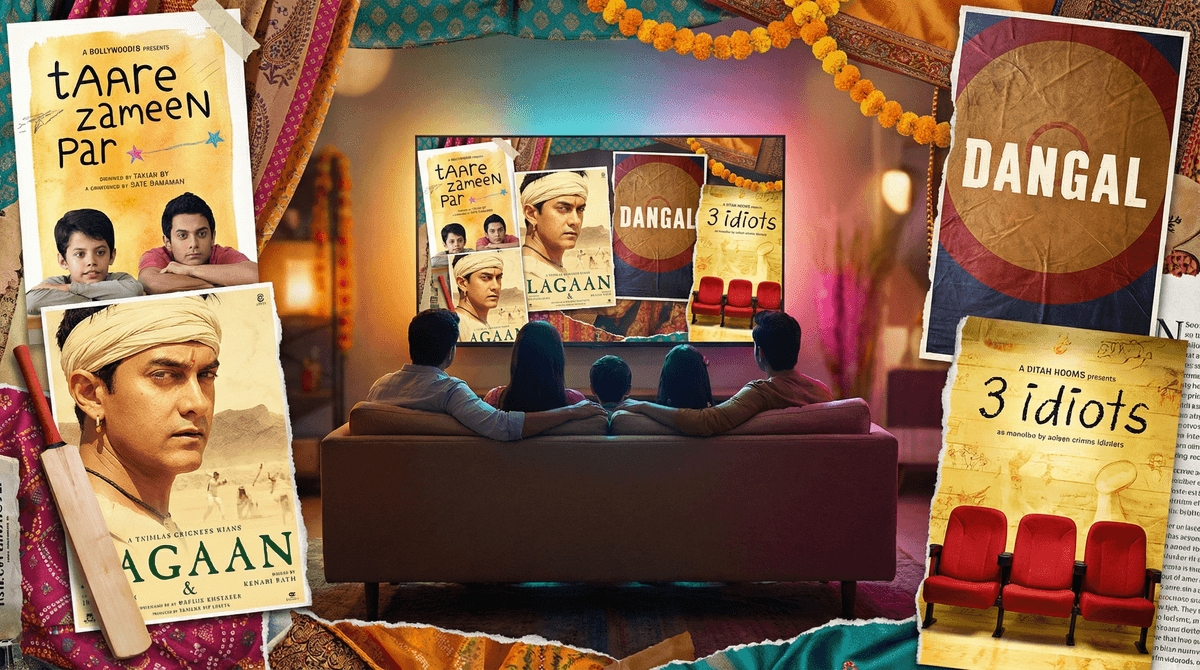
The Best Family-Friendly Bollywood Movies for All Ages
Bollywood offers some of the most vibrant, emotionally rich family viewing experiences out there—but navigating 100+ years of Indian cinema can feel overwhelming. Here are the absolute best family-friendly picks that work across ages, from elementary schoolers to grandparents:
Elementary Age (6-10):
- Taare Zameen Par (Like Stars on Earth)
- Chillar Party
- Stanley Ka Dabba
Screenwise Parents
See allTweens & Teens (10+):
Whole Family (All Ages):
If your only exposure to Bollywood is those three-hour runtime memes or the occasional dance number that goes viral on TikTok, you're missing out on storytelling that American family films often can't touch. Bollywood at its best combines:
Emotional depth without cynicism. These films aren't afraid to make you cry, laugh, and feel things deeply—without the ironic distance that pervades so much Western media.
Multi-generational appeal that actually works. Not "kid movie that adults tolerate" but genuine stories that resonate across ages.
Cultural richness without being educational vegetables. Your kids learn about different perspectives, values, and ways of life while being thoroughly entertained.
Music that's integral, not interruption. Unlike Disney+ musicals where songs can feel like speed bumps, Bollywood songs are woven into the emotional fabric of the story.
The challenge? Bollywood produces 1,500+ films annually, and quality varies wildly. Plus, not everything labeled "family film" in India translates to Western family viewing—different cultural contexts around romance, violence, and themes mean you need a curated list.
Taare Zameen Par (Like Stars on Earth)
Ages 6+ | 2007 | 2h 45m
This is the Bollywood film that makes grown adults ugly-cry in the best way. It follows Ishaan, a third-grader struggling in school who everyone assumes is lazy or difficult—until an art teacher recognizes he has dyslexia.
Why it works: It's essentially the Indian Wonder in terms of emotional impact, but focused on learning differences. The film respects kids' perspectives while helping parents understand what it feels like to be the "difficult" child.
Parent heads-up: The first half shows Ishaan being yelled at, punished, and misunderstood by adults—it's hard to watch but necessary for the story's impact. If your child has learning differences, preview first to gauge whether it'll be cathartic or triggering.
Cultural bonus: Introduces kids to the Indian education system's pressure-cooker environment (which will make American homework seem chill by comparison).
Ages 7+ | 2011 | 2h 15m
Think The Sandlot meets The Goonies, but set in Mumbai with a group of kids who form a "gang" to protect a street child and his dog from local politicians.
Why it works: Pure kid-powered adventure with genuine stakes. The children are the heroes, adults are mostly obstacles, and the humor lands for both kids and parents.
Parent heads-up: Deals with class differences and poverty in ways that might prompt good conversations. One child is clearly from a lower socioeconomic background, which is portrayed honestly but sensitively.
Stanley Ka Dabba (Stanley's Tiffin Box)
Ages 8+ | 2011 | 1h 36m
Finally, a Bollywood film under two hours! Stanley never brings lunch to school, and a greedy teacher who steals students' food becomes obsessed with why. The reveal is genuinely moving.
Why it works: It's essentially a feature-length empathy exercise disguised as a school comedy. Kids connect with the classroom dynamics while parents appreciate the deeper themes about dignity and kindness.
Bonus: At 96 minutes, this is perfect for families still building their Bollywood stamina.
Ages 10+ | 2009 | 2h 50m
Three engineering students navigate India's cutthroat academic system while questioning whether success means following your passion or meeting others' expectations. It's a comedy, a bromance, and a surprisingly sharp critique of educational pressure.
Why it works: Tweens and teens are starting to feel academic pressure themselves—this film validates their stress while offering a different perspective. Plus, it's genuinely hilarious.
Parent heads-up: One suicide attempt (off-screen but discussed), some bathroom humor, and a childbirth scene played for comedy that's more chaotic than graphic. The film also includes some mild romantic content and a scene where characters are shown drinking alcohol at a wedding.
Discussion starter: Perfect for conversations about academic pressure and mental health , especially if you have a high-achieving middle or high schooler.
Ages 10+ | 2016 | 2h 41m
Based on the true story of wrestler Mahavir Singh Phogat who trains his daughters to become world-class wrestlers in a society that doesn't believe girls belong in sports.
Why it works: It's Rocky meets Bend It Like Beckham with layers of complexity about gender, tradition, and female empowerment. The sports sequences are genuinely thrilling.
Parent heads-up: The father is tough—sometimes crossing into harsh—which creates interesting discussions about different parenting styles and cultural contexts. Wrestling scenes include physical intensity but nothing gratuitous.
Why teens especially love it: The older daughter's storyline about balancing tradition, independence, and family expectations resonates deeply with teens navigating their own identity.
Ages 11+ | 2007 | 2h 33m
A disgraced hockey player coaches the Indian women's national team, transforming a group of individual players into a unified force while battling sexism, regional prejudices, and their own egos.
Why it works: Every sports movie trope you love, executed perfectly. But it's also about overcoming stereotypes and finding your voice.
Perfect for: Kids who play team sports, families with daughters who need to see women as athletes, anyone who loves an underdog story.
Ages 9+ | 2001 | 3h 44m
Yes, it's nearly four hours. Yes, it's worth it. In 1890s India, villagers challenge their British rulers to a cricket match to avoid paying oppressive taxes. None of them know how to play cricket.
Why it works: It's an epic in the true sense—sweeping, emotional, with genuine stakes. The British are cartoonishly villainous in satisfying ways, the romance is sweet, and you'll be Googling cricket rules by halftime.
Parent strategy: Make it an event. Pause at intermission (the film has a built-in break), serve snacks, discuss what's happening. This isn't background viewing—it's an experience.
Cultural context: Great introduction to colonialism's impact without being a history lecture. Kids understand power dynamics through sports metaphor.
Swades (Homeland)
Ages 10+ | 2004 | 3h 9m
An Indian-American NASA scientist returns to India to find his childhood nanny and ends up confronting what "home" means and whether success is measured by career achievement or community impact.
Why it works: Especially resonant for immigrant families or third-culture kids navigating multiple identities. It asks big questions about responsibility, privilege, and belonging without being preachy.
Discussion gold: Perfect for families talking about giving back to communities, what we owe to others, and how to define success.
Zindagi Na Milegi Dobara (You Only Live Once)
Ages 12+ | 2011 | 2h 35m
Three friends take a bachelor-party road trip through Spain, confronting their fears, relationships, and what they actually want from life.
Why it works: It's a buddy comedy with depth, gorgeous cinematography, and themes about facing fears and authentic living that resonate across ages.
Parent heads-up: Some drinking (it's a bachelor party), mature themes about relationships and family expectations, and one scene of skydiving/adventure sports that might inspire your kids to add things to their bucket list.
Bonus: The Spain travelogue aspect makes this perfect for families who love travel content or are planning trips.
Elementary (6-9): Stick with Taare Zameen Par, Chillar Party, and Stanley Ka Dabba. These have clear kid protagonists and straightforward emotional arcs.
Tweens (10-12): Add 3 Idiots, Dangal, Chak De! India, Lagaan, and Swades. They can handle longer runtimes and more complex themes.
Teens (13+): Everything on this list works, including Zindagi Na Milegi Dobara which deals with young adult themes they'll relate to.
Runtime reality check: Most Bollywood films run 2.5-3+ hours. This isn't padding—it's cultural. Indian audiences expect intermissions and epic storytelling. Plan accordingly with snacks and bathroom breaks.
Subtitles are your friend. Even films with English dubs work better with subtitles—you get the original performances and your kids practice reading. Win-win.
Hindi isn't necessary. These films are so visually expressive that language barriers matter less than you'd think. Kids pick up emotional beats through music, expressions, and context.
Romance is different. Bollywood romance is generally more chaste than Hollywood—expect longing glances and emotional songs rather than physical intimacy. That said, preview if you're concerned about your family's comfort level.
Songs aren't skippable. I know it's tempting to fast-forward through musical numbers, but they're often where character development happens. Embrace them. Your kids will be singing them for weeks.
Cultural context helps. A quick primer on Indian culture and values before watching enriches the experience. Talk about joint families, arranged marriages, regional differences, religious diversity—whatever's relevant to the film.
Streaming options: Most of these are on Netflix, Amazon Prime Video, or Disney+ Hotstar. Quality varies by region, so you might need to hunt a bit.
Bollywood family films offer something increasingly rare in Western media: stories that treat big emotions and moral questions seriously while still being wildly entertaining. They're not perfect—runtimes are long, cultural context matters, and not every joke translates—but they expand your family's storytelling vocabulary in ways that Disney and Pixar simply can't.
Start with one film from the list that matches your kids' ages and interests. Make it special—plan an evening, prepare snacks (samosas if you're feeling ambitious, popcorn works too), and commit to the experience. Don't treat it like homework or cultural education—treat it like the vibrant, emotional, often hilarious entertainment it is.
Your kids might ask questions about why people are singing, why the movie is so long, or what's happening with the dancing. That's the point. These films open conversations about different ways of telling stories, different cultural values, and different perspectives on universal themes like family, education, success, and belonging.
Plus, next time your teen complains about a two-hour movie being "too long," you can remind them about that time they watched Lagaan and loved every minute of nearly four hours.
Ready to dive in? Pick one film from your kids' age range and schedule a family movie night this weekend.
Want more recommendations? Check out international films for kids or movies that teach empathy.
Curious about other cultural cinema? Explore family-friendly anime films or Studio Ghibli movies by age.
Need help talking about themes? Ask about discussing cultural differences with kids or teaching kids about diversity through media.