

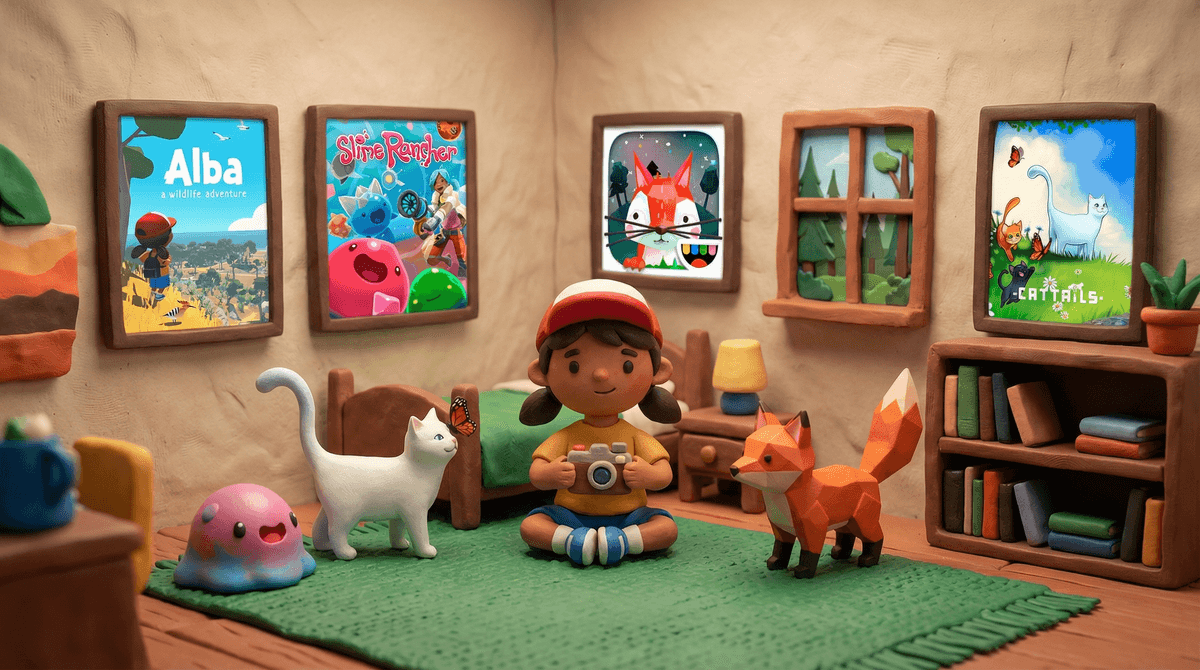
Animal games are exactly what they sound like—video games where animals take center stage. But here's the thing: not all animal games are created equal. Some are basically digital pet simulators where your kid feeds a virtual hamster every 20 minutes (hello, notification addiction). Others are genuinely engaging wildlife adventures that might actually teach your kid something about ecosystems or animal behavior.
The category is huge. You've got everything from Minecraft's passive mob farming (which, let's be honest, is more about resource management than animal care) to deeply educational titles like Alba: A Wildlife Adventure where kids actually learn about conservation. Some are cozy life sims, some are action-adventure games with animal protagonists, and some are straight-up educational tools disguised as games.
Kids are hardwired to love animals. It's developmental—caring for creatures (even digital ones) taps into nurturing instincts and teaches responsibility without the actual commitment of cleaning a litter box for 15 years.
But there's more going on here. Animal games often hit that sweet spot between low-stakes gameplay and meaningful engagement. There's usually no game over screen, no pressure to perform, just... vibes. Your kid can explore, collect, care for creatures, and feel accomplished without the cortisol spike of competitive multiplayer.
Also? Animals are just less complicated than humans. No social drama, no complex dialogue trees—just a fox that needs berries or a horse that needs brushing. For kids who find social situations exhausting (or are just tired from navigating middle school), animal games can be genuinely restorative.
Ages 4-7: Gentle Introduction
Paw Patrol games - Look, I'm not going to tell you these are masterpieces of game design. They're not. But they're familiar, simple, and your preschooler already knows the characters. The games are short, forgiving, and don't require reading skills.
Toca Nature - This is the one you actually want your kid playing. It's an ecosystem builder where kids plant trees, shape landscapes, and watch animals appear naturally. No ads, no in-app purchases, just pure creative play. Toca Boca consistently makes quality stuff.
Pikmin Bloom - Okay, technically these are plant-animal hybrids, but hear me out. It's a walking game that encourages actual outdoor time. Your kid grows little Pikmin by walking around the real world. Is it still screen time? Yes. But it's screen time that gets them moving.
Ages 8-11: Building Complexity
Stardew Valley - The animal care here is part of a bigger farming sim, but it's genuinely well-designed. Kids learn that animals need consistent care, that chickens don't just produce eggs automatically, and that building relationships (even with pixelated cows) takes time. Plus the whole game teaches resource management and planning. Read more about why Stardew Valley works so well for families.
Alba: A Wildlife Adventure - This is the game you show other parents when they ask if "good" games exist. You play as a girl documenting wildlife on a Mediterranean island while cleaning up pollution. It's beautiful, it's educational, and it's genuinely fun. The environmental message is there but never preachy. This is the sweet spot.
Spiritfarer - Fair warning: this one deals with death and grief. You're a ferrymaster for the deceased, caring for animal spirits before they move on. It's gorgeous and deeply emotional. Appropriate for mature 10+ kids, especially if they're dealing with loss. Not a casual pick, but meaningful.
Webkinz - Yes, it still exists! The plush-toy-code thing is mostly gone, but the online world continues. It's dated, sure, but it's also a known quantity with relatively safe social features. If your kid is begging for a virtual pet world, this is safer than many alternatives.
Ages 12+: Deeper Engagement
Red Dead Redemption 2 - Okay, this is an M-rated Western with violence and mature themes, so definitely not for everyone. But the horse mechanics? Chef's kiss. Your horse is a real companion that you bond with, care for, and can actually lose permanently. It teaches consequences in a way few games do. For mature teens only, and maybe check out our full guide first.
Slime Rancher - You're a rancher on an alien planet collecting and breeding adorable slime creatures. It's essentially Pokemon meets farming sim, but with better resource management mechanics. Genuinely charming, zero inappropriate content, and teaches economic thinking.
Cattails - Stardew Valley but you're a cat. You hunt, build relationships with other colony cats, and survive the seasons. It's cozy but with enough challenge to stay engaging for older kids.
The monetization question: Many animal games are free-to-play with aggressive in-app purchases. Roblox has a million animal-themed experiences, and yes, many are trying to separate you from your Robux. Learn more about how Robux is actually real money if that's not already painfully clear from your credit card statement.
Educational value varies wildly: A game featuring animals doesn't automatically teach anything useful. Some are just Skinner boxes with cute graphics. Look for games where animal behavior is realistic-ish, where care routines matter, or where conservation themes are present.
Social features: Games like Animal Jam have chat functions and social spaces. This isn't automatically bad, but you need to know what you're getting into. Check our guide on game chat safety if this is new territory.
The "just one more thing" trap: Animal games are designed to keep kids checking in. Daily rewards, timed events, animals that need feeding—it's all engineered for habit formation. This isn't evil, but it's worth discussing with your kid. "Why do you think the game wants you to check in every day?"
- Constant notifications - If the game is pinging your kid every hour, that's a design choice, not a necessity
- Pay-to-care mechanics - Games where you can't properly care for animals without spending real money are basically teaching kids that love costs money (yikes)
- Breeding for profit focus - Some games turn animal breeding into pure economics with zero care component. That's... not the vibe we want
- Realistic hunting games marketed to young kids - There's a difference between age-appropriate hunting content for teens and graphic hunting sims. Know which you're dealing with
Animal games can be genuinely great. They teach empathy, responsibility, and systems thinking. They can be calming, restorative, and educational. But they can also be manipulative time-sinks designed to extract money and attention.
The best animal games respect your kid's time, teach something meaningful about animal care or ecosystems, and don't require constant check-ins to keep a virtual pet alive. Games like Alba and Stardew Valley are gold standard. Free-to-play mobile games with aggressive monetization? Approach with caution.
Pro tip: If your kid is obsessed with animal games, that's actually useful information. Maybe they'd love volunteering at an animal shelter, or maybe it's time to have the "can we get a real pet" conversation. Digital interest can point to real-world passions worth exploring.
Not sure which game is right for your kid? Find animal games for your child's specific interests and age and we can narrow it down. Or if your kid is already deep into a specific animal game and you want to understand what they're actually doing in there, we can help with that too.
The goal isn't to find the "perfect" game—it's to find something that matches your family's values, your kid's interests, and your tolerance for in-app purchases. You've got this.