

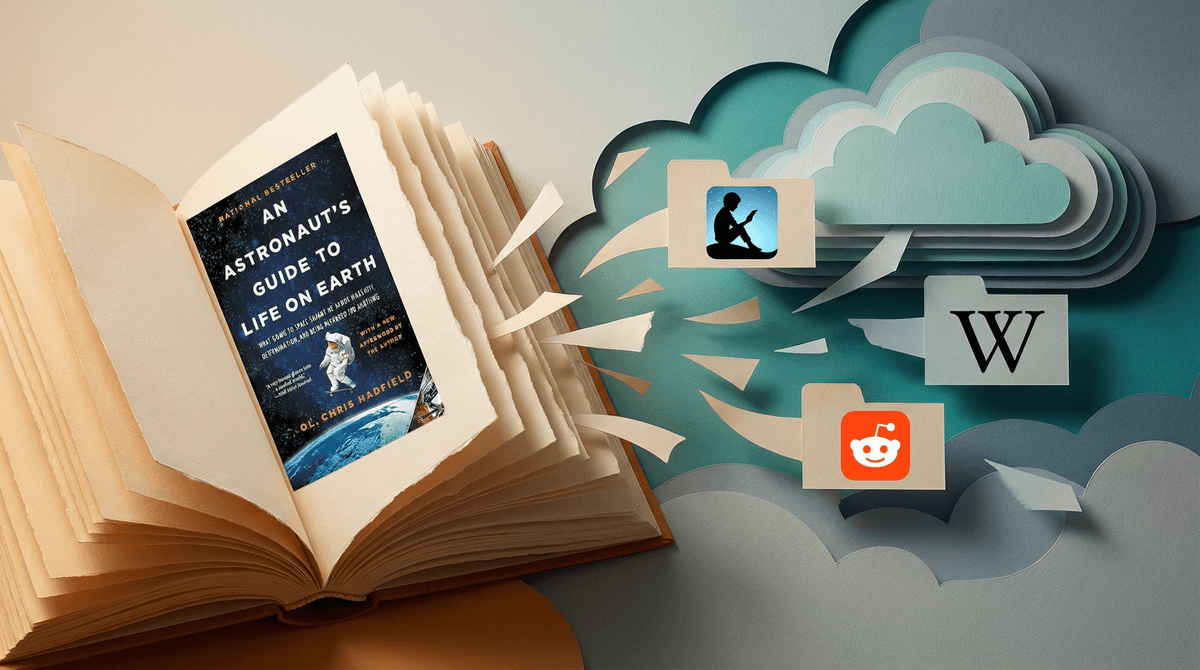
So you walk past your teen's room and see them absolutely glued to their screen, reading intently. Victory, right? They're reading! Except... they're seven Wikipedia tabs deep into the history of Soviet space dogs, and their assigned novel for English class is still on page 12.
This isn't about lazy kids choosing the "easy" option. What's happening is genuinely interesting: teens are gravitating toward Wikipedia-style reading—short, interconnected, information-dense articles—over traditional long-form books. And it's not just Wikipedia. It's Fandom wikis, Reddit threads, YouTube video essays, and TikTok explainers. They're reading a lot, just not in the format we expect.
The shift is real. Studies show that while overall literacy hasn't collapsed, the type of reading has changed dramatically. Teens are spending more time on what researchers call "non-linear" or "hypertextual" reading—jumping between sources, following links, and building knowledge through connected fragments rather than sustained narrative.
Let's be honest: Wikipedia-style reading has some genuine advantages that books don't.
It's immediately rewarding. You get answers fast. You can satisfy curiosity in three minutes instead of three chapters. Your brain gets little dopamine hits as you click through to related topics—it's like intellectual popcorn.
It matches how they actually learn online. Teens aren't just reading Wikipedia in isolation. They're cross-referencing with YouTube videos, checking Reddit discussions, looking at TikTok explainers. They're building understanding through multiple sources and formats, which is honestly a valuable modern skill.
It feels more relevant. A Wikipedia article about climate change includes this week's data. A novel about climate change was written three years ago. For teens who've grown up with real-time information, books can feel frustratingly static.
The hyperlink structure mirrors their thinking. Ever watch a teen explain something they're interested in? It's not linear. It's "so this happened, but first you need to know about this other thing, which connects to this, oh and also—" That's exactly how Wikipedia works.
Here's where it gets tricky. Wikipedia-style reading and book reading use different cognitive skills, and we need both.
Deep reading—the sustained, focused attention required for novels and long-form nonfiction—builds specific abilities:
- Sustained concentration without the dopamine hit of clicking to something new every two minutes
- Narrative comprehension and the ability to track complex character development or arguments over hundreds of pages
- Empathy and perspective-taking that comes from spending hours inside someone else's experience
- Tolerance for ambiguity because books don't have hyperlinks to explain every reference immediately
The research here is actually concerning. Studies show that heavy digital readers often struggle with what's called "deep reading" tasks—making inferences, understanding complex themes, connecting ideas across long texts. It's not that they can't do it; it's that the skill atrophies without practice.
Think of it like this: Wikipedia reading is like doing intervals on a treadmill. Book reading is like going on a long hike. Both are exercise, but they build different capacities. If you only do intervals, you'll struggle on the hike.
This isn't about demonizing Wikipedia. Wikipedia is genuinely useful, often accurate, and can spark incredible curiosity. The problem is when it becomes the only way a teen engages with text.
The stakes are real for academic success. College and career success still heavily depend on the ability to read long, complex texts—research papers, technical manuals, legal documents, dense articles. Students who struggle with sustained reading face genuine disadvantages .
.
But nagging doesn't work. Telling your teen "just read a book" while they're deep in a Wikipedia rabbit hole about Byzantine history isn't going to create a love of reading. It's going to create resentment.
The goal is balance, not elimination. We want teens who can both efficiently scan Wikipedia for quick information and settle into a novel for sustained engagement.
1. Acknowledge their Wikipedia reading as legitimate
When your teen emerges from a Wikipedia deep-dive about something obscure, engage with it. Ask questions. Show genuine interest. This validates that they are reading and learning, which builds the foundation for expanding into other formats.
2. Bridge from Wikipedia to books
Use their Wikipedia interests as an on-ramp to long-form reading. Teen obsessed with true crime Wikipedia articles? Try I'll Be Gone in the Dark or The Stranger Beside Me. Into space exploration? The Martian or An Astronaut's Guide to Life on Earth.
3. Create phone-free reading time
This is the big one. The presence of the phone—even face-down—makes deep reading harder. The possibility of clicking away is too tempting. Try: "We're doing 20 minutes of no-phone reading time together" (yes, you too). Start small. Build the muscle.
4. Try audiobooks as a gateway
Some teens find audiobooks easier to stick with because they can't hyperlink away. It's not the same as reading text, but it builds narrative comprehension and sustained attention. Libro.fm supports independent bookstores, or there's always Libby for free library audiobooks.
5. Make books as frictionless as Wikipedia
Wikipedia is free, instant, and always available. Books shouldn't require a trip to the store or a week-long library hold. Get a Kindle or use the Libby app. Remove barriers. Make "I want to read that" as easy as clicking a link.
6. Read what they're reading
Not as homework. Not to quiz them. But because you're genuinely curious about what's capturing their attention. Shared reading creates conversation, which creates engagement, which creates motivation to read more.
Your teen choosing Wikipedia over books isn't a moral failing or a sign of intellectual laziness. It's a rational response to an information environment that rewards quick answers and punishes sustained attention.
But here's the truth: we're raising kids for a world that still requires deep reading skills, even as digital reading dominates their daily life. They need both. They need to be able to efficiently scan Wikipedia and push through a challenging novel. They need quick information literacy and the patience for complex arguments.
The goal isn't to eliminate Wikipedia or shame digital reading. It's to ensure that Wikipedia isn't the only way they engage with text. Because the ability to sustain attention, follow complex narratives, and sit with ambiguity? Those aren't optional skills. They're foundational to almost everything that matters—academic success, career advancement, and honestly, the ability to understand anything complicated in a world full of complicated things.
Start small. Twenty minutes of phone-free reading. One book that connects to their Wikipedia obsessions. Build the muscle slowly. It's not about perfection; it's about practice.