

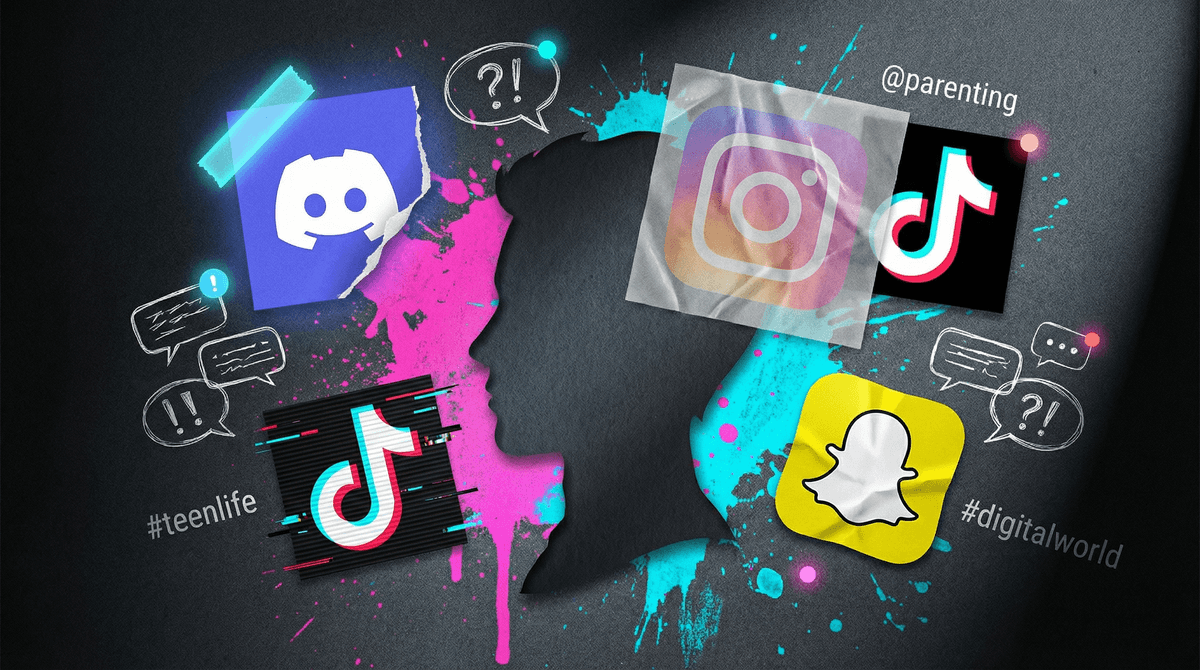
Let's be honest: when we talk about "teens and social media," we're really talking about a thousand different concerns rolled into one anxiety ball. Is my kid being bullied? Are they the bully? Why are they on their phone at 2am? What is a "finsta"? Should I be worried about TikTok trends? Is Instagram still a thing or are they all on BeReal now? (Spoiler: BeReal already peaked, you missed it.)
The truth is, social media isn't one thing anymore. It's how teens communicate, create, learn, procrastinate, flirt, fight, organize, and occasionally radicalize themselves about everything from skincare routines to political movements. It's where they figure out who they are, often in front of an audience that includes their crush, their nemesis, and that weird kid from math class.
And here's the part that keeps you up at night: you can't just ban it all and call it a day. Well, you can, but then you're potentially isolating your teen from their actual social life, which increasingly happens in DMs and group chats. It's complicated. Let's break it down.
By high school, over 95% of teens have access to a smartphone, and the average teen is on 4-5 different platforms. Here's the current lay of the land:
The Big Players:
- TikTok - The algorithm is genuinely scary good at serving up exactly what keeps your teen scrolling. Can be hilarious, creative, educational, or a pipeline to eating disorders. Often all four.
- Instagram - Still huge, but teens use it differently than you do. Main feed is curated and polished, Stories are more casual, DMs are where actual conversation happens.
- Snapchat - The primary communication tool for many teens. Streaks are still a thing (yes, really). The disappearing messages create both privacy and anxiety.
- Discord - Started as a gaming chat platform, now it's where interest-based communities live. Your teen's book club, gaming squad, or anime discussion group probably has a Discord server.
- YouTube - Not technically "social media" but teens spend HOURS here. It's background noise, education, entertainment, and yes, sometimes problematic influencer content.
The Emerging/Niche Ones:
- BeReal - Had its moment, now declining but some friend groups still use it
- Threads - Meta's Twitter alternative, some teens use it but it's more millennial energy
- Reddit - More popular with teen boys, especially for gaming, memes, and niche interests
The research on teens and social media is... messy. Headlines swing wildly between "social media is destroying a generation" and "actually it's fine, everyone calm down." The truth is somewhere in the middle and heavily depends on how your specific teen uses it.
The Real Concerns:
- Mental health impacts - Heavy social media use correlates with increased anxiety and depression, especially for girls. But correlation isn't causation, and moderate use doesn't show the same effects.
- Sleep disruption - Phones in bedrooms = less sleep. This one's pretty straightforward.
- Social comparison - Everyone's life looks better curated. Your teen knows this intellectually but feels it emotionally.
- Cyberbullying - It's real, it's brutal, and it doesn't end when school ends.
- Predatory behavior - Rare but real. DMs from strangers, grooming attempts, scams.
- Radicalization - Algorithms can create echo chambers. Your teen can go from "curious about fitness" to "consuming incel content" faster than you'd think.
The Actual Benefits (Yes, Really):
- Connection - Especially for LGBTQ+ teens, neurodivergent kids, or anyone who feels isolated in their physical community
- Creative expression - TikTok has launched legitimate creative careers
- Organization and activism - Teens are organizing around causes they care about
- Learning - Educational content is genuinely good on many platforms
- Social skill development - Learning to navigate digital communication is a real skill
Ages 13-14 (Middle School): Most platforms officially require users to be 13. In reality, many kids get on earlier, but let's talk about what's reasonable for early teens:
- Start with one or two platforms, not all of them
- Keep accounts private and actually review follower requests together initially
- No phones in bedrooms at night - this is non-negotiable for this age
- Follow your teen (but don't comment on everything, please)
- Check in weekly about what they're seeing and how it makes them feel
Consider starting with more contained platforms like Discord for specific friend groups rather than the infinite scroll of TikTok.
Ages 15-16 (Early High School): They're going to be on social media. The question is whether you're part of the conversation about it.
- Shift from monitoring to mentoring - you're building trust and judgment
- Talk about the algorithm - help them understand they're being served content designed to keep them engaged
- Discuss digital footprint - college admissions and future employers will look
- Address the comparison trap explicitly and regularly
- Keep some boundaries - screen-free family dinners, no phones after a certain time
Ages 17-18 (Late High School): They're almost adults. Your goal is to prepare them for complete independence.
- Trust but verify - you're transitioning to advisor role
- Have real conversations about consent, digital privacy, and online reputation
- Discuss content creation if they're posting publicly
- Talk about news literacy and misinformation
- Prepare them for college where they'll have complete autonomy
1. Don't Go in Blind
Get on the platforms yourself. You don't need to post, but you should understand how TikTok's algorithm works, what a Snap streak is, why Discord servers matter. You can't parent what you don't understand .
.
2. Have Ongoing Conversations, Not One "Big Talk" This isn't a sex ed lecture. It's an ongoing dialogue about what they're seeing, how it makes them feel, what's funny, what's weird, what's concerning.
3. Focus on Behavior, Not Just Time "You're on your phone too much" is less useful than "I notice you seem anxious after scrolling Instagram. What's going on?" Watch for changes in mood, sleep, eating, or social behavior.
4. Teach Critical Consumption Help them understand:
- Everyone curates their content
- The algorithm has goals (engagement) that don't align with their wellbeing
- Likes and followers are not measures of worth
- Not everything online is true or real
5. Model Healthy Use You're on your phone a lot too. Probably more than you realize. If you want them to put devices away at dinner, you need to do the same.
6. Know When to Intervene If you see signs of serious mental health issues, cyberbullying, or dangerous behavior, it's time to step in directly. Trust your gut.
"Can I see your phone?" This is the nuclear option and should be used sparingly. Random phone checks destroy trust. But if you have genuine concern about safety, you're still the parent. Frame it as: "I'm worried about X because I've noticed Y. I need to make sure you're safe."
"Everyone else has it" Yeah, probably true. But "everyone" is also dealing with the consequences. You can acknowledge social pressure while still setting boundaries: "I know this is hard. Let's talk about what would make me comfortable saying yes."
"You don't understand" Correct! You don't fully understand their social world. But you do understand mental health, manipulation, and predatory behavior. Stay curious, not defensive.
Social media isn't going away, and your teen is going to use it. Your job isn't to prevent all exposure or eliminate all risk—it's to help them develop the judgment and resilience to navigate it safely.
The goal is not to raise a teen who never makes a mistake online. The goal is to raise a teen who can recognize when something feels off, who knows how to get help, and who understands that their worth isn't determined by likes, comments, or follower counts.
Some families do strict limits and monitoring. Some do almost complete freedom with check-ins. Most are somewhere in the middle, adjusting as they go. There's no perfect approach, only what works for your specific teen in your specific family.
-
If you're just starting: Have a conversation with your teen about which platforms they want to use and why. Set initial boundaries together.
-
If you're in the thick of it: Check in this week about how social media is making them feel. Not what they're using, but how it's affecting them.
-
If you're concerned: Look into parental control options
but remember: tech solutions are supplements to relationship and communication, not replacements. -
If you want to understand specific platforms better: Check out our guides on TikTok, Instagram, Snapchat, and Discord.
You've got this. It's messy and imperfect, but so is all of parenting. The fact that you're reading this means you're already doing better than you think.