

Infinite Craft: The AI-Powered Word Game Your Kid is Playing Right Now
TL;DR: Infinite Craft is a free browser-based game where kids combine words to create new things using AI. It's basically digital alchemy with zero chat features, no accounts required, and infinite possibilities. You can play it at neal.fun/infinite-craft — bookmark that URL because your kid will ask for it approximately 47 times this week.
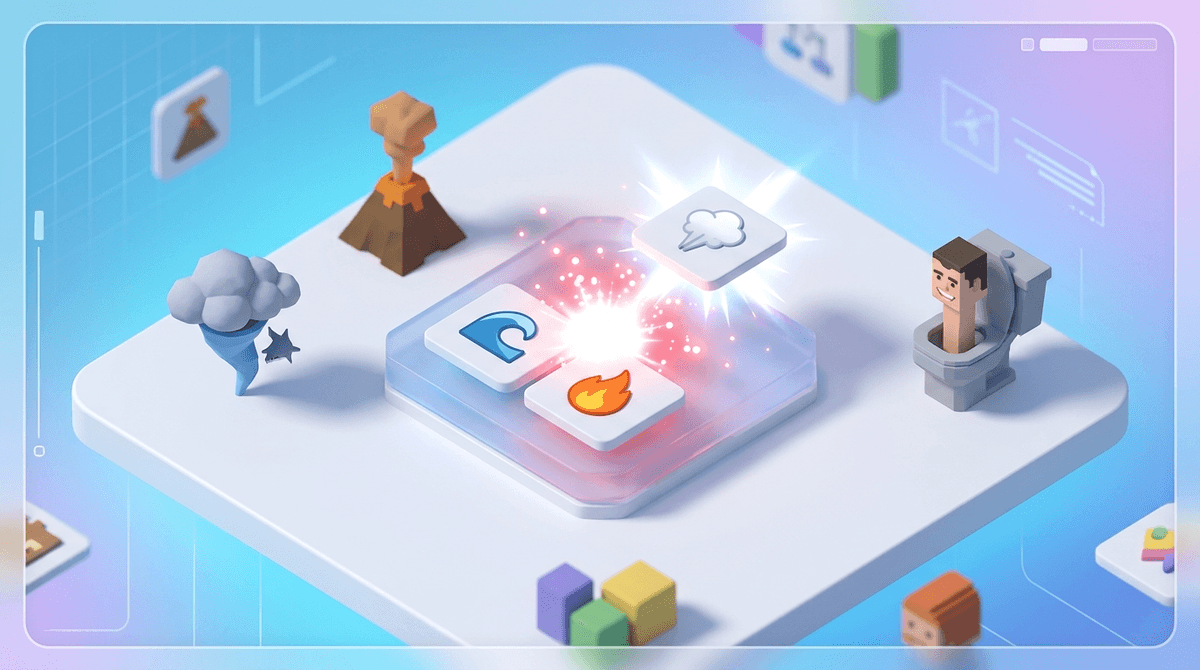
Infinite Craft is deceptively simple: you start with four elements (Water, Fire, Wind, and Earth) and combine them to create new things. Water + Fire = Steam. Earth + Wind = Dust. Steam + Dust =... well, that's where it gets weird, because the game uses AI to generate combinations on the fly.
Unlike traditional crafting games with preset recipes, Infinite Craft's combinations are generated by a language model. This means two things: first, there are literally infinite possibilities (the creator claims over a trillion combinations), and second, the results can get absolutely bonkers. Kids are creating everything from "Sharknado" to "Elon Musk's Twitter Meltdown" to "Skibidi Toilet" (of course).
The game was created by Neal Agarwal, the developer behind other viral browser games like The Password Game and various physics simulators on his site neal.fun. It launched in early 2024 and has been quietly spreading through middle school computer labs ever since.
It rewards weird thinking. The AI doesn't judge. Want to see what happens when you combine "Minecraft" with "Depression"? Go for it. The game actively encourages the kind of random, chaotic experimentation that gets kids sent to the principal's office in real life.
Discovery feels genuinely exciting. When you create something new that no one else has made before, the word appears in red with sparkles. Your kid isn't just playing a game — they're "discovering" new combinations. The first person to create "Among Us" or "Fortnite" or "Mr. Beast" in the game gets that little dopamine hit of being first.
There's no losing. You can't die, there's no timer, no levels to fail. It's pure creative sandbox energy, which is especially appealing to kids who feel pressured by competitive games like Fortnite or Roblox.
It works on school Chromebooks. This is huge. The game requires no download, no account, no email verification. Just a browser. It's the perfect "looks like I'm doing research" game during computer lab time.
Here's what makes Infinite Craft different from every other crafting game your kid has played: it's one of the first games where kids are directly interacting with generative AI as the core mechanic.
The game uses a language model (likely GPT-3.5 or similar) to determine what two words should combine into. It's not random — the AI is making associations based on how these concepts relate in its training data. Water + Mountain might give you "River" because that makes logical sense. But "Internet" + "Cat" gives you "Meme" because the AI has learned that cultural association.
For parents wondering about our community data showing that 85% of families report no AI usage while 8% use it for homework and 6% for creative projects — Infinite Craft sits in an interesting middle ground. Kids don't think of it as "using AI" the way they would ChatGPT for homework help. They're just playing a game. But they're absolutely learning how AI makes connections, how it can be unpredictable, and how it sometimes generates completely nonsensical results.
This is actually valuable exposure. Your kid is learning, through play, that AI isn't magic — it's a tool that makes associations based on patterns, and sometimes those associations are hilariously wrong.
Let's talk about what Infinite Craft doesn't have:
- No chat rooms
- No player-to-player interaction
- No accounts or personal information required
- No in-app purchases
- No ads (as of February 2026)
- No downloadable content
This makes it one of the safest online games your kid could be playing. There's literally no way for strangers to contact them, no way to spend money, and no data collection beyond basic browser analytics.
The one caveat: Because the AI generates combinations based on internet culture, kids can and will create inappropriate words. If your kid combines "Weed" with "Smoke" or types in profanity, the game will generate results. The AI isn't filtered for school-appropriate content.
That said, the game doesn't suggest inappropriate content — kids have to actively try to create it. And honestly, if your middle schooler is determined to type bad words into a computer, they'll find a way with or without Infinite Craft.
Ages 8-10: Great for building logical thinking and pattern recognition. Younger kids love the simple drag-and-drop interface and the immediate feedback. They'll mostly stick to creating things they know (animals, foods, Pokemon characters).
Ages 11-14: This is the sweet spot. Middle schoolers are old enough to appreciate the meta-humor (creating "Memes" and "Rizz" and whatever other slang is trending) while still being genuinely engaged by the discovery mechanic. With 55% of families in our community reporting gaming usage and average screen time of 4.2 hours daily, Infinite Craft is a relatively harmless way to fill some of those hours — especially compared to games with social features or microtransactions.
Ages 15+: High schoolers often use it as a background activity while doing homework or as a creative break. Some are genuinely trying to "break" the AI by finding the weirdest possible combinations.
It's genuinely educational (sort of). Kids are learning about:
- Associative thinking and pattern recognition
- How AI language models work
- Creative problem-solving
- Basic chemistry concepts (even if "Fire + Water = Steam" eventually leads to "Steam + Ninja = Twitch Streamer")
It can be surprisingly time-consuming. The "just one more combination" pull is real. Some kids will spend hours trying to create specific things or competing with friends to see who can make the longest chain of combinations.
Your kid will want to show you their discoveries. Be prepared for "MOM LOOK I MADE SKIBIDI TOILET" approximately 600 times. The appropriate response is mild interest followed by "that's nice, honey."
It works offline-ish. Once the page loads, kids can continue combining things they've already created without internet. But new AI-generated combinations require connectivity.
If your kid loves Infinite Craft, they might also enjoy:
- Little Alchemy — The original browser-based element-combining game with preset recipes (no AI)
- Doodle God — Similar concept but with more structure and progression
- Minecraft — Obviously more complex, but the crafting system scratches the same "combine things to make new things" itch
The key difference is that Infinite Craft's AI-generated combinations mean there's no wiki, no "correct" recipe list, no way to "complete" the game. This is either liberating or frustrating depending on your kid's personality.
Infinite Craft is a rare example of a viral browser game that's actually pretty harmless. No predatory monetization, no stranger danger, no toxic community — just kids combining words to see what happens.
Is it educational? Sort of. Is it a waste of time? Maybe. But in a world where 68% of kids in our community don't have smartphones and parents are increasingly cautious about gaming platforms with social features, a simple browser game that teaches basic AI concepts while keeping kids entertained isn't the worst way they could spend 30 minutes.
If your kid asks to play Infinite Craft, the answer can safely be "sure, go ahead" without the usual parental investigation required for new digital experiences. Just maybe set a timer, because three hours later they'll still be trying to figure out how to create "Skibidi Toilet Rizz" and you'll need them to come eat dinner.
Want to try it yourself? Go to neal.fun/infinite-craft and spend five minutes combining things. You'll immediately understand both the appeal and the absurdity.
Looking for other safe browser games? Check out our guide to educational websites for kids or explore math games that don't feel like homework.
Curious about AI and kids? Learn more about how kids are using AI tools and whether that's something you should be encouraging or monitoring more closely.