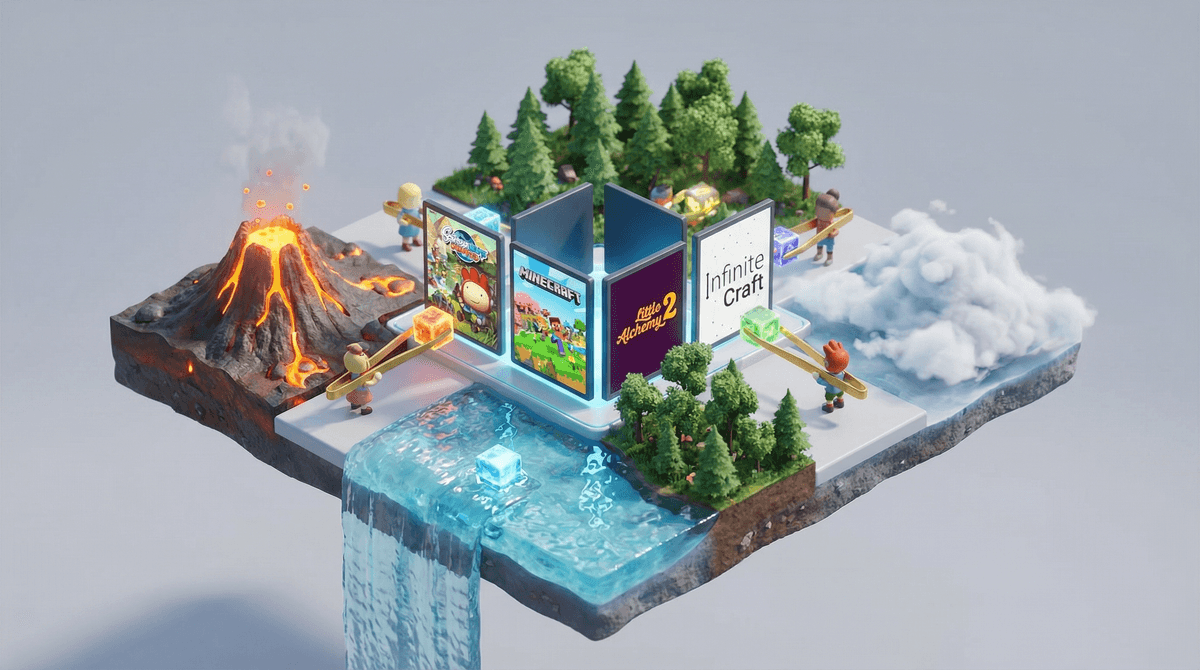
If your kid is currently obsessed with the viral "drag-and-drop anything" genre, they are essentially playing the spiritual successor to Doodle God. This 2010 title is the grandfather of the modern element-combiner. While the recent explosion of games like Infinite Craft uses AI to let you create literally anything from "Batman" to "Existential Dread," Doodle God is a much more structured affair. It’s a closed loop with a finite number of combinations, designed by humans rather than an LLM.
The logic (and the lack of it)
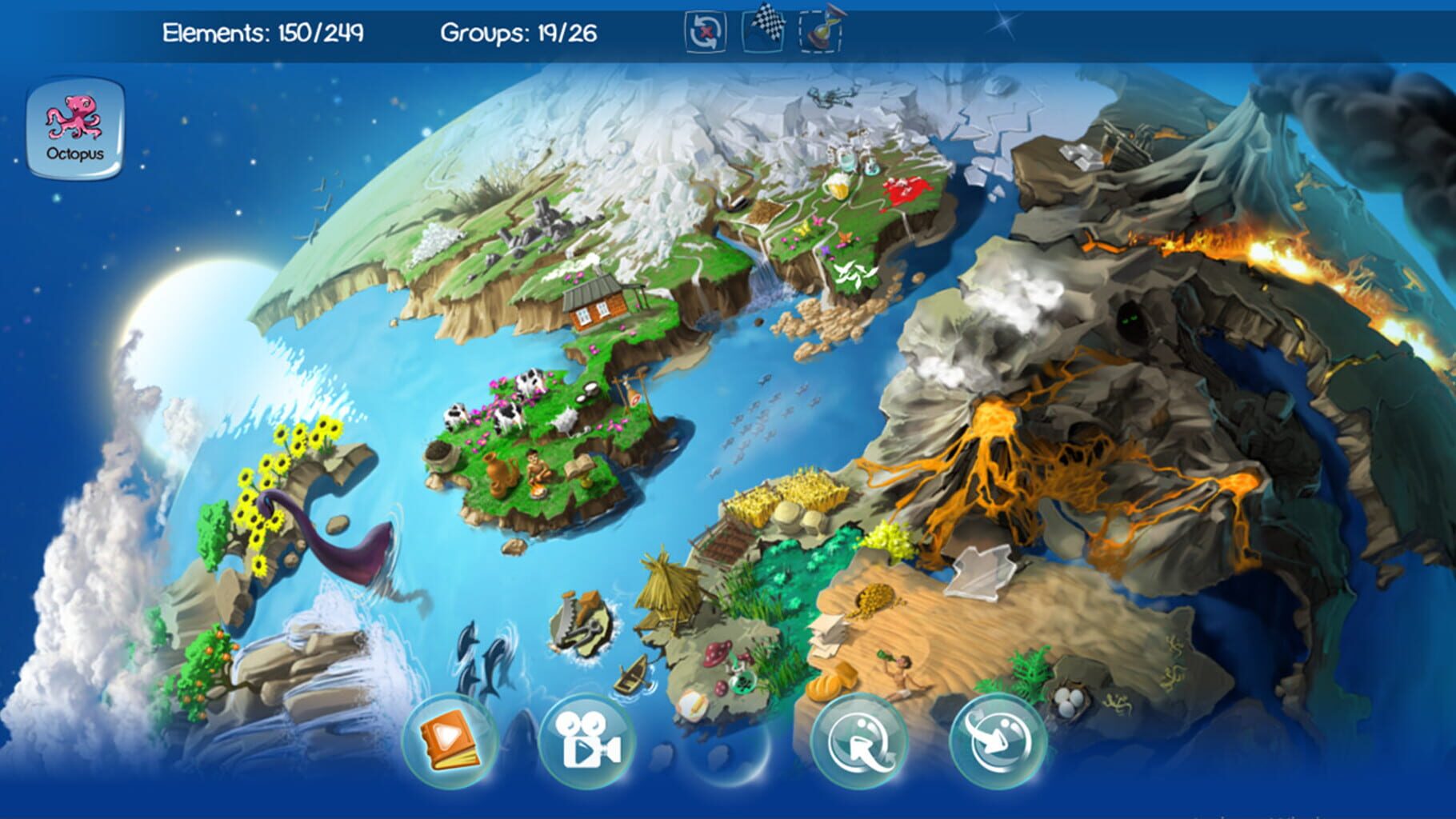
The core hook is simple: you start with Earth, Air, Fire, and Water. You drag them onto each other to see what sticks. Fire + Water = Alcohol. Air + Earth = Dust. It’s a satisfying "aha!" machine for the first hour. You feel like a genius when you deduce that combining "Life" and "Swamp" might give you a "Bacteria."
But here is the friction: as you progress, the logic gets stretchy. You’ll eventually hit a wall where the combinations stop being intuitive and start feeling like you’re just brute-forcing every possible pairing. When you’re stuck trying to figure out how to make "Cyborg" or "Lawyer," the game stops being a puzzle and starts being a chore. The IGDB score in the high 60s reflects this—it’s a great concept that eventually runs out of steam and resorts to making you click everything on everything else just to see a new icon pop up.
The "mature" content reality check
There is a lot of noise about this game containing "Sex," "Drugs," and "Alcohol." To be clear: this isn't Grand Theft Auto. You aren't watching a cutscene or engaging in any graphic behavior. You are looking at a 2D icon and a text label.
When you combine two "Humans," you get "Sex." When you combine "Alcohol" and "Wheat," you might get "Beer." For a teenager, this is background noise. For a 7-year-old, it might lead to a "What is this?" conversation five minutes after you thought they were playing a wholesome science game. If you aren't in the mood to explain what a "Zombie" or "Executioner" is while you're trying to cook dinner, this might be one to play together rather than handing over the iPad and walking away.
Why it still holds up
Despite being over a decade old, Doodle God feels right at home on a phone or a browser. It’s the ultimate "waiting for the bus" game. There are no high stakes, no ticking clocks, and no complex controls to master. It’s pure experimentation.
If your kid likes the idea of "building a world" but finds the infinite, chaotic nature of modern AI-based crafters a bit overwhelming, the fixed boundaries here are actually a selling point. It’s a finite puzzle with a clear ending. Just be prepared for the moment they ask you why "Religion" plus "Human" results in "Law" or "War"—the developers definitely injected their own cynical sense of humor into the recipe book.