

TL;DR
If you’re trying to pry a kid away from NBA 2K25 or Madden NFL 25, you need books that move as fast as their refresh rate. These aren't your dusty 1950s baseball biographies. We’re talking high-stakes, verse-style novels and graphic stories that mirror the adrenaline of a final buzzer-beater.
The Heavy Hitters:
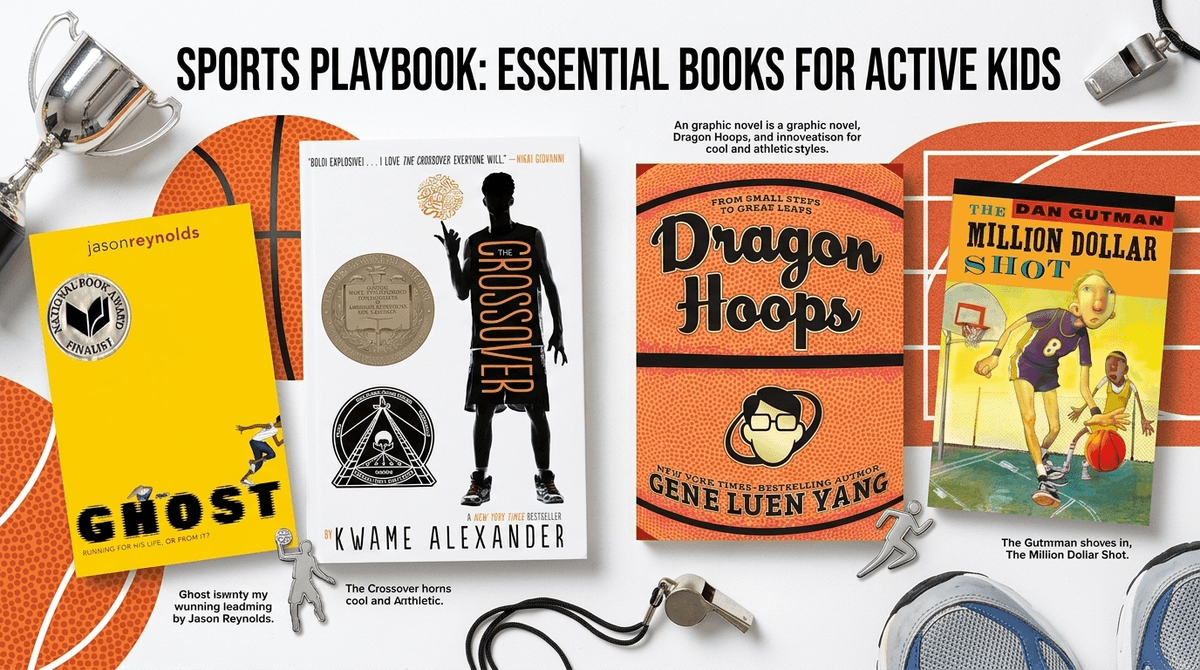
- Best for Visual Learners: Dragon Hoops by Gene Luen Yang
- Best for Fast Readers: The Crossover by Kwame Alexander
- Best for Real-World Grit: Ghost by Jason Reynolds
- Best for Younger Kids (Ages 7-10): The Million Dollar Shot
- Best for Non-Fiction Fans: Who Is LeBron James?
Check out our guide on finding the best books for reluctant readers
We’re all fighting the same battle: the dopamine hit of Roblox vs. the slow burn of a chapter book. For a lot of kids, reading feels like "work" because it lacks the immediate feedback of a video game.
Sports books bridge that gap because they are built on the same architecture as gaming: clear goals, high stakes, and intense pacing. When a kid reads about a point guard facing a hostile crowd, they’re feeling the same "clutch" pressure they experience in a Fortnite finale.
The trick is choosing books that don't talk down to them. If a book feels like a "lesson on teamwork," they’ll smell it a mile away and go back to watching MrBeast. You want stories where the sports are the engine, but the human drama is the fuel.
If your kid looks at a wall of text and immediately checks out, start with "novels in verse." These books use poetry-style formatting with lots of white space on the page. It makes the book feel "thin" and the reading experience incredibly fast.
This is the gold standard. It follows twin brothers who are basketball stars, but it’s really about family, jealousy, and growing up. The words literally bounce and move on the page like a dribble. It’s the closest thing a book can get to a highlight reel.
- Ages: 10-14
- Digital Crossover: If they like the rhythm and style of TikTok trends or music-heavy content, they’ll vibe with this.
If soccer is more their speed (think FC 25 fans), this is the soccer equivalent of The Crossover. It deals with divorce and finding your voice, but the soccer action is top-tier.
Jason Reynolds is a genius because he writes exactly how kids actually talk. No "golly-gee" sports tropes here.
Castle "Ghost" Cranshaw is running away from a traumatic past when he literally stumbles onto a track team. This isn't just about winning a race; it’s about a kid trying to stay out of trouble while dealing with a world that isn't always fair. It’s raw, funny, and deeply relatable.
Sometimes the best way to get a kid to read 300 pages is to make sure 150 of those pages are incredible illustrations.
This is a massive, beautiful graphic novel about a high school basketball team’s quest for a state championship. It weaves in the history of basketball with the personal lives of the players. It’s thick, but because it’s a graphic novel, kids fly through it.
- Ages: 12+ (some mature themes regarding racism and historical context)
- Digital Crossover: Perfect for the kid who spends hours on YouTube watching sports documentaries or "Story Time" animations.
With the massive surge of kids playing on Chess.com, sports books aren't just about the field anymore. If your kid is obsessed with "the gambit," lean into it.
For the "reluctant" younger reader, you need humor and a "what happens next?" hook.
Dan Gutman is the master of the "easy read." This book is about a kid who wins a contest to take a foul shot at an NBA finals game for a million dollars. It’s high-stakes, funny, and the chapters are short.
- Ages: 7-10
- Digital Crossover: It feels like a high-stakes Roblox challenge.
Part of the Baseball Card Adventures series. A boy finds a rare T206 Honus Wagner card and discovers he can travel through time. It’s a mix of history, fantasy, and sports.
When picking sports books, the "Reading Level" and "Interest Level" often clash.
- Middle Grade (Ages 8-12): This is the sweet spot for sports fiction. Most books focus on the "big game" but include subplots about friendship and school.
- Young Adult (Ages 13+): These get much heavier. Expect discussions on systemic racism, injury-related depression, and more intense language. Dragon Hoops falls here, as do many of Mike Lupica's later works like Travel Team.
Learn more about navigating age ratings for books
The "Reluctant Reader" label is often just a "Bored Reader" label. If your kid is obsessed with stats, don't force a novel on them right away.
- Try the "Who Was" series: Books like Who Is LeBron James? or Who Is Jackie Robinson? are huge hits because they’re bite-sized and fact-heavy.
- Magazines and Websites: Don't sleep on Sports Illustrated Kids. Reading a website or a magazine is still reading.
- Audiobooks are not cheating: If your kid listens to The Crossover on Audible while shooting hoops in the driveway, that is a win. They are consuming narrative structure and vocabulary.
Instead of asking "Did you finish your chapters?" try connecting it to their digital life:
- "That move Ghost made on the track—do you think you could pull that off in Madden?"
- "The way they describe the pressure in The Crossover reminds me of how stressed you get in a Fortnite 1v1."
Find more conversation starters about reading
Sports books work because they validate a kid's passion. If they spend all their time thinking about the court or the field, a book that does the same feels like a teammate, not a chore. Start with The Crossover—it’s the closest thing to a "guaranteed win" in the world of reluctant reading.
- Identify the "Digital Hook": Does your kid like the strategy of NBA 2K or the speed of Rocket League?
- Pick a Format: If they’re visual, go graphic novel (Dragon Hoops). If they’re impatient, go verse (The Crossover).
- Leave it on the "Table": Don't make it a mandatory assignment. Just leave the book on the coffee table or the car seat. Curiosity usually wins.
Check out our full guide on screen-free activities for sports fans