

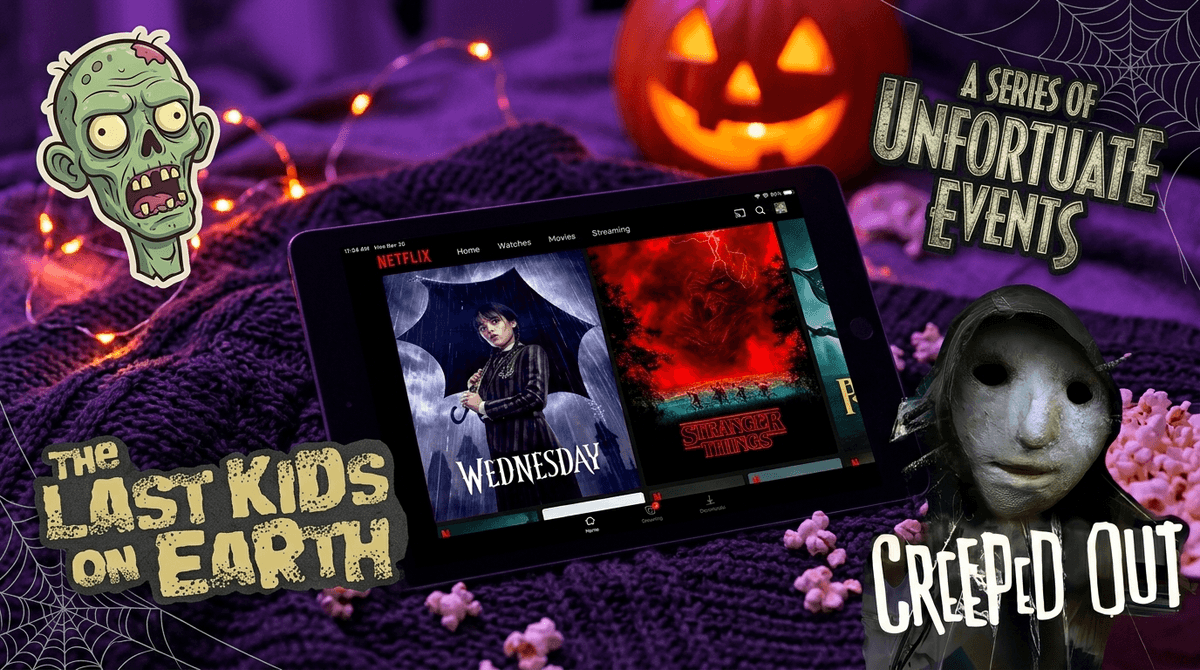
TL;DR: The Spooky Cheat Sheet
If you’re in a rush and just need to know what to put on while you fold laundry, here are the top picks for different "scare tolerances":
- The "Cozy Spooky" (Ages 7+): The Last Kids on Earth and A Series of Unfortunate Events.
- The "Social Must-Watch" (Ages 11+): Wednesday. It’s the one everyone is talking about.
- The "Actually Pretty Intense" (Ages 13+): Stranger Things and Locke & Key.
- The "Black Mirror for Kids" (Ages 10+): Creeped Out.
Get a spooky watchlist based on your kid's favorite games
We’ve all been there: it’s Friday night, the kids want something "scary but not too scary," and you’re staring at the Netflix home screen like it’s a bomb you’re trying to defuse. One wrong choice and you’re dealing with 2:00 AM "there’s a monster in my closet" visits for the next three weeks.
The "spooky" genre for kids is a massive spectrum. On one end, you’ve got animated zombies that are basically slapstick comedians; on the other, you’ve got psychological dread that makes even us adults want to sleep with the lights on. With Wednesday season 2 on the horizon and the final season of Stranger Things looming, the pressure to let kids "level up" their horror game is real.
According to Screenwise community data, about 65% of middle schoolers have seen at least one TV-14 horror series, often because of the "social currency" that comes with knowing the memes. If your kid is calling everything "Ohio" or talking about "Skibidi" monsters, they’re already swimming in the weird part of the internet—spooky Netflix shows are often their way of trying to make sense of that adrenaline rush in a structured way.
It’s not just about the jump scares. For kids, watching spooky content is a "safe" way to practice being brave. It’s a controlled environment where they can feel high-intensity emotions—fear, anxiety, relief—knowing that the couch is soft and the snacks are nearby.
It also helps them navigate the "uncanny valley" of the digital age. When they see a monster on Stranger Things, they’re learning to process things that look "wrong," which is a surprisingly useful skill in an era of AI-generated deepfakes and weird YouTube lore.
These are the shows that lean into the "monster-of-the-week" vibe without the deep psychological trauma.
Think of this as a "zombie apocalypse lite." It’s based on the popular The Last Kids on Earth book series and plays out like a video game. There are monsters and zombies, but the tone is adventurous and funny. It’s less about the horror of the end of the world and more about the ultimate treehouse and cool gadgets. The Verdict: Great for kids who love Minecraft or Roblox.
This show is "spooky" in an aesthetic, gothic way rather than a "monster under the bed" way. It’s dark, cynical, and features a villain (Count Olaf) who is genuinely threatening but also ridiculous. It’s a fantastic way to introduce kids to more complex storytelling and the idea that not every ending is happy. The Verdict: Perfect for the kid who thinks Bluey is for babies but isn't ready for actual gore.
This one is a gem. It’s set in a haunted theme park and deals with demons and ghosts, but it’s wrapped in a very bright, diverse, and funny animated package. It handles themes of identity and anxiety alongside the paranormal stuff. The Verdict: A solid pick for 9-12 year olds who want a cohesive story with their scares.
Check out our guide to the best graphic novels for kids who love spooky shows
This is where the line gets blurry. These shows are often rated TV-14, but Screenwise data shows that a huge chunk of 5th and 6th graders are watching them anyway to keep up with friends.
Let’s be real: Wednesday is essentially a high-budget CW show with a gothic coat of paint. It’s a murder mystery at a boarding school. There is some blood and a disembodied hand (Thing) that might creep out very young viewers, but for the 11+ crowd, it’s mostly about the "deadpan girl" aesthetic and the viral dance scenes. The Warning: It deals with some darker themes like secret societies and attempted murder, but it’s rarely "nightmare fuel."
This is the big one. If you haven't seen it, be warned: Season 1 is a nostalgic sci-fi mystery. Season 4 is a full-blown slasher movie. The "scare factor" ramps up significantly as the seasons progress. By the time you get to Vecna (the season 4 villain), you’re looking at body horror and psychological torture. The Verdict: If your kid is under 12, watch it with them first. If they’re sensitive to "bones snapping" sounds or psychological distress, maybe wait. Read our full guide on whether your kid is ready for Stranger Things
This is an anthology series, which means every episode is a different story. It’s basically Goosebumps for the modern age. Some episodes are harmless, but others have very dark, "Twilight Zone" style endings where the protagonist doesn't win. The Warning: The "Curious" (the masked figure who introduces the episodes) is genuinely unsettling to look at.
Based on a brilliant comic book series, this show is about a house with magical keys. It sounds like a fantasy, but it’s definitely "horror-adjacent." There’s a demon who manipulates children, some fairly violent deaths, and a lot of trauma processing. The Verdict: It’s a great show, but it’s "heavy." Best for the 13+ crowd who can handle complex emotional stakes alongside the supernatural stuff.
When you're deciding if a show is okay, try to distinguish between two types of fear:
- The Jump Scare: A loud noise and a monster popping out. This causes a quick spike in heart rate but is usually forgotten five minutes later.
- The Dread: A feeling that something is fundamentally wrong, or a character being trapped in a hopeless situation. This is what sticks with kids at 2:00 AM.
Shows like Creeped Out rely heavily on dread. Shows like The Last Kids on Earth rely on jump scares. Most kids handle jump scares better than dread.
If your kid watches something that ends up being a bit too much, don't make it a "I told you so" moment. That just makes them hide their media consumption from you in the future. Instead:
- Deconstruct the Magic: Talk about the "behind the scenes." Look up how the makeup for Vecna in Stranger Things was made (it’s mostly latex and blue slime). Seeing the actor in a chair eating a sandwich while in full demon makeup kills the fear instantly.
- The Remote Control Rule: Give them the power. Tell them, "If you feel that 'pit in your stomach' feeling, you have permission to fast-forward or turn it off. No judgment."
- Contextualize the "Brain Rot": If they’re watching "spooky" YouTube channels like LankyBox or looking at Skibidi Toilet memes, explain that Netflix shows are professional versions of those stories. It helps them see the difference between "viral weirdness" and actual storytelling.
Learn more about the "Skibidi Toilet" phenomenon and why kids are obsessed
Not all spooky shows are created equal. While Netflix’s algorithm might lump Wednesday and Stranger Things together, the intensity levels are worlds apart.
If your family is just starting to dip your toes into the horror genre, start with the animated stuff. If your middle schooler is begging for the "big" shows, watch an episode or two together. Not only does it let you vet the content, but it also gives you a shared language to talk about the themes—and let's be honest, Stranger Things is actually pretty good TV for us parents, too.
- Check the Wise Score: Before you hit play, look up the show on Screenwise to see the community's "Scare Rating."
- Set the Vibe: If you're worried about nightmares, watch spooky shows in the afternoon rather than right before bed.
- Ask the Chatbot: Not sure if a specific episode is okay? Get a content breakdown of any Netflix episode