

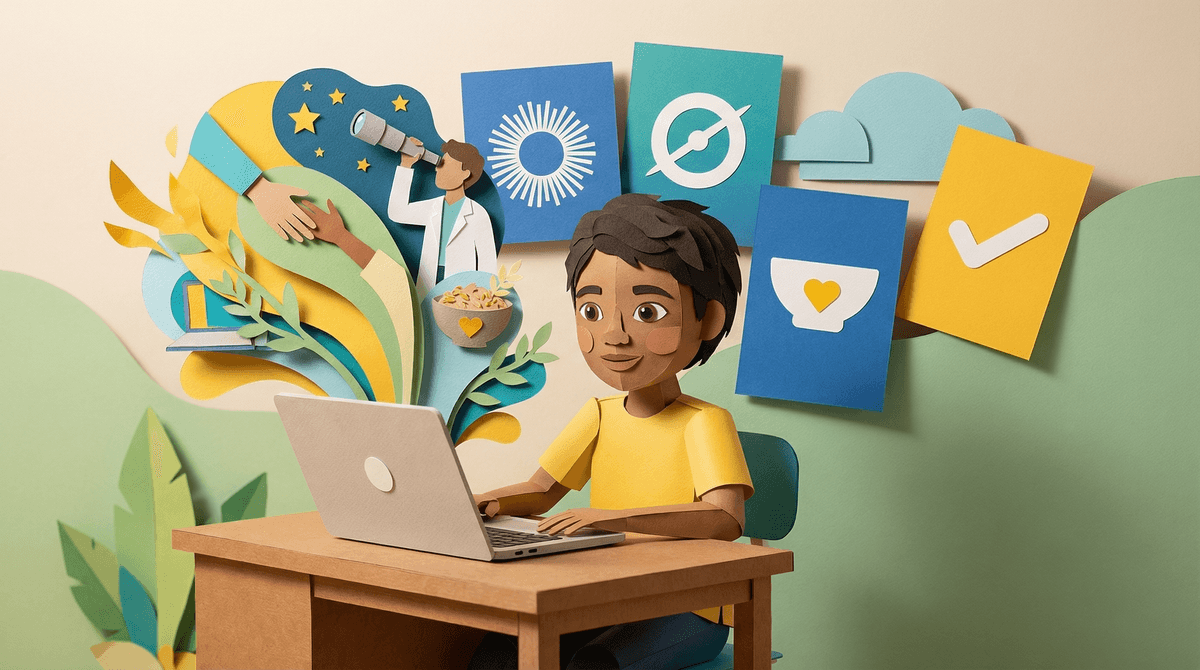
Here's a plot twist for your next screen time negotiation: not all digital time is created equal. While we're over here monitoring Fortnite hours and TikTok scrolls, there's a whole category of websites and platforms designed to turn kids' online energy into actual real-world impact.
These aren't your dusty "educational websites" from 2005. We're talking about platforms where kids can volunteer virtually, raise money for causes they care about, learn about global issues, connect with other young changemakers, and yes—actually make a tangible difference. Think of it as the antidote to doomscrolling, but for kids who aren't even old enough to doomscroll yet.
The landscape includes everything from micro-volunteering platforms (quick 5-minute actions) to full-blown youth activism hubs, from letter-writing campaigns to kids helping other kids with homework across the world.
Let's be honest: our kids are growing up in a world that can feel pretty heavy. Climate anxiety is real. Social media feeds are a constant stream of problems. And "be the change you wish to see in the world" can feel impossibly abstract when you're 11 and your main sphere of influence is your Minecraft server.
These platforms offer something crucial: agency. They transform kids from passive consumers of content (and problems) into active participants in solutions. And here's the thing—the research backs this up. Kids who engage in volunteering and social impact activities show higher levels of empathy, stronger civic engagement, better academic outcomes, and yes, even improved mental health.
Plus, there's a sneaky benefit for us: when kids spend time on these platforms, you can actually feel good about screen time instead of guilty about it. Revolutionary, I know.
DoSomething.org (Ages 13+)
The OG of youth activism platforms. Over 6 million members doing everything from texting campaigns to organizing local cleanups. It's like if social media and volunteering had a baby. Kids can browse causes, take action, and track their impact. The interface is genuinely engaging—not that "how do you do, fellow kids" vibe some sites have.
Freerice (Ages 8+)
This one's brilliant in its simplicity: answer trivia questions, donate rice to fight hunger through the World Food Programme. Every correct answer = 10 grains of rice donated by sponsors. It's educational, it's addictive (in a good way), and kids can literally see their impact adding up. Great for elementary and middle schoolers who aren't ready for more complex activism but want to do something.
Letters to a Pre-Scientist (Ages 10+)
Kids exchange letters with real scientists, engineers, and researchers. It's part mentorship, part STEM education, part pen pal program. The "doing good" here is mutual—kids get exposure to career paths and role models, scientists get to inspire the next generation. Beautiful stuff.
Zooniverse (Ages 10+)
Citizen science at its finest. Kids can help real researchers by classifying galaxies, transcribing historical documents, identifying animals in camera trap photos, or tracking penguin populations. It's like crowdsourcing meets actual scientific research. Your kid can contribute to published papers from the couch.
Kids Boost (Ages 8-15)
A platform that teaches kids about UN Sustainable Development Goals through videos, then lets them take action through challenges and campaigns. It's global citizenship education wrapped in an interface that doesn't feel like homework.
Be My Eyes (Ages 13+ with parent)
An app that connects blind and low-vision people with sighted volunteers through live video calls for quick assistance—reading labels, navigating spaces, checking if the milk is expired. Calls are usually under 5 minutes. This one requires maturity and parent involvement, but it's incredibly impactful and teaches real-world helping.
Ages 8-10: Start with structured, low-stakes impact
- [Freerice](https://screenwiseapp.com/media/freerice-game for that instant gratification of seeing numbers go up
- Zooniverse projects with clear tasks (animal identification is perfect for this age)
- Parent-supervised letter writing or card-making campaigns
Ages 11-13: Building independence and deeper understanding
- Kids Boost for learning about global issues
- Zooniverse projects that match their interests (space kids → galaxy classification, animal lovers → wildlife projects)
- Letter-writing campaigns they can manage independently
- Learn about how to talk to tweens about social issues

Ages 14+: Full engagement and leadership
- DoSomething.org campaigns they can run
- Be My Eyes volunteering (with initial parent check-in)
- Creating their own fundraising campaigns on platforms like GoFundMe for causes they care about
- Mentoring younger kids on some of these platforms
This isn't a "set it and forget it" situation. The most meaningful engagement happens when parents are at least somewhat involved—asking questions, celebrating impact, helping kids process what they're learning about the world's problems.
Watch for burnout. Yes, even kids can get compassion fatigue. If your teen is spending hours every day on activism platforms and seems stressed rather than energized, it's worth a conversation. The goal is empowerment, not overwhelm.
Verify before donating. If your kid wants to fundraise or donate, do your due diligence. Use Charity Navigator or GuideStar to check out organizations. Teach kids to do the same—it's a crucial digital literacy skill.
The "voluntourism" trap applies online too. Some platforms are more about making kids feel good than actually doing good. Look for transparency about impact, partnerships with legitimate organizations, and clear explanations of where donations or efforts go.
Privacy matters. Even on do-good platforms, read the privacy policies. Some collect significant data. For kids under 13, COPPA protections apply. For teens, have conversations about what they're comfortable sharing.
The difference between this becoming a meaningful part of your kid's digital life versus a one-time thing often comes down to connection and consistency.
Connect it to their existing interests. Animal-obsessed kid? Zooniverse wildlife projects. Space nerd? Galaxy classification. Social justice warrior in training? DoSomething campaigns. The more it aligns with what they already care about, the more likely they'll stick with it.
Make it social. Everything is better with friends. Can they get their friend group involved in a campaign? Can siblings work on Freerice together? Social good + social connection = actual engagement.
Celebrate the impact. Screenshot those Freerice totals. Print out certificates from completed projects. Talk about it at dinner. Kids need to see that this matters to you, not just as "acceptable screen time" but as genuine contribution to the world.
Balance action with understanding. These platforms are most powerful when paired with conversations about why these issues exist and how systems change. Otherwise it can feel like digital band-aids on structural problems.
Look, I'm not going to pretend that 30 minutes on DoSomething.org is going to transform your kid into the next Greta Thunberg. But here's what it can do: show them that they have power, that their actions matter, that the internet can be used for something other than consuming content or performing for likes.
In a digital landscape that often feels designed to make kids feel inadequate, anxious, or addicted, platforms that help kids do good offer something radical: purpose. They transform screen time from something we're constantly negotiating and feeling guilty about into something that actually aligns with our values as parents.
Is it going to replace outdoor play and face-to-face volunteering? No, and it shouldn't. But as one piece of a balanced digital diet? These sites prove that screens and service aren't mutually exclusive.
Start small. Pick one platform that matches your kid's age and interests. Spend 15 minutes exploring it together. See what resonates.
Create a routine. Maybe it's "Freerice Friday" or "Zooniverse Sunday morning." Consistency matters more than duration.
Ask questions. "What did you learn today?" "Why do you think this issue matters?" "How did it feel to contribute?" The reflection is where the real growth happens.
Model it. Kids are more likely to engage if they see you doing it too. Make it a family thing sometimes.
And hey—next time someone gives you grief about your kid's screen time, you can casually mention they spent the afternoon helping scientists track penguin populations or donating rice to fight world hunger. Not too shabby for a Tuesday.