

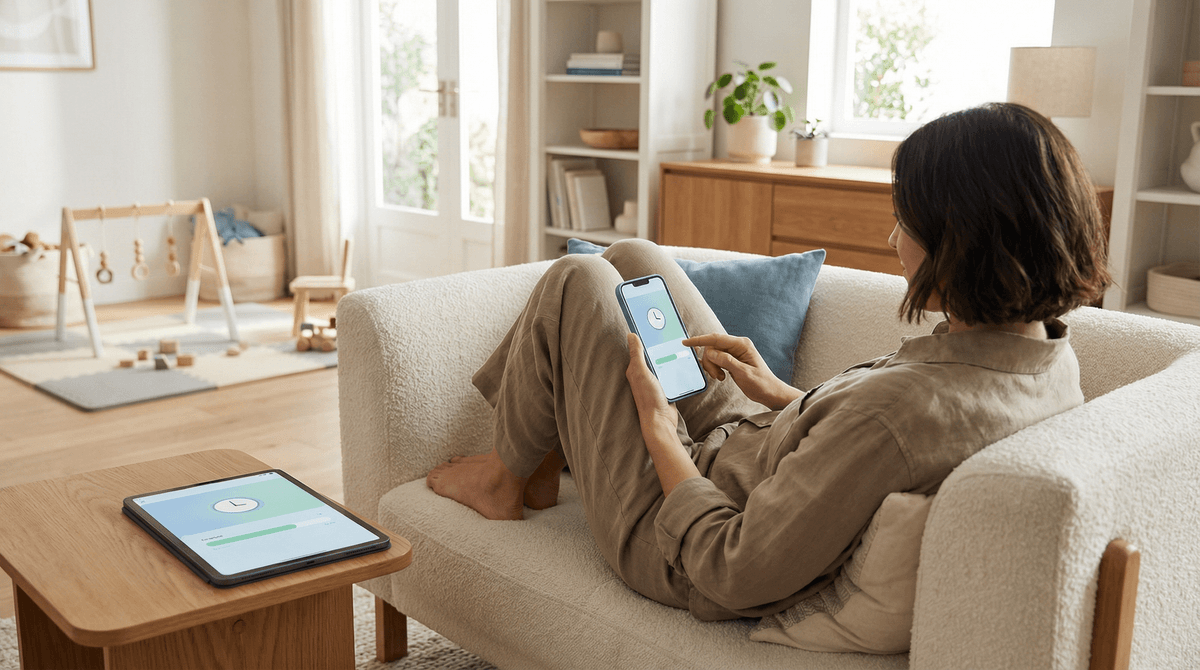
TL;DR: Setting up parental controls shouldn't feel like you’re hacking the Pentagon. For iOS, it’s all about Screen Time. For Android, you need Google Family Link. The goal isn't "surveillance"—it's creating digital guardrails so your kid doesn't end up in a TikTok rabbit hole at 2 AM or accidentally spend $400 on Roblox "limiteds."
Quick Links for the Modern Parent:
We’ve all been there. You hand your kid a phone so they can call you after soccer practice, and three weeks later you realize they’ve developed a "skibidi" accent and their brain is essentially fried from 12-hour YouTube Shorts marathons.
It’s 2026. The tech has changed, the "brain rot" has evolved, and the parental controls have—thankfully—gotten a lot more intuitive. You don't need to be a software engineer to lock down a device. You just need about fifteen minutes and a solid plan. Here is how to stop being the "Tech Police" and start being the "Digital Architect" of your home.
Apple has leaned heavily into "Communication Safety" and "Distance Awareness" in the latest iOS updates. If your kid is on an iPhone or iPad, Screen Time is your command center.
1. Set Up Family Sharing
Don't just hand-code settings on their physical device. Set up Family Sharing from your own iPhone. This allows you to approve or decline app requests (the "Ask to Buy" feature) directly from your Apple Watch or phone. It’s the ultimate power move when your kid wants to download Brawl Stars for the tenth time.
2. Downtime and App Limits
In 2026, iOS allows for "Contextual Downtime." You can set a schedule where only "Always Allowed" apps—like Phone, Messages, and Apple Maps—work.
- Pro Tip: Group apps by category. You can give them 1 hour for "Social Media" (covering Instagram and Snapchat) but unlimited time for "Education" apps like Duolingo or Khan Academy.
3. Content & Privacy Restrictions
This is where you toggle the "No Adult Websites" switch. It’s not foolproof, but it filters out the vast majority of the garbage. Also, make sure to disable "Account Changes" so your teen can’t sign out of iCloud to bypass your tracking.

If your kid has a Samsung, Pixel, or any other Android device, Google Family Link is your best friend. In 2026, Google has integrated more "AI-driven" content warnings, which are actually surprisingly helpful.
1. App-Specific Curfews
Unlike iOS, which tends to group things, Android is great for micro-managing specific "problem" apps. If your kid is obsessed with CapCut edits, you can put a hard 30-minute limit on just that app without affecting their ability to use Spotify for music.
2. The "School Time" Feature
Google’s 2026 "School Time" update is a game changer. It allows you to whitelist only specific educational tools like Google Classroom and Canvas during school hours. Everything else—including those distracting Discord notifications—is silenced until the final bell rings.
3. Remote Lock
There is nothing quite as satisfying as the "Lock Devices Now" button when it’s time for dinner and your kid is "just finishing one more round" of Fortnite. It turns the phone into a very expensive brick until you decide otherwise.
Learn more about the differences between iOS and Android for kids
We aren't just worried about "stranger danger" anymore. The risks in 2026 are more about dopamine loops and algorithmic manipulation.
- The "Ohio" Effect: Kids are consuming content at a rate that makes 2020 look slow. Apps like TikTok and YouTube Shorts are designed to keep them scrolling. Parental controls aren't a punishment; they are a necessary "speed bump" for a developing brain that hasn't finished its prefrontal cortex yet.
- The Entrepreneurship Trap: Roblox and Rec Room tell kids they can be "developers," but mostly they just teach them how to spend money they don't have. Use the "Purchase Request" features on both iOS and Android to keep your bank account from being drained by digital hats.
Ages 6-9: The "Walled Garden" Phase
At this age, they shouldn't have an open browser. Period.
- iOS: Use "Allowed Websites Only" and only add sites like PBS Kids or National Geographic Kids.
- Android: Use the "YouTube Kids" filter rather than the main YouTube app.
Ages 10-12: The "Training Wheels" Phase
This is when the social pressure starts. They’ll want Messenger Kids or WhatsApp.
- Action: Set app limits, but allow them to "Request More Time." This starts a conversation about why they need more time rather than just a hard "No."
Ages 13+: The "Trust but Verify" Phase
By now, they can probably bypass half your settings if they really want to (kids are basically professional hackers when motivated).
- Action: Focus on "Communication Safety" features that blur sensitive images and "Location Sharing" for safety. Switch the focus from "blocking" to "mentoring."
Let’s be real: Parental controls are not a substitute for parenting.
If you think you can just toggle a few switches and never talk to your kid about the internet again, you’re going to have a bad time. Apps like Snapchat are notoriously difficult to monitor because of disappearing messages. Instagram "Teen Accounts" are a nice PR move, but they still feed your kid an algorithm designed to keep them insecure and engaged.
The best parental control is a kid who feels comfortable telling you when they saw something "Ohio" (weird/cringe) or "sus" (suspicious) without fear of you immediately snatching the phone away forever.
When you set these up, don't do it in secret. Sit them down and say:
""I’m putting some guardrails on your phone. Not because I don't trust you, but because these apps are literally designed by geniuses to make you addicted to them. These limits are here to help you keep your 'rizz' (charisma/confidence) in the real world, not just the digital one."
(Okay, maybe don't use "rizz" if you want to keep any shred of dignity, but you get the point.)
- For Apple families: Use Family Sharing + Screen Time.
- For Android families: Use Google Family Link.
- For everyone: Set a "Downtime" that starts 30 minutes before bed.
- The Golden Rule: If an app is making your kid a jerk, delete the app. No "parental control" is more effective than the "Uninstall" button.
Setting these up today means fewer arguments tomorrow. You’ve got this.