

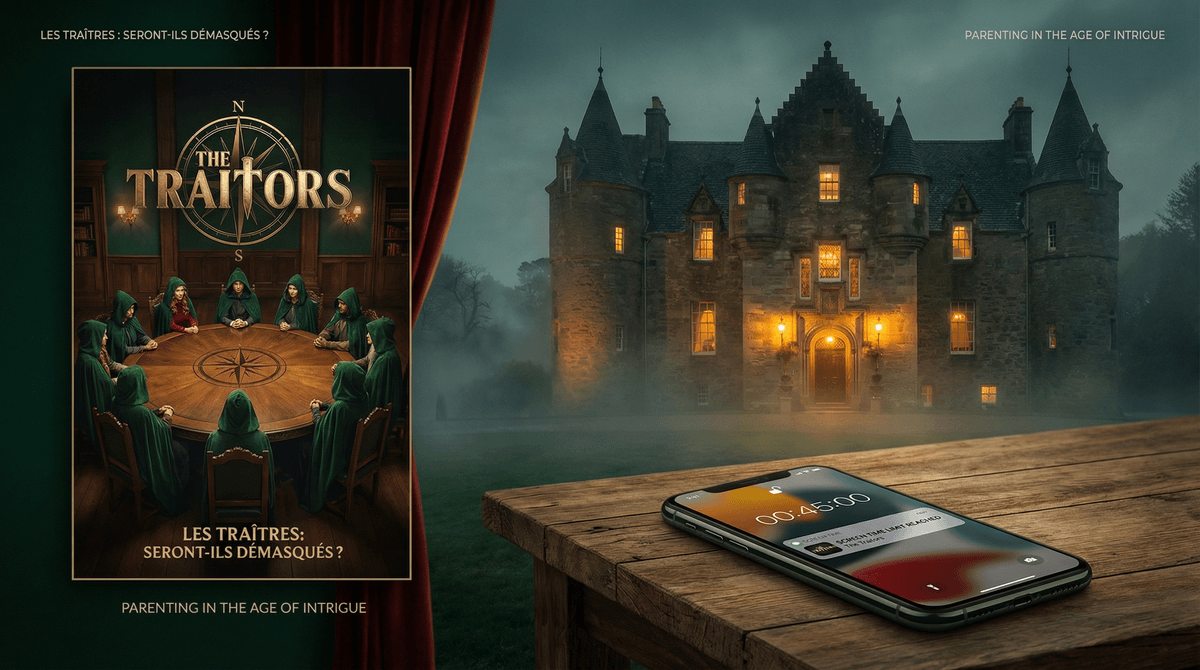
Screen Time Rules for Binge-Watching The Traitors
The Traitors is peak reality TV — strategic, dramatic, and legitimately addictive for teens and adults alike. If your family is hooked, here's how to set boundaries that respect the show's binge-worthiness while keeping screen time in check:
- Set episode limits (2-3 per viewing session max)
- Schedule viewing nights instead of random binges
- Use it as family time — watch together and discuss the strategy
- Balance with other activities — one episode earned per hour of non-screen time
- No devices during viewing — make it intentional, not background noise
Looking for other shows that won't rot brains? Check out our guides to reality competition shows for families and strategic thinking shows.
The Traitors is a reality competition show that's basically Mafia meets Survivor meets a Scottish castle. A group of contestants (called "Faithfuls") tries to identify the "Traitors" among them while completing challenges to build a prize pot. The Traitors secretly eliminate Faithfuls each night, and if they make it to the end without being caught, they steal all the money.
It's on Peacock, hosted by Alan Cumming in full theatrical glory, and it's genuinely one of the smartest reality shows on TV right now. The US version is on Season 3, and the UK version (which many consider superior) is also available.
Age rating: TV-14, though Common Sense Media suggests 16+ due to strategic manipulation themes and some mature language.
Let's be real: this show is designed to be binged. Each episode ends on a cliffhanger. The strategic gameplay is complex enough to keep adults engaged, but accessible enough for teens to follow. The social dynamics are fascinating — it's basically a masterclass in reading people, building alliances, and strategic deception.
Unlike a lot of reality TV, The Traitors rewards intelligence and strategy over physical prowess or looks. Watching people work through the game theory in real-time is genuinely compelling. And the roundtable discussions where contestants vote to "banish" someone? Chef's kiss of dramatic tension.
The problem? It's very easy to say "just one more episode" and suddenly it's 2am and you've watched six episodes and have work in the morning. Ask me how I know.
Here's what makes The Traitors particularly tricky from a screen time perspective:
Episodes are 45-60 minutes each, so "just one more" means another full hour. Unlike 22-minute sitcoms, you can't easily squeeze in a quick episode.
The cliffhangers are ruthless. Every episode ends right before a major reveal or decision. The show knows exactly what it's doing.
It drops all at once (or weekly, depending on the season), which means the temptation to binge is built into the release model.
It's genuinely engaging, which means it's not mindless background noise — but that also means it's consuming focused attention for extended periods.
For teens 14-16: The Traitors can actually be a great conversation starter about social dynamics, trust, and strategic thinking. The manipulation and deception are all within the context of a game, which makes it less concerning than, say, shows that glorify real-world lying. That said, some kids might find the betrayal themes stressful or take the "lying is strategy" lessons a bit too literally.
For teens 16+: This is solidly in their wheelhouse. The strategic complexity will appeal to the same kids who love Among Us or Werewolf. It's also a good opportunity to discuss how reality TV editing works and how producers shape narratives.
For younger kids: Hard pass. The entire premise is about deception and manipulation, and while it's all in good fun for adults and older teens, younger kids don't have the cognitive framework to understand why lying is okay in this context but not in real life. Stick with The Great British Baking Show for wholesome competition content.
Strategy 1: Episode Limits Per Session
The most straightforward approach: set a hard limit of 2-3 episodes per viewing session. This gives you enough time to get invested (and maybe see one full challenge and roundtable), but prevents the 6-hour spiral.
How to enforce it: Set a timer when you start watching. When it goes off, that's it for the night. No negotiations, no "but this episode is about to reveal who the Traitor is!" — because every episode is about to reveal something.
Why it works: It creates natural stopping points and builds anticipation for the next viewing session. The show will still be there tomorrow.
Strategy 2: Scheduled Viewing Nights
Instead of allowing random binge sessions whenever, designate specific nights as Traitors nights. Maybe it's Friday and Saturday after homework is done, or Sunday evenings as a family.
How to enforce it: Treat it like an event. Make popcorn, turn off phones, watch together. This transforms it from mindless consumption into intentional family time.
Why it works: It adds structure and makes the viewing experience more special. Plus, watching together means you can discuss the strategy and social dynamics in real-time, which turns it into a teaching moment about reading people and understanding manipulation tactics.
Strategy 3: Earn-Your-Episodes System
For families who want to tie screen time to other activities, try an earn-it model: for every hour of non-screen activity (reading, outdoor play, sports, homework, chores), they earn one episode of The Traitors.
How to enforce it: Keep a simple chart or use a screen time management app. When they've logged the required non-screen time, they can watch an episode.
Why it works: It creates a natural balance and makes screen time feel like a reward rather than a default activity. Plus, it encourages the behaviors you want to see more of.
Strategy 4: No Multi-Screening
If you're going to watch The Traitors, actually watch it. No scrolling TikTok while the show plays in the background. No texting through the roundtable discussions.
How to enforce it: Phones go in a basket or another room during viewing time. If someone needs to check their phone, pause the show.
Why it works: It makes the screen time more intentional and reduces total daily screen exposure. Plus, you'll actually catch all the strategic nuances and subtle social cues that make the show great.
The show is manipulative by design — and that's worth discussing. Talk about how producers edit footage to create narratives, how music and camera angles influence our perception of contestants, and how reality TV is a constructed story, not pure documentation.
The lying is contextual. In The Traitors, deception is part of the game rules. It's not modeling real-world dishonesty any more than Poker or Coup are. But it's worth having that conversation explicitly with teens who might not automatically make that distinction.
It can spark great discussions about trust, alliances, risk assessment, and reading social cues. Use it as a jumping-off point: "Why do you think she made that move?" "Would you have trusted him?" "What would your strategy be?"
Watch for binge behavior patterns. If your teen is staying up until 3am to finish the season, or if the show is interfering with homework, sleep, or other responsibilities, it's time to tighten the boundaries. Learn more about recognizing problematic binge-watching behaviors .
.
The Traitors is genuinely excellent television — smart, strategic, and way more engaging than most reality TV. It's not "brain rot" content, but it is designed to be binged, which means you need guardrails.
The key is making viewing intentional rather than compulsive. Set clear limits, stick to them, and consider watching together so you can discuss the strategy and social dynamics. Used well, it's actually a great tool for teaching critical thinking about media, social manipulation, and game theory.
Just don't let "one more episode" turn into "whoops it's 2am and we have to be up in five hours."
- Set your family's viewing schedule for the week
- Decide on episode limits that work for your household
- Watch the first episode together and discuss the strategy
- Check out our guide to strategic board games if your kids love the deduction aspect
- Explore other reality competition shows that reward strategy over drama
And if you need help having the "no, we're not watching another episode" conversation without World War III breaking out, our chat can help with that.