

Digital Pacifiers: Navigating Screen Time for the Under-Two Crowd
Look, we need to talk about screens and babies. Because whether you're a "zero screens before two" absolutist or you've definitely handed your phone to your 18-month-old in a restaurant while silently begging them to just please let you finish one meal in peace — this conversation is happening in your house.
The guilt around baby screen time is real. But so is the reality of modern parenting. So let's cut through the noise and figure out what actually matters here.
The American Academy of Pediatrics updated their guidelines in 2016, and here's what they recommend for kids under 18 months: avoid screen media other than video chatting. For kids 18-24 months, they say if you're going to introduce screens, choose high-quality programming and watch it together.
But why? What's the big deal?
The first two years are when babies' brains are developing at an absolutely wild pace. They're learning language, cause and effect, emotional regulation, and how to be human — primarily through face-to-face interactions, physical play, and exploring their environment. Screens can't replicate that. When a baby watches a screen, they're in receive-only mode. There's no back-and-forth, no contingent response when they babble or point or try something new.
Research shows that babies under two don't really learn from screens the way they learn from real people. It's called the "video deficit effect" — basically, babies need 3D experiences with real humans to wire their brains properly. A screen showing someone stacking blocks doesn't teach a baby about gravity and spatial relationships the way actually knocking over blocks does.
And here's the thing about language development: babies learn to talk by having conversations. When you respond to their sounds, when you narrate what you're doing, when you read a book together and they point at the dog and you say "yes! Dog! Woof woof!" — that's the magic. A TV show, even an educational one, can't do that.
Okay, so that's the ideal. Now let's talk about Thursday at 5:47pm when you haven't showered in two days, the baby won't nap, you need to answer one work email, and you're about to lose your mind.
Screens are not poison. Putting on Bluey for 20 minutes so you can take a breath is not going to permanently damage your child's developing brain. The research is about patterns, not isolated incidents. It's about what happens regularly, not what happens once.
The real risks with baby screen time are:
Displacement - Every minute spent watching a screen is a minute not spent doing something more developmentally beneficial. For babies, that's basically everything else: playing, moving, babbling, exploring, sleeping.
Background TV - This is actually the bigger issue for many families. Having the TV on "for adults" while babies play nearby has been linked to reduced parent-child interactions and decreased attention spans. The TV pulls your focus, you respond less to your baby, and they learn less.
Sleep disruption - Screen time too close to bedtime can mess with sleep, which babies desperately need. The blue light, the stimulation, all of it works against good sleep hygiene.
Habit formation - If screens become the go-to soothing tool, you're training both yourself and your baby to reach for them reflexively. That pattern gets harder to break as they get older.
If you're going to use screens with babies (and most of us will, at least sometimes), here's how to minimize the downsides:
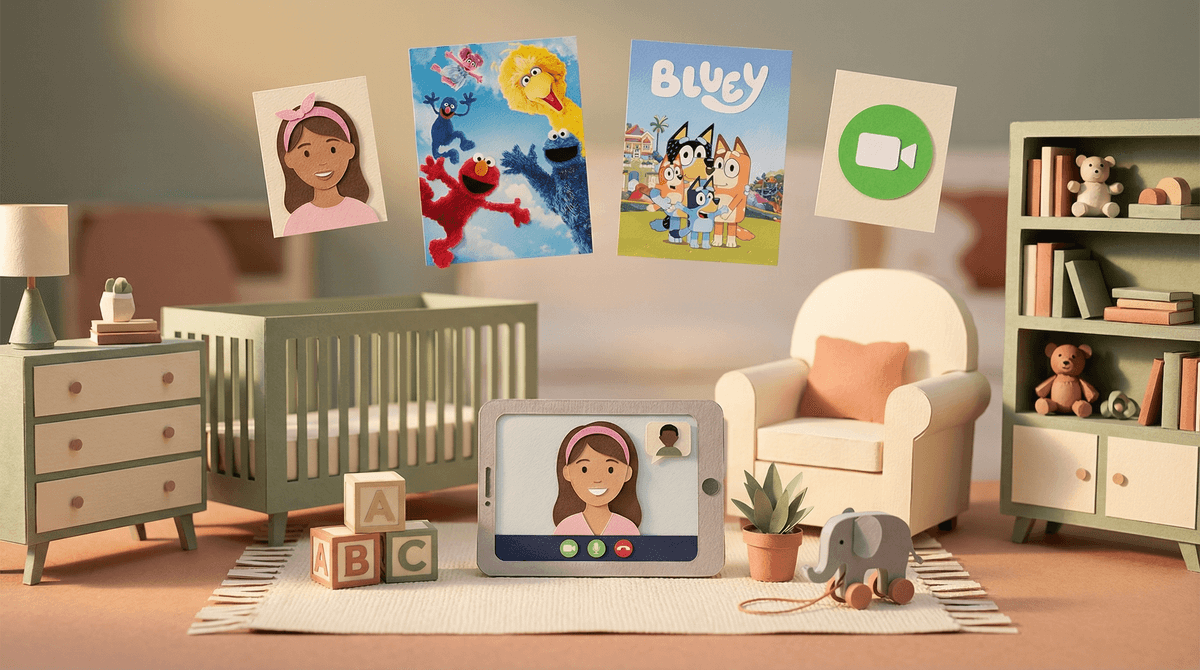
Save it for video calls with grandparents. This is the one type of screen time that actually seems beneficial for babies. Seeing and hearing real people they know, who respond to them? That's social interaction, even through a screen. FaceTime with grandma counts as relationship-building.
Co-view everything. If you do put something on for your 18+ month old, watch it with them. Talk about what you're seeing. Make it interactive. Point and narrate. Ask questions. This turns passive watching into something closer to a shared experience.
Keep it short and rare. Think minutes, not hours. And occasional, not daily. The AAP isn't pulling these recommendations out of thin air — the dose really does make the poison here.
Turn off background TV. Seriously, this might be more important than anything else. If you want TV on for yourself, use headphones or wait until the baby is actually asleep. The background noise is worse than you think.
Don't use screens for all soothing. Sometimes babies need to be bored. Sometimes they need to fuss a little. Sometimes they need to learn to self-soothe without digital intervention. Save screens for true emergencies (long flights, important phone calls, medical appointments) rather than everyday fussiness.
Here's what a reasonable approach might look like:
-
Under 12 months: Aim for video calls only. When you absolutely need a break, 10-15 minutes of something like Ms. Rachel isn't going to ruin everything, but try to make it truly rare.
-
12-18 months: Still mostly avoiding screens, but maybe occasionally watching something together. Emphasis on together and occasionally.
-
18-24 months: If you're introducing some screen time, keep it under 30 minutes a day, choose high-quality content, and co-view whenever possible.
-
All ages: No screens during meals, no screens in bedrooms, no screens within an hour of bedtime, minimal to no background TV.
The science is pretty clear that less is more when it comes to screens and babies. But the science is also clear that parental stress, depression, and burnout are terrible for child development too. If 15 minutes of Sesame Street is the difference between you being present and patient versus touched-out and overwhelmed, that's a trade-off worth making sometimes.
The goal isn't perfection. It's being intentional. Know why you're using screens. Know what you're choosing. And know that the rest of your parenting — the talking, playing, reading, cuddling, and just being present — matters so much more than whether you occasionally let them watch your phone while you grocery shop.
You're not a bad parent for using screens sometimes. You're also not a better parent for never using them. You're just a parent, doing your best with the information and resources you have. And honestly? That's enough.
Want to think through what screen time boundaries make sense for your specific family? Get help setting screen time rules for your situation — it can help you figure out what's realistic and what matters most given your family's actual daily life.
And if you're already past the baby stage and wondering what comes next, check out our guide to screen time for toddlers — because spoiler alert, it doesn't get easier, but it does get more interesting.