

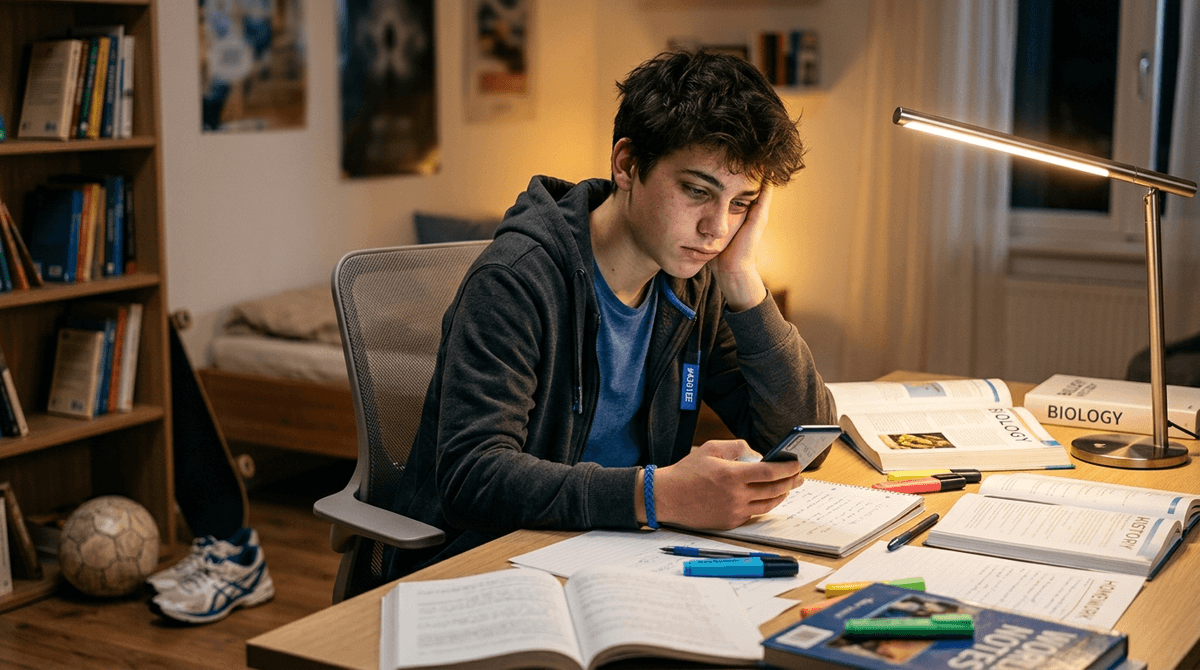

More than half of school-aged kids fail to get adequate rest, and two everyday habits tip the scale: passing two hours of daily screen time sharply increases sleep deprivation, while sixty minutes of physical activity buffers against it.
Two hours of daily screen time doubles down on childhood sleep loss, while an hour of daily movement acts as a protective shield. In a survey of more than 23,000 students, over half failed to meet baseline sleep recommendations, squeezed between digital devices and intense academic expectations.
Sleep directly powers emotional regulation, executive function, and immune health in developing brains. When children run chronic sleep deficits, morning battles and afternoon meltdowns become the norm, and cognitive performance quietly erodes.
Adjusting bedtime by fifteen minutes will not solve exhaustion if device habits and afternoon routines work against your child's biological clock. The findings hand parents two clear, practical levers to pull this week: cap non-academic screen use strictly below two hours and build in sixty minutes of active movement before dinner.
Pediatric health organizations have sounded alarms about sliding sleep durations for years, but isolating how recreation, devices, and school demands collide has proven challenging. Researchers surveyed 23,167 primary and secondary students ages 6 to 17 across Wuxi, China, to map out precisely which daily habits trigger sleep deprivation.
About half of all surveyed students (51.7%) missed the national minimum sleep guidelines for their age group. The risk factors clustered around specific patterns:
- Screens hit a wall at two hours. Children logging two or more hours of daily screen time experienced substantially higher rates of insufficient sleep than those with lighter use.
- Daily exercise serves as an antidote. Accumulating at least sixty minutes of daily physical activity was strongly tied to lower rates of sleep deprivation.
- Graduating classes lose the most rest. Older children and students in critical academic transition years faced the steepest deficits.
- Educated parents had more sleep-deprived kids. Higher parental education was linked to less sleep, likely reflecting heavy homework loads and elevated academic pressure at home.
- Boarding schools provided a surprising buffer. Boarding students slept better than day students, benefiting from rigid schedules that eliminated evening screen negotiations.
Academic ambition frequently backfires by starving the brain of sleep. Highly educated parents often schedule intensive tutoring, advanced coursework, and late study sessions without realizing that sleep loss cancels out the very cognitive edge they are trying to provide.
Meanwhile, the boarding school advantage points to an uncomfortable reality: structured, friction-free household routines protect sleep far better than relying on a child's willpower to shut down devices at night.
This was an observational, cross-sectional survey relying on self-reported questionnaires rather than objective measurements like sleep wearables or lab polysomnography. It demonstrates an association, not direct cause-and-effect; sleep-deprived kids may simply use screens more because they cannot fall asleep.
The sample also reflects the intense testing environment of urban China. While screen physiology translates across borders, the specific academic pressures driving homework late into the night may differ in communities with lighter workloads.
- If your child logs more than two hours of recreational screen time daily: Set a hard two-hour ceiling on non-school device use and move all charging stations out of the bedroom.
- If your child is entering a high-stakes academic year: Audit their evening workload to ensure homework never cuts into an age-appropriate eight-to-ten-hour sleep window.
- If your child struggles to wind down at lights out: Schedule sixty minutes of sweat-inducing physical activity in the afternoon to rebuild natural sleep pressure.
- If high school study demands are creeping past 10:00 PM: Enforce a strict lights-out policy, recognizing that staying up to study yields diminishing cognitive returns the next morning.
Protecting your child's sleep requires drawing a firm line between productivity and biology. Keeping daily screen time under two hours and guaranteeing sixty minutes of active play provides the baseline rest their brain needs to function.
Zhang D, Chen K, Yu R et al. (2026). Prevalence of insufficient sleep and its associated factors among children and adolescents in Wuxi, China: a cross-sectional survey. Scientific reports. doi:10.1038/s41598-026-61274-3 — pubmed.ncbi.nlm.nih.gov