

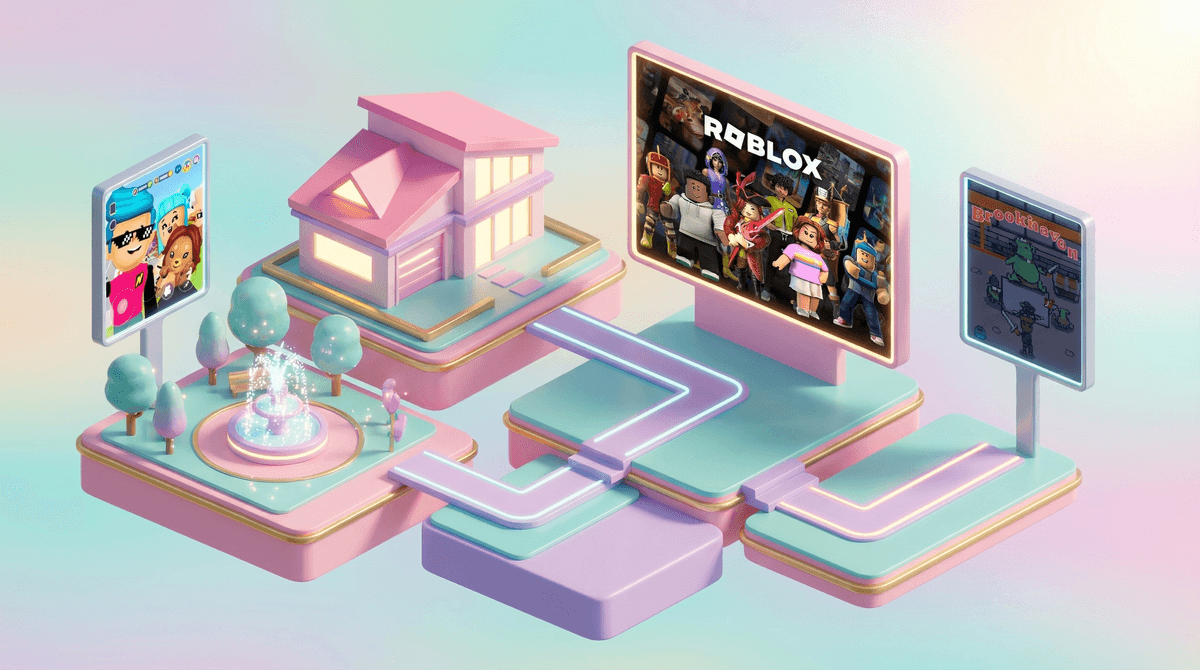
If you've got a 4th grade daughter (we're talking 9-10 year olds), chances are she's either already playing Roblox or begging you for access. And honestly? It's not a phase—about 70% of kids this age are on the platform, so you're navigating something that's basically the digital equivalent of the playground at this point.
Roblox isn't actually a single game—it's more like a massive platform where users create and play millions of different games. Think of it as YouTube meets gaming meets social hangout spot. Your daughter might be playing "Adopt Me!" (a virtual pet game), "Brookhaven" (a roleplay town), "Royale High" (a fantasy high school), or literally thousands of other experiences.
The girl-focused games on Roblox tend to skew toward roleplay, dress-up, pet collecting, and social experiences. These aren't violent shooter games—they're more like digital dollhouses where kids can express creativity, socialize, and explore different identities. Which sounds great! And also... might explain why she wants Robux (the platform's currency) to buy virtual outfits that cost actual money.
Here's what I've learned from watching this age group: 4th grade is peak friend-group formation time. Girls are figuring out their social identities, forming tight friend circles, and desperately want to feel included. Roblox becomes the after-school hangout spot they can't physically access every day.
The games popular with this demographic hit some very specific developmental sweet spots:
Creative expression - They're at an age where they're developing their own style and taste. Customizing avatars, decorating virtual homes, and choosing outfits feels genuinely meaningful to them.
Social connection - They can play with friends from school, chat while playing, and maintain friendships outside of school hours. During a playdate drought or when a best friend moves away, this matters more than we might realize.
Low-stakes drama - There's roleplay, there are "families" you can join, there are fashion shows and pet competitions. It's practice for social dynamics without real-world consequences. (Though the drama can still feel very real to them!)
Sense of progression - These games have goals, achievements, daily login rewards. That dopamine hit of "I unlocked something!" is powerful at this age.
Okay, we need to talk about Robux. Because if you thought you could just let her play for free, I have some news for you.
Technically, yes, Roblox is free to play. Practically? The social pressure to have Robux is intense. The free avatar items are... not cute. The good games often have premium features. And when all her friends have custom outfits and she's stuck in the default look, it genuinely affects her social experience on the platform.
Here's what I see working for families:
- Monthly allowance approach - Give her a set amount of Robux monthly (like $10-20) and let her budget it. This actually teaches financial literacy.
- Earn it system - Connect Robux to chores or reading goals. Some parents find this helps kids understand Robux is real money
 .
. - Birthday/holiday only - Keeps it special and limited.
- Hard no - Also totally valid! But know she'll feel it socially.
Pro tip: Set up parental controls that require approval for all purchases. Kids can accidentally spend hundreds if you have a credit card linked.
I'm not going to fear-monger here, but there are real things to know:
Chat is the biggest concern. Roblox has chat features, and while they filter inappropriate content, it's not perfect. 4th graders are old enough to chat but not always savvy enough to recognize when someone's being inappropriate or trying to get personal information.
What to do:
- Set chat to "Friends only" in settings (not "Everyone")
- Have her only friend people she knows IRL
- Periodically check her chat history (yes, you can do this)
- Talk about what to do if someone makes her uncomfortable
The "condo games" issue. There are occasionally inappropriate games that slip through Roblox's moderation. They get taken down quickly, but they exist. The good news? The games 4th grade girls typically play (Adopt Me, Brookhaven, Royale High) are heavily moderated and generally safe.
Screen time spiral. This is honestly the bigger issue than stranger danger. These games are designed to keep kids playing—daily rewards, limited-time events, friends online now. It's easy for "30 minutes" to become 3 hours.
Studies on gaming at this age show some interesting things:
Social play has benefits - Kids who play online games with friends show similar social skill development to in-person play, especially when it's cooperative rather than competitive.
The creativity factor is real - Games like Roblox that involve building, customizing, and creating do engage different cognitive skills than passive screen time.
But the time-suck is documented - The average kid on Roblox spends 2.6 hours per day on the platform. That's... a lot. And it's designed to be that way.
Here's what works in real families:
Set clear time limits before she starts playing. Not "play for a while," but "you have 45 minutes, and I'm setting a timer." Use device time limits if you need to.
Require "breaks" between games. The "just one more game!" cycle is real. Build in mandatory 10-minute breaks.
Make it social IRL too. If she's playing Roblox with her friend Emma, can Emma come over and they play together in the same room sometimes? It's a different vibe.
Ask about what she's playing. Show genuine interest. Have her show you her avatar, her virtual house, her pets. This keeps you in the loop and makes her more likely to tell you if something weird happens.
Use it as leverage (sorry, but yes). Roblox time can be earned through homework completion, chores, reading time. It's highly motivating.
Here's something I wish someone had told me: By 4th grade, about 75% of girls in a typical class are on Roblox. If your daughter isn't, she's likely hearing about it constantly. She might feel left out of conversations. She might not be invited to virtual hangouts.
This doesn't mean you have to say yes! But it does mean the decision has social implications. Some families decide to wait until 5th grade. Some allow limited access. Some dive in fully. There's no perfect answer.
What I'd suggest: Talk to other parents in her class about what they're doing. There's power in numbers—if several families agree to similar rules, it takes pressure off everyone.
Roblox for 4th grade girls is basically the digital version of hanging out at each other's houses playing with dolls—but with more microtransactions and some safety considerations you didn't have to worry about in 1995.
It's not inherently bad. The games she's likely playing are creative, social, and age-appropriate. But it does require active parenting—setting limits, monitoring chat, managing the money aspect, and keeping it balanced with other activities.
If you decide to allow it, go in with clear rules from day one. If you decide to wait, that's also totally reasonable. And if you're somewhere in between, figuring it out as you go? Welcome to the club.
- If you're allowing Roblox, sit down together and set up the account with proper privacy settings
- Decide on your Robux policy before she asks for the 47th time
- Set clear time limits and stick to them (device controls are your friend)
- Learn more about Roblox safety settings and how to actually use them
- Check in weekly about what she's playing and who she's playing with
And remember: You're not a bad parent if you say yes, and you're not a mean parent if you say no. You're just trying to figure out how to parent in an era where the playground is digital and costs Robux.