

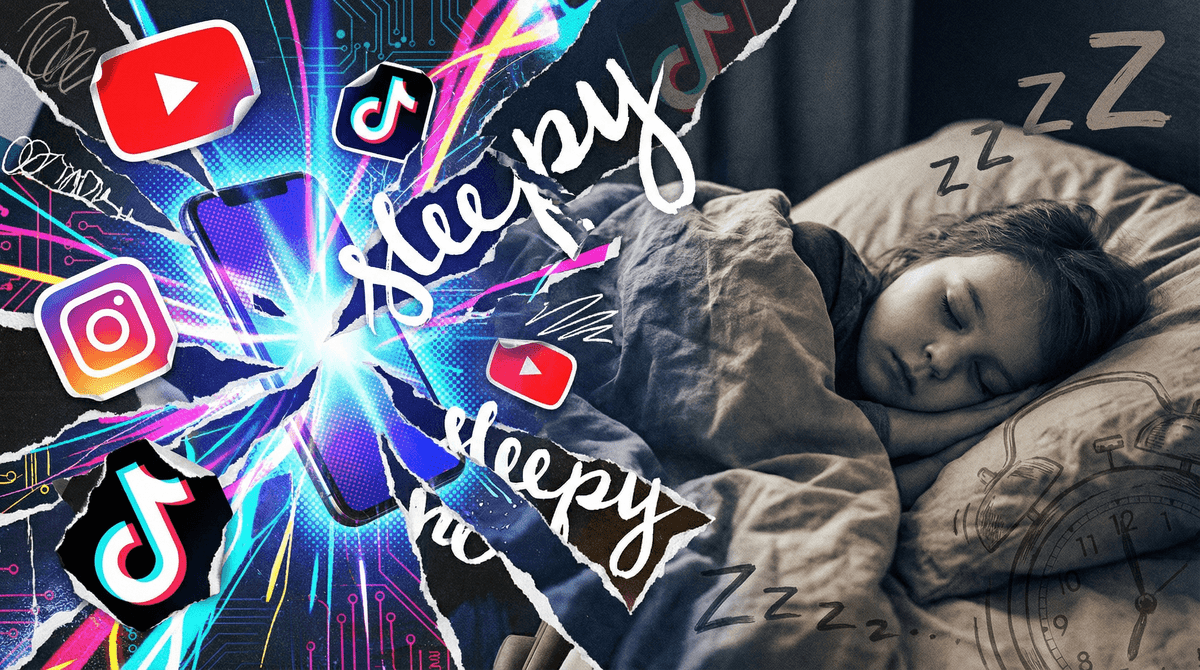
Let's cut to it: screens are absolutely wrecking our kids' sleep. And probably ours too, if we're being honest.
You've probably heard the blue light thing. Maybe you've even tried those orange-tinted glasses that make everyone look like they're in a 1970s crime drama. But the relationship between phones, screens, and sleep goes way deeper than just the glow from the display. It's about what kids are doing on those devices, when they're doing it, and the fact that their brains are basically getting a shot of espresso right when they should be winding down.
The average teen loses 1-2 hours of sleep per night because of screen use. That's not a typo. We're talking about a generation of kids running on fumes because they can't put down their phones.
Sleep deprivation in kids and teens isn't just about being cranky (though, yes, that too). It's linked to:
- Academic performance drops - tired brains don't retain information
- Mental health issues - anxiety and depression rates correlate strongly with poor sleep
- Physical health problems - weakened immune systems, weight gain, higher injury rates in sports
- Impulse control issues - exhausted teens make worse decisions (shocker)
And here's the kicker: 95% of teens use a device in the hour before bed. That's basically everyone. So if you're feeling like you're fighting an uphill battle, you are. But that doesn't mean it's not worth fighting.
Let's talk about what's actually happening when your kid is scrolling TikTok at 11 PM.
Blue Light Is Real (But Not the Whole Story)
Yes, the blue wavelengths from screens suppress melatonin production. Melatonin is the hormone that tells our bodies "hey, time to sleep." When you blast your face with blue light, your brain thinks it's daytime. Evolution did not prepare us for LED screens.
But honestly? The blue light thing gets too much credit. You can slap a blue light filter on every device in your house and your kid will still be up until midnight if they're:
Doomscrolling and Emotional Activation
Social media, YouTube, Discord, gaming - these are all designed to be engaging. That's a nice word for "addictive." Every notification, every new video, every friend coming online creates a little dopamine hit. Your kid's brain is getting pinged over and over, staying in an activated, alert state.
It's not just "one more video." It's one more video that makes them laugh, then one that makes them mad, then one that makes them anxious about what someone said at school, then a text comes in, then they need to check if their Snap streak is safe...
This is the opposite of the calm, boring wind-down that sleep requires.
The Comparison Trap at Night
There's also something uniquely toxic about late-night social media. When your kid is lying in bed, tired and vulnerable, and they're scrolling through everyone else's highlight reel - that's when the comparison really hits. The anxiety, FOMO, and social stress are all amplified when they're already exhausted.
What Doesn't Work:
- Expecting self-regulation from a 13-year-old with an iPhone
- Blue light filters alone
- "Just don't look at it" lectures
- Keeping the phone in their room with the honor system
What Does Work:
1. Physical Boundaries
All devices charge in a common area overnight. Not in bedrooms. Not "just for the alarm clock." Buy them an actual alarm clock . They're like $15.
Yes, your teen will hate this. Yes, it's still the right call. The research is unambiguous: phones in bedrooms = worse sleep, period.
2. The 1-Hour Wind-Down
No screens for the hour before bed. This is hard! But it works. The brain needs time to transition. This means:
- No "just finishing this episode" at 9:45 PM for a 10 PM bedtime
- No "quick check" of texts
- No "but I need to look up something for homework"
What to do instead: reading (actual books or e-readers without notifications), drawing, talking, listening to music, podcasts like Sleepy, journaling, board games with family.
3. Night Mode + Grayscale
If you can't enforce a full hour (or you're working up to it), at least enable:
- Night Shift/Blue Light Filter starting at sunset
- Grayscale mode (makes the phone way less appealing)
- Do Not Disturb with only emergency contacts allowed through
Here's how to set this up on iPhone and Android.
4. Model It Yourself
Yeah, this one stings. But if you're scrolling Instagram in bed, your kids notice. If you want them to have healthy sleep habits, you need to demonstrate them. Put your phone away too.
Elementary (Ages 5-10): This is the easy phase - you have control. No screens in bedrooms, period. Devices stay in common areas. Establish the pattern now before the teen years hit.
Middle School (Ages 11-13): The pressure ramps up. "Everyone else has their phone in their room." Maybe they do! Those kids are also exhausted and struggling. Hold the line. Phones charge in the kitchen. They'll survive.
High School (Ages 14-18): If you haven't established boundaries yet, this is harder but not impossible. Have a real conversation about sleep and performance. Many teens actually want better sleep but don't know how to break the cycle. Consider:
- A 30-day experiment with phones out of bedrooms
- Tracking sleep quality and mood
- Letting them see the connection themselves
Some families negotiate: phones in rooms on weekends only, or during summer. That's a family call.
Your kid's sleep is not negotiable. It's not a "nice to have." It's foundational to their health, development, and mental wellness.
Will they push back? Absolutely. Will they say you're ruining their life? Probably. Will they be mad that they can't scroll TikTok until 2 AM? Definitely.
But in the morning, when they're actually rested and functional, they'll be better off. Even if they won't admit it.
The good news: you don't have to be perfect. You don't have to ban all screens forever. You just need consistent boundaries around sleep. That's it. Phones out of bedrooms at night. One hour of wind-down. That's the foundation.
Everything else - the apps, the content, the screen time limits during the day - you can figure out. But sleep is non-negotiable.
- Tonight: Have a family meeting about the new sleep boundaries. Explain why (health, not punishment).
- This week: Set up a charging station in a common area. Get alarm clocks if needed.
- This month: Track the difference. Notice mood, grades, family dynamics. Adjust as needed.
And if you need more support on setting up parental controls, managing pushback from teens, or finding alternatives to screens before bed, Screenwise has your back.
Sleep is worth fighting for. You've got this.