

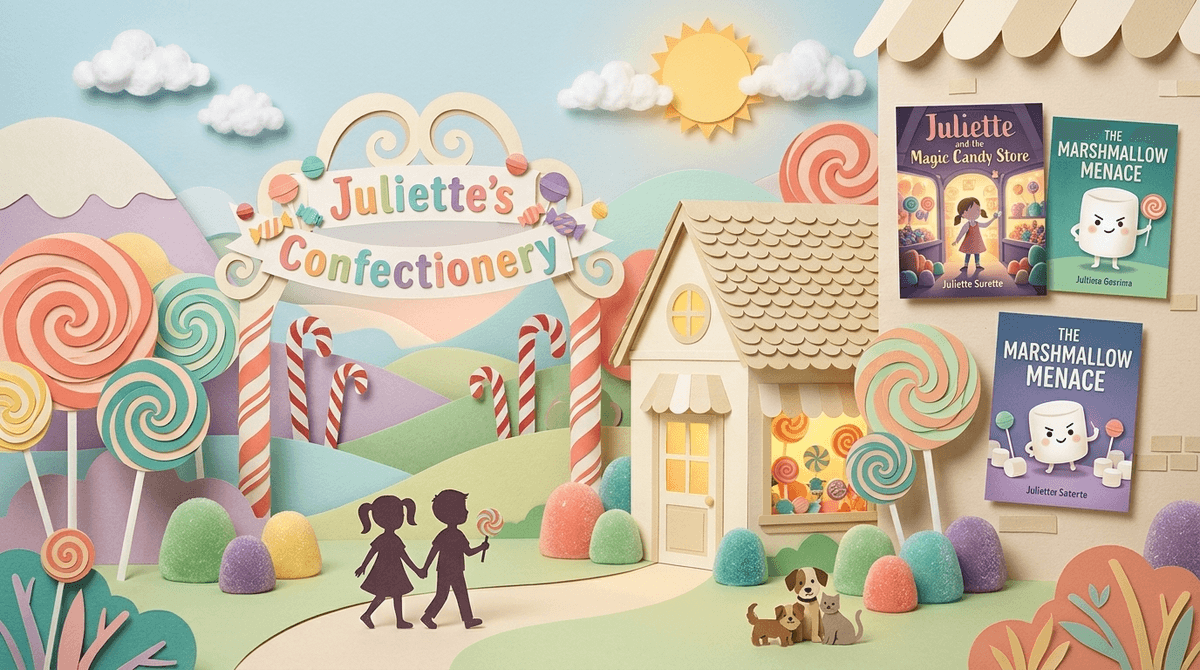
Juliette and the Magic Candy Store is a sugary, low-stakes mystery series that hits the sweet spot for kids who are graduating from early readers but aren't quite ready for the heavy emotional lifting of "big kid" middle-grade fiction. It’s essentially a cozy mystery for the second-grade set—predictable, comforting, and centered on a grandfather-granddaughter duo that actually likes each other.
If your kid is in that "I just finished Magic Tree House and need a new personality" phase, Juliette and the Magic Candy Store is a solid, safe bet. It’s a whimsical mystery series for ages 7–10 that prioritizes charm over peril. For more great picks in this age bracket, check out our best books for kids list.
The series follows Juliette and her grandfather, who runs a candy shop that is—surprise—actually magical. The "mysteries" usually involve things like missing ingredients, a rival shop owner with a cartoonish grudge, or a magical batch of fudge gone wrong.
What makes it work is the relationship. In a lot of kid lit, parents and grandparents are either dead, incompetent, or the "fun police." Here, the grandfather is the mentor and the co-conspirator. It’s a refreshing dynamic for families who want stories where the adults aren't the obstacles.
If you’re seeing chatter in parent groups about this series lately, it’s probably because of the "Salty Surprise" incident from earlier this year.
The series is originally produced by a small international press, and the English translation for the third book, The Marshmallow Menace, clearly bypassed a human editor in favor of an unpolished AI pass. For about three weeks, the "Salty Surprise" candy was translated as "Piquant Pickle Pouch," and some of the dialogue in chapter four sounded like a direct Google Translate hallucination from 2012.
The publisher has since patched the digital versions and issued a second printing, but if you find a copy at a used bookstore where the characters suddenly start talking like Victorian robots for three pages, now you know why. It’s not "inappropriate" content—it’s just a weird glimpse into the future of budget publishing.
The "I Can Read It Myself" Confidence Boost
The chapters are short, the vocabulary is accessible, and there are enough illustrations to keep the "I hate walls of text" kids from bailing. It’s a perfect bridge book. If your kid is in the digital guide for elementary school demographic, this is the kind of book they can crush in two nights, which builds the "I’m a reader" identity faster than a 400-page epic ever will.
Low-Stakes Engagement
Some kids are "intensity-averse." They don't want the world to be ending; they don't want the dog to die; they just want to know if Juliette finds the missing Silver Sprinkles. This series is the literary equivalent of a warm bath.
The "Mid" Factor
Let’s be real: this isn't Roald Dahl. The prose is functional, not magical. The plotting is thin. If you have an advanced reader who is already into The Mysterious Benedict Society or Wings of Fire, they are going to find Juliette's adventures a little "babyish." This is a "starter" mystery, not a brain-bender.
If your kid loves the idea of a mystery but gets spooked easily, this is the perfect entry point.
If they love this series, try these deeper cuts next:
- Hotel Flamingo: Similar "fix-it" energy with a great cast of animal characters.
- The Dragon with a Chocolate Heart: For kids who want a little more "fantasy" with their sweets.
- The Vanderbeekers of 141st Street: If the "family working together" aspect is what they liked most.
The "Magic Candy" hook is a layup for real-world connection.
- The "Secret Ingredient" Game: After a chapter, ask your kid: "If we had a candy shop, what would our 'Magic Fudge' do?" Does it make you run fast? Talk to cats? Give you the power to never have to brush your teeth?
- The Mystery Map: The candy store has a specific layout. Have them draw what they think the "Back Room" looks like. It’s a great way to check reading comprehension without making it feel like a school assignment.
The biggest friction point isn't the content—it's the marketing. This book is often sold in "mega-packs" on Amazon that look like they're published by a major house but are actually self-published or small-press. The quality control on the physical paper and binding can be hit-or-miss. Don't be surprised if a page falls out of a $6 paperback.
Q: What age is Juliette and the Magic Candy Store appropriate for? It’s perfect for the 7–10 age range. Specifically, it's a "sweet spot" book for 2nd and 3rd graders who are moving into independent chapter book reading but still want a story that feels "young" and safe.
Q: Are there any scary parts or "bad guys" I should know about? The "villains" are very Scooby-Doo—mostly grumpy neighbors or rival business owners who are easily thwarted by kindness and a little bit of magic. There is no violence, no heavy language, and no "stranger danger" vibes.
Q: Is this book better than the Rainbow Magic series? It’s a step up in terms of plot, but it occupies the same "collectible" space. If your kid likes Rainbow Magic, they’ll likely find Juliette a bit more grounded and interesting, even with the magic candy.
Q: Does the book promote eating too much sugar? It’s a book about a candy store, so sugar is the central theme. However, the "magic" is usually tied to the making of the candy and the intention behind it, rather than just eating it. It’s about as "pro-sugar" as Willy Wonka, which is to say, it’s a fantasy.
Juliette and the Magic Candy Store is "comfort food" reading. It’s not going to win a Newbery Medal, but it might just be the book that makes your 8-year-old stop asking for your phone and start asking for "just one more chapter." In 2026, that’s a win.
- Check out our best books for kids list for more chapter book series.
- See the digital guide for elementary school for more age-appropriate media picks.
- Get a book recommendation
