

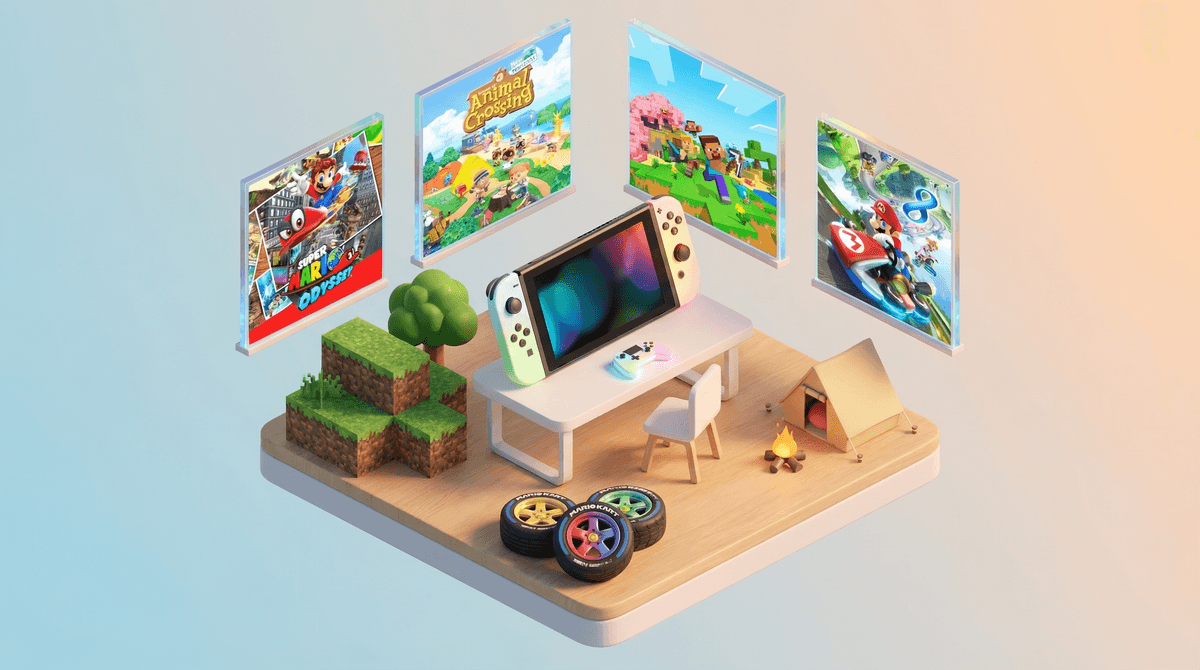
The Nintendo Switch is probably sitting in your living room right now, or at least you've heard about it at every birthday party for the past five years. It's Nintendo's hybrid console that works both as a handheld device and plugged into your TV, which means yes, your kid can play it literally anywhere. Released in 2017, it's become the family gaming system, and honestly? It deserves that reputation.
But here's the thing: the Switch library has over 4,000 games now. Some are absolute gems that'll teach problem-solving and creativity. Others are shovelware garbage that'll drain your wallet faster than a Fortnite skin addiction. Let's talk about which ones are actually worth it.
Before we get into specific games, let's acknowledge why this console has taken over: it's genuinely well-designed for kids. The parental controls are solid (you can limit playtime, restrict online features, and monitor usage through an app). The games skew younger and more family-friendly than PlayStation or Xbox. And the portability means it's not permanently hogging the TV.
Plus, Nintendo's first-party games—the ones they make themselves—are consistently excellent. They're not churning out battle royale clones or loot box simulators. They're making actual games with gameplay, creativity, and polish.
Mario Kart 8 Deluxe (Ages 4+)
This is the family game. Period. It's racing, it's colorful, it has an auto-steering mode for young kids that keeps them on the track, and it's genuinely fun for adults too. No in-app purchases, no online toxicity if you stick to playing with family, just pure racing chaos. Every Switch household should own this.
The Legend of Zelda: Breath of the Wild (Ages 10+) and Tears of the Kingdom (Ages 10+)
These are masterpieces. Open-world exploration, creative problem-solving, minimal reading required, and absolutely zero online components. Breath of the Wild is one of those rare games that teaches spatial reasoning and experimentation without feeling educational. Tears of the Kingdom adds building mechanics that are genuinely impressive. Yes, there's combat, but it's cartoonish—Link fights bokoblins, not realistic enemies.
Super Mario Odyssey (Ages 7+)
A 3D platformer that's joyful, creative, and has that perfect Nintendo difficulty curve where kids feel accomplished but adults aren't bored. No microtransactions, no online requirements, just exploration and collecting moons.
Animal Crossing: New Horizons (Ages 6+)
The cozy game that took over during lockdown. Kids design their island, catch bugs, decorate their house, and visit friends' islands. It's creative, low-stress, and has a real-time clock that naturally limits binge sessions (shops close, events happen on specific days). The online component requires Nintendo Switch Online, but it's opt-in and limited to approved friends. Read more about Animal Crossing here.
Minecraft (Ages 8+)
You already know about Minecraft. The Switch version is perfectly fine, though some kids prefer it on iPad or PC for the controls. Creative mode is great for younger kids, survival mode for older ones. The online multiplayer is where you need to pay attention—stick to private realms with known friends.
Pokémon Scarlet/Violet (Ages 8+)
The latest Pokémon games are open-world now, which is great. The gameplay is still collecting, battling, and exploring. Fair warning: these games had some technical issues at launch (frame rate drops, glitches), but they're mostly patched now. If your kid is into Pokémon cards or the show, they'll love these.
Splatoon 3 (Ages 10+)
This is Nintendo's take on a shooter, except you're squids shooting ink, not soldiers shooting bullets. It's colorful, creative, and the online community is surprisingly non-toxic compared to other shooters. That said, it's primarily an online multiplayer game, so you'll need Nintendo Switch Online ($20/year) and should monitor who they're playing with.
Super Smash Bros. Ultimate (Ages 8+)
Fighting game with every Nintendo character imaginable. Great for family play, chaotic fun, and the single-player mode is substantial. The online competitive scene can get intense, but local multiplayer is where this shines.
Roblox (Ages 10+, but really 13+)
Roblox is on Switch now, and look—it's the same Roblox you know from every other platform. User-generated content means wildly inconsistent quality and safety. Some games are creative and educational. Others are thinly-veiled gambling simulators or have chat features that need heavy monitoring. If your kid is playing Roblox, you need to understand how Robux actually works and set up proper parental controls. Here's our full guide on Roblox parental controls.
Fortnite (Ages 13+)
Also on Switch, also the same game as everywhere else. Battle royale shooter (third-person, cartoonish), heavy online component, voice chat with strangers, and a shop that's designed to create FOMO. Some families are fine with it for older kids; others hard pass. Know what you're getting into.
Stardew Valley (Ages 10+)
Farming simulator that's actually about community, relationships, and building something over time. It's cozy, creative, and has surprising depth. Single-player, no microtransactions, and genuinely wholesome.
Untitled Goose Game (Ages 6+)
You're a goose. You're a jerk. You honk and cause chaos in a village. It's hilarious, short (about 4 hours), and perfect for younger kids who can handle simple puzzles.
Luigi's Mansion 3 (Ages 7+)
Mildly spooky (think Scooby-Doo, not horror) puzzle-adventure game. Great co-op mode for parent-kid play. Charming, funny, and well-designed.
Nintendo's online service costs $20/year (individual) or $35/year (family plan for up to 8 accounts). You need it for online multiplayer in most games. The family plan is worth it if you have multiple kids or want to play together.
It also includes access to a library of classic NES and SNES games, which is a nice bonus—your kids can experience the games you grew up with (or pretend you did).
Ages 4-7: Stick with Mario Kart, Kirby games, Pokémon Let's Go, and Yoshi's Crafted World. These have simple controls, bright visuals, and forgiving gameplay.
Ages 8-10: Add in Minecraft, Pokémon, Super Mario Odyssey, Animal Crossing, and Luigi's Mansion. These require more reading and problem-solving but are still age-appropriate.
Ages 11+: Zelda games, Splatoon, Smash Bros, and carefully monitored online games like Roblox or Fortnite (if your family allows them).
The Switch has legitimately great games that are worth your money and your kid's time. Focus on Nintendo's first-party titles—they're consistently high-quality, don't have predatory monetization, and are designed with kids in mind.
Avoid the shovelware in the eShop (anything that looks like a mobile game port probably is). Read reviews before buying. And remember: physical cartridges can be resold or traded, digital games cannot. If you're unsure about a game, buy physical.
The Switch isn't going anywhere—Nintendo just announced they're working on a successor, but it'll likely be backward compatible. Your investment in good games now will pay off for years.
Set up parental controls first: Download the Nintendo Switch Parental Controls app (yes, it's a separate app on your phone) and set time limits, spending limits, and content restrictions before handing over the console.
Start with one great game: Don't overwhelm them with options. Mario Kart or Super Mario Odyssey are perfect starting points.
Consider the family plan for Nintendo Switch Online: If multiple kids are playing or you want online features, the $35/year family plan is worth it.
Check our database: We have detailed reviews and age recommendations for hundreds of Switch games at Screenwise. Search for any title you're considering to see parent reviews, WISE scores, and whether it's actually worth the money.
The Switch can be a genuinely positive part of your family's digital life. Just be intentional about what games you're bringing into your home, set boundaries early, and actually play with your kids sometimes—that's when the magic happens.