

Look, I get it. You open Netflix (or Disney+, or Max, or Apple TV+, or whatever streaming service your kid just discovered) and there are approximately 47 new kids' shows staring back at you. The thumbnails are bright. The titles are... creative. And you have no idea if you're about to let your 7-year-old watch something genuinely great or 22 minutes of hyperactive nonsense that will have them bouncing off the walls.
The volume of new kids' content is absolutely overwhelming. And here's the thing: not all of it is created equal. Some shows are legitimately well-crafted, thoughtful, and entertaining for both kids AND adults. Others are what we might generously call "content" — stuff that exists to fill a slot in the algorithm but offers nothing of actual value.
So let's talk about how to separate the wheat from the chaff, what's actually worth your family's screen time right now, and how to make these decisions without losing your mind.
Kids' TV shows aren't just background noise (though let's be real, sometimes we need them to be exactly that). The shows your kids watch regularly become part of how they see the world. They pick up language patterns, humor styles, problem-solving approaches, and relationship dynamics from the characters they spend time with.
A well-made kids' show can:
- Model emotional regulation (looking at you, Bluey)
- Introduce complex concepts in age-appropriate ways
- Spark genuine curiosity about the world
- Create shared family moments that aren't just passive consumption
A poorly-made show can:
- Normalize disrespectful behavior as "comedy"
- Overstimulate without engaging (fast cuts, loud noises, no actual plot)
- Reinforce stereotypes without examination
- Just be really, really annoying to have on in your house
Let me break down some of the standout new and recent shows by age group, with actual honest takes:
For Younger Kids (Ages 3-7)
Kiya & the Kimoja Heroes (Disney Junior) - This one's genuinely solid. African culture-inspired superhero show that doesn't talk down to kids. The animation is beautiful, and the problem-solving is actually problem-solving, not just "friendship fixes everything."
Interrupting Chicken (Apple TV+) - Based on the book series, this is clever and meta in the best way. Your kid learns about story structure while a little chicken hilariously derails fairy tales. Parents won't hate watching this one.
Chip and Potato (Netflix) - Sweet, gentle, genuinely helps with anxiety and big feelings. Not groundbreaking, but solidly made and emotionally intelligent.
For Elementary Age (Ages 6-10)
The Creature Cases (Netflix) - Mystery-solving with actual science education baked in. Think detective show meets nature documentary, but fun. Kids learn real animal facts while following engaging stories.
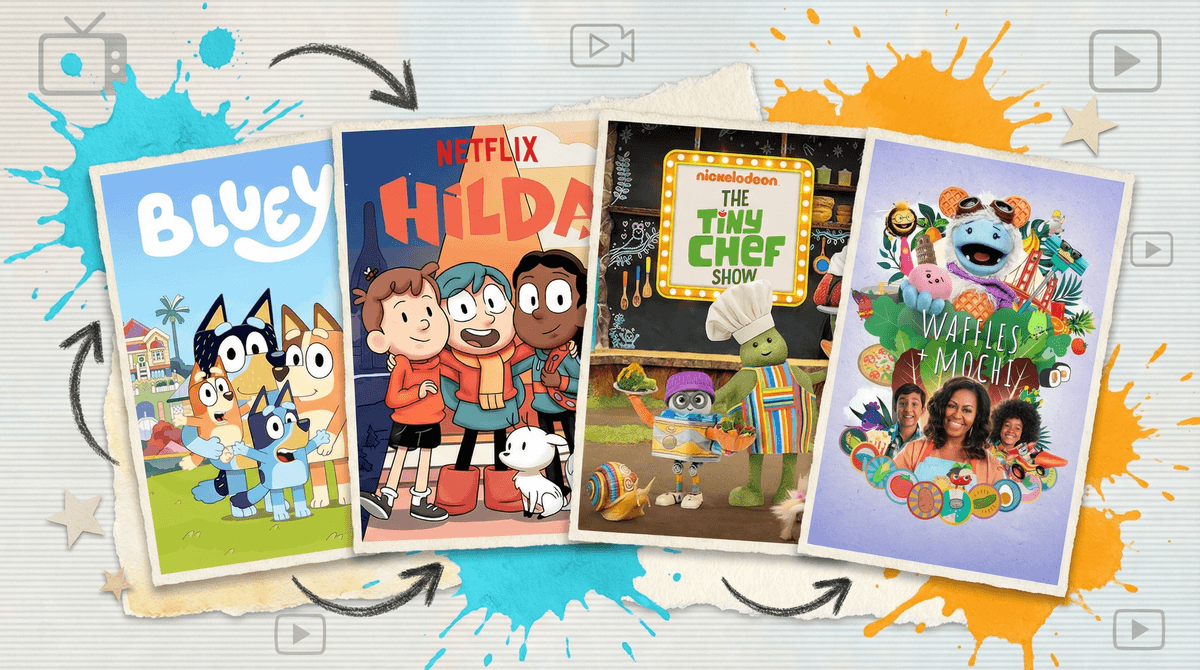
Hilda (Netflix) - This one's been around a few years but keeps adding seasons. Absolutely worth your time. Gorgeous animation, genuinely adventurous without being scary, and the main character is brave, kind, and curious. The whole family can watch this.
The Tiny Chef Show (Nickelodeon/Paramount+) - Stop-motion cooking show with a tiny chef. It's wholesome, it's creative, and it might actually inspire your kid to help in the kitchen. Low-key educational about cooking without being preachy.
For Tweens (Ages 9-13)
The Last Bus (Netflix) - British kids survive an alien invasion. It's funny, it's got heart, and it doesn't assume tweens need everything dumbed down. Some genuinely tense moments but age-appropriate.
Waffles + Mochi's Restaurant (Netflix) - Follow-up to the original Waffles + Mochi. Still has that Michelle Obama-produced quality, still teaches about food and culture, but this one's aimed slightly older. Actually makes kids interested in ingredients and cooking.
Ghostwriter (Apple TV+) - Reboot of the '90s show. Mystery-solving through literature and storytelling. Diverse cast, actually respects kids' intelligence, and might get your tween reading more.
Let me be blunt about some stuff that's popular but... not great:
Ryan's Mystery Playdate and similar YouTube-kid-turned-TV-star shows - These are essentially long commercials. The "Ryan's World" empire is built on toy sales and there's very little educational or entertainment value here. Your kid will survive without it.
Most "YouTube Shorts" style TV shows - You know the ones. Rapid cuts, loud noises, no coherent plot, just chaos designed to hold attention without engaging brains. If the show feels like it's trying to replicate TikTok's editing style, that's your red flag.
Shows where disrespect is the main joke - If the humor is primarily kids being rude to adults, siblings being mean to each other, or characters getting laughs from being cruel... just no. There's plenty of genuinely funny content that doesn't normalize being a jerk.
You don't have time to pre-screen everything. Here's my quick checklist:
-
Watch the first 5 minutes - Is the pacing reasonable? Is there actual dialogue or just noise? Do the characters seem like characters or just vehicles for selling toys?
-
Check the credits - Who made this? Shows from studios with track records (Cartoon Saloon, Aardman, established animation houses) tend to be higher quality than random content farms.
-
Look up one review - Not a full research project, just a quick check on Common Sense Media
 or similar. See what other parents are saying.
 -
Trust your gut - If a show is giving you weird vibes or seems like it's trying to be annoying, it probably is. There's too much good content out there to settle for stuff that makes you cringe.
-
Ask your kid what they like about it - If they can articulate why they enjoy it ("the characters are funny" or "I like the mysteries"), that's different than just "I don't know, it's on." The latter might mean it's just hypnotic rather than engaging.
Ages 3-5: Stick with slower-paced shows that model good behavior and emotional intelligence. Daniel Tiger's Neighborhood is still the gold standard here, but newer options like Bluey have raised the bar for what "kids' shows" can be.
Ages 6-8: They can handle more adventure and mild conflict, but still benefit from clear moral lessons and positive role models. This is a great age for shows that encourage curiosity and creativity.
Ages 9-12: Tweens can appreciate more complex storytelling, humor with layers, and shows that don't treat them like babies. They're also old enough to start having conversations about what they're watching and why certain choices were made.
Not all kids' TV is created equal, and you're not being uptight by being selective. In a world with literally thousands of options, you get to be picky.
The best new kids' shows are the ones that:
- Respect your child's intelligence
- Don't make you want to leave the room immediately
- Model behavior you actually want to see in your house
- Spark conversation or curiosity beyond just "what happens next?"
Start with shows that have actual creative teams behind them (not just algorithms), check in with what your kids are actually getting from them, and don't be afraid to say "we're done with that one" if something isn't working for your family.
And if you're ever unsure about a specific show, see if a specific show is appropriate — we can dig into the details together.
- Browse by age: Check out our full guide to kids' TV shows by age group for more specific recommendations
- Set up a rotation: Instead of defaulting to "whatever's on," create a short list of pre-approved shows your kids can choose from
- Schedule a family screening: Pick one new show a month to watch together and discuss — makes it less passive
- Balance it out: For every hour of TV, what other activities are happening? Screen time isn't evil, but it also shouldn't be the only thing
Your kids will be fine if they don't watch every new show that drops. They'll be better than fine if the shows they do watch are actually worth watching.