

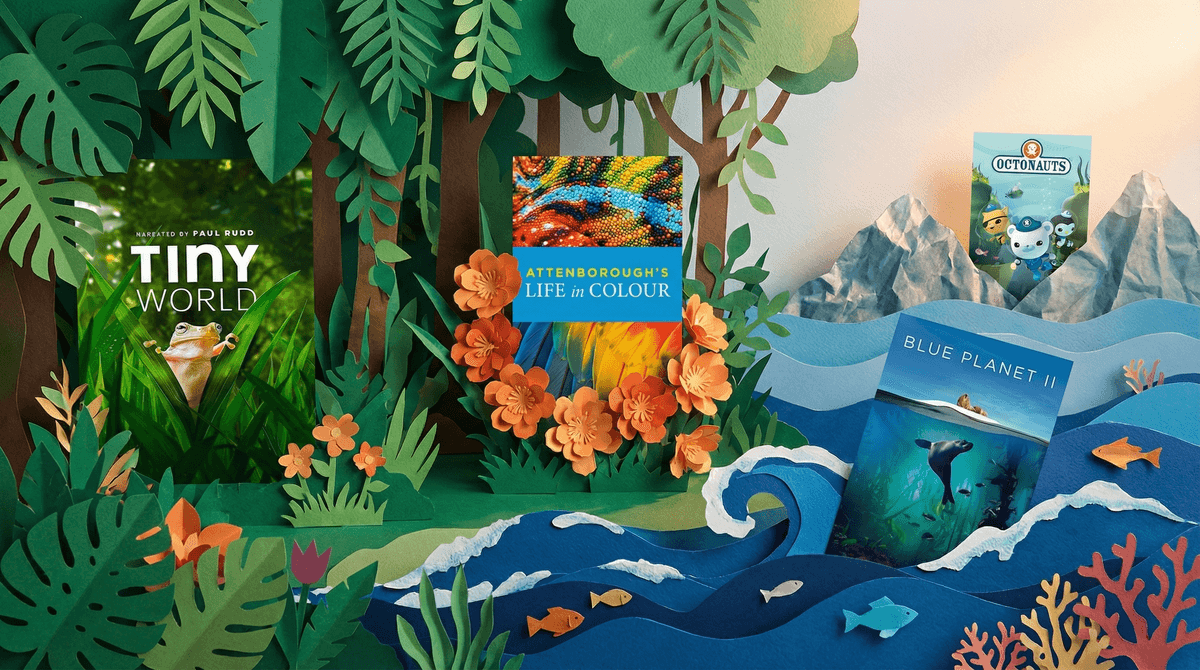
You've got a 3-year-old who's obsessed with animals, a 6-year-old who asks "why?" about everything, and an 8-year-old who thinks they're too cool for "baby shows." And you're trying to find one nature show that works for all of them during family screen time without someone melting down because it's too scary, too boring, or "for babies."
Here's the thing: about 50% of families in your community watch Disney+ together as a family activity, and 40% have kids watching Netflix independently or together. Nature documentaries are actually one of the few genres that can genuinely bridge this age gap—when you choose the right ones.
The wrong pick? Your 3-year-old is traumatized by a lion kill, your 6-year-old is bored by slow pacing, and your 8-year-old is on their phone because "this is for little kids."
The right pick? Everyone's engaged, you're not fielding nightmare questions at bedtime, and honestly, you might learn something too.
Let's be real about what you're dealing with:
The 3-year-old needs bright colors, clear narration, and absolutely no predator-prey violence. They're still figuring out what's real and what's pretend, and a graphic hunting scene can legitimately mess with their sleep for weeks.
The 6-year-old is in that sweet spot of genuine curiosity. They want facts, they want to understand how things work, but they also still need things to move along. Attention span is maybe 20-30 minutes max before they're asking for snacks.
The 8-year-old wants to feel grown-up. They've probably seen clips of intense nature stuff on YouTube (because let's be honest, the algorithm loves dramatic animal content), and they don't want anything that feels "babyish." But they're also not ready for the full Planet Earth experience with its unflinching circle-of-life moments.
With average screen time hovering around 4.2 hours per day in your community (4 hours on weekdays, 5 on weekends), you want that time to actually count when you're all watching together.
Octonauts (Ages 2-7, but 8-year-olds tolerate it)
This is your safety pick. Animated underwater adventures with real creature facts woven in. The 3-year-old loves the characters and action, the 6-year-old absorbs the information, and the 8-year-old won't complain too much because the creature facts are legitimately interesting. No violence, just rescue missions. It's on Netflix and honestly, it's a solid choice when you need zero risk of scary content.
The catch: Your 8-year-old will definitely tell you it's "for babies" even while they're watching it.
Our Planet (With Strategic Episode Selection)
David Attenborough's voice is magic, and some episodes of this Netflix series work beautifully across ages—if you preview first. The "Coastal Seas" and "Fresh Water" episodes have stunning visuals without graphic predation. The "From Deserts to Grasslands" episode? Skip it with young kids unless you want to explain why the cheetah is chasing the baby gazelle.
Pro move: Watch episodes yourself first, or check which Our Planet episodes are appropriate for young kids . The cinematography is gorgeous enough to hold even a 3-year-old's attention, and the 8-year-old feels like they're watching "real" nature content.
Tiny World on Apple TV+
This is the sleeper hit. Narrated by Paul Rudd, it shows nature from the perspective of small animals. The scale makes everything feel like an adventure movie, and because the subjects are tiny (baby turtles, harvest mice, hummingbirds), there's inherently less scary predator content. Episodes are short—about 30 minutes—which is perfect for your 6-year-old's attention span.
Why it works: The 3-year-old is mesmerized by the tiny animals, the 6-year-old loves the adventure narrative, and the 8-year-old is genuinely impressed by the cinematography.
Night on Earth (Select Episodes)
Also Netflix, also requires previewing. The night-vision footage is absolutely captivating—animals doing their thing in the dark with special cameras. Some episodes are perfect (the one about cities is great), others have hunting scenes. But when you find the right ones, all three kids are glued to the screen because it feels like they're seeing something secret.
This Netflix series focuses on how animals use color, which means it's naturally more about display behaviors than hunting. Lots of beautiful birds, vibrant fish, and animals showing off. The 3-year-old loves the colors, the 6-year-old is learning about animal communication, and the 8-year-old thinks it's cool without being babyish.
Planet Earth / Blue Planet: Stunning, educational, and absolutely not for this age combo. Too slow for young kids, too graphic for sensitive viewers. Save it for when your youngest is at least 6.
Most YouTube nature content: The algorithm rewards dramatic moments (read: predator kills), and even channels that seem kid-friendly will suddenly show something intense. If you're going YouTube route, check the difference between YouTube and YouTube Kids and stick with curated playlists you've previewed.
The National Geographic shelf on Disney+: Hit or miss. National Geographic Kids is a magazine, website and YouTube channel, not one show, and Nat Geo's titles on Disney+ range from kid series like Weird But True! (great for the 6- and 8-year-old, a bit fast for the 3-year-old) to predator-heavy documentaries made for adults. Pick by title, not by the logo, and preview.
Here's your actual strategy: Watch the first 10 minutes of any nature show before family viewing. Look for:
- Predator-prey content: Is there hunting? How graphic?
- Pacing: Does it move along or linger on slow scenes?
- Narration style: Is it engaging or monotone?
- Visual intensity: Sudden loud noises or scary music?
With 92% of families in your community using TV in some capacity, you're not alone in trying to find content that works for mixed ages. The families who nail this are the ones who preview and curate, not just hit play on whatever's trending.
The perfect nature show for 3, 6, and 8-year-olds together does exist, but it requires some curation on your part. Tiny World and Life in Color are your best bets for everyone-stays-engaged-no-nightmares viewing. Octonauts is your safety net when you need zero risk. And Our Planet can work beautifully if you preview episodes first.
The goal isn't finding content that's perfectly age-appropriate for everyone—it's finding shows that give each kid something to engage with while not traumatizing the youngest or boring the oldest. That's a narrow window, but it exists.
- Start with Tiny World if you have Apple TV+—it's the easiest win
- Preview one episode of Our Planet or Life in Color to see if it works for your specific kids
- Keep Octonauts in your back pocket for when you need guaranteed safe content
- Check if specific shows are appropriate before hitting play
And remember: if a show doesn't work, it's not a failure—it's just data. Every family's tolerance for intensity is different, and you're the expert on your specific kids.