

TL;DR
If your child is between the ages of 7 and 15, they almost certainly know MrBeast. He’s the undisputed king of YouTube, known for massive giveaways and high-stakes stunts. But the "Beast" empire has been hit with a wave of scandals lately—from safety issues on his Amazon Prime Video show to "moldy" snack boxes.
While the content is generally "clean" (no swearing or gore), the hyper-fast editing and "get rich quick" vibes can be a lot for developing brains. We recommend it for ages 10+ with active conversation about what's real versus what's "for the plot."
Check out our guide to YouTube safety
Learn more about the "Brain Rot" editing style
Jimmy Donaldson, better known as MrBeast, transformed YouTube from a place for cat videos into a multi-million dollar production machine. His videos usually follow a simple formula: take a high-concept "challenge" (like "Last to Leave the Circle" or "I Spent 50 Hours Buried Alive") and attach a life-changing amount of money to it.
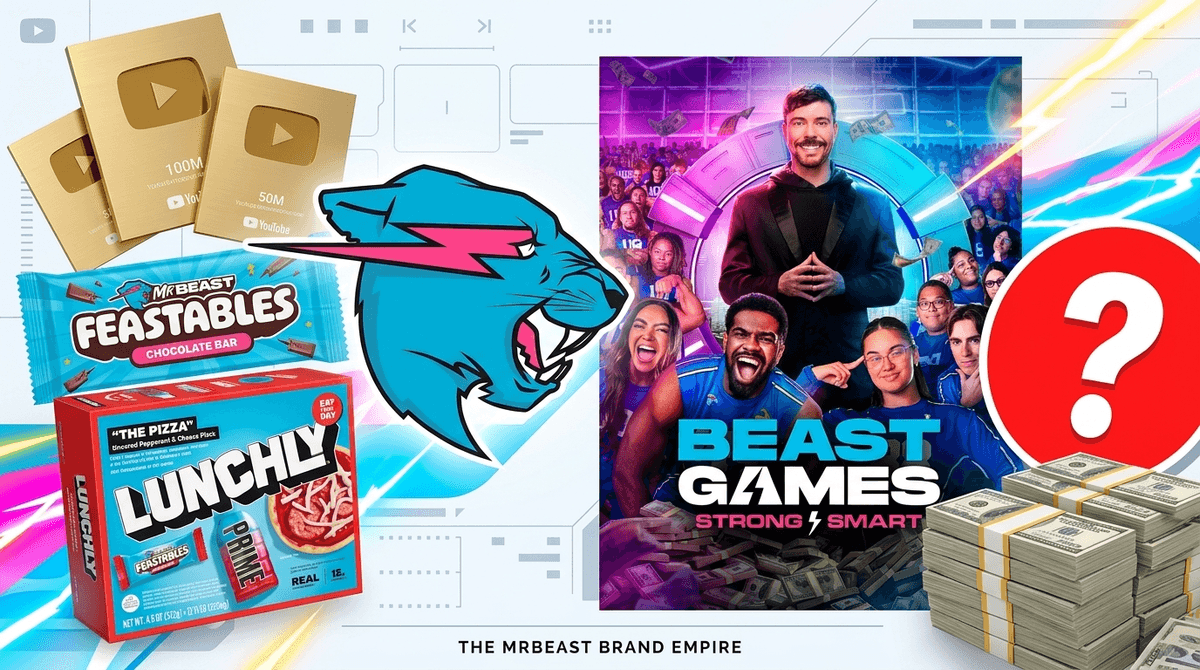
He’s not just a creator anymore; he’s a conglomerate. He has MrBeast Philanthropy, where he builds wells or gives away houses, and a snack empire including Feastables and the controversial Lunchly.
To kids, he’s a real-life Willy Wonka. To parents, he’s a fascinating, slightly exhausting case study in "Challenge Culture"—the digital trend where everything is a competition and every moment must be "epic."
If you’ve ever sat through a 15-minute MrBeast video, you probably felt like you just drank five espressos. That’s intentional. He pioneered a style of "retention editing"—fast cuts, loud sound effects, and constant visual changes designed to keep kids from clicking away.
Kids love the vicarious thrill of the win. They imagine themselves in those challenges, winning the $500,000 or the private island. It’s the ultimate "what if?" fantasy. Plus, MrBeast has successfully branded himself as the "good guy" of the internet, making kids feel like they’re part of a movement to change the world, one viral stunt at a time.
For a long time, MrBeast was considered the "safe" YouTuber. But 2024 and 2025 were rough for the brand. If you’re seeing your kids talk about "Beast Drama," here’s the actual breakdown:
MrBeast’s massive reality show on Amazon faced a class-action lawsuit from contestants. Allegations included "inhumane conditions," lack of adequate food and medical care, and even reports of sexual harassment on set. It was a wake-up call that "YouTube scale" production doesn't always have "Hollywood scale" safety protocols.
In late 2024, MrBeast teamed up with Logan Paul and KSI to launch Lunchly, a direct competitor to Lunchables. It was marketed as "healthier," but it quickly became a PR nightmare when influencers found mold in the cheese before the expiration dates. Beyond the mold, the "healthier" claim is mostly marketing—it’s still highly processed food with artificial sweeteners.
Workplace Culture and "Fraud" Allegations
Former employees (most notably "DogPack404") released videos alleging that many of the "random" winners in MrBeast's videos were actually friends or employees, and that some stunts were faked with CGI. An internal investigation in late 2024 resulted in the firing of several employees for workplace misconduct.
There’s a debate in parent circles: Is MrBeast teaching kids about philanthropy and business, or is he just melting their attention spans?
- The Pro: He shows that you can use a platform for good. He’s built houses, funded surgeries, and cleaned oceans. For a kid who loves Minecraft or Roblox, seeing a creator turn a hobby into a world-changing business is inspiring.
- The Con: The content is inherently extrinsic. It’s about the prize, not the process. It can create a "lottery mindset" where kids feel like the only way to succeed is to go viral or win big. And let's be real—the fast-paced editing is the definition of "brain rot" for a 7-year-old’s developing focus.
While YouTube says 13+, we see kids as young as 5 watching MrBeast. Here’s how we break it down:
- Ages 5-8: Not recommended. It’s too loud, too fast, and the concept of "winning $100k" is abstract and overstimulating.
- Ages 9-12: Co-viewing suggested. This is the prime age for MrBeast fans. Talk about the editing. Ask, "Why do you think he yelled there?" or "Do you think that person really stayed in that box for 7 days, or is there a camera crew helping them?"
- Ages 13+: Good for discussion. Use the scandals as a jumping-off point for media literacy. Discuss how "philanthropy as content" can be complicated.
If your kid is obsessed, don't just ban it—that usually backfires. Instead, try these conversation starters:
- "How does your brain feel after watching three of these in a row?" (Help them notice the overstimulation).
- "If MrBeast didn't film himself giving away money, would he still do it?" (A great talk about the ethics of "performing" kindness).
- "What do you think happens behind the scenes of a challenge like this?" (Discuss the safety issues and the reality of production).
If you want the high energy and "wow" factor without the "gambling" vibes and fast cuts, check these out:
The gold standard. He’s a former NASA engineer who does massive "challenges" (like the Squirrel Obstacle Course or Glitter Bombs), but it’s all rooted in science and engineering.
If your kid likes the "stunt" aspect, these guys are great. It’s all about trick shots and sports challenges. It’s wholesome, competitive, and significantly less "noisy" than the Beast empire.
For the curious kid. Destin explores how the world works through slow-motion cameras and deep-dive experiments. It’s the opposite of brain rot.
MrBeast isn't "evil," but he is a business. His primary goal is your child’s attention, which he then sells to advertisers or uses to move Feastables bars.
By all means, let them watch the $1 vs $1,000,000 hotel video, but make sure they know that the world doesn't actually work like a YouTube thumbnail. Real life is slower, quieter, and rarely involves a giant red circle in the middle of a desert.
- Check the History: Take a peek at your kid's YouTube watch history. Are they watching the main channel or the "Beast Reacts" stuff? (The reactions are much closer to pure brain rot).
- The "One-for-One" Rule: For every MrBeast video they watch, have them watch one "educational" creator like Mark Rober.
- Audit the Snacks: If they're begging for Lunchly, use it as a chance to read the nutrition label together. It’s a great real-world health lesson.