

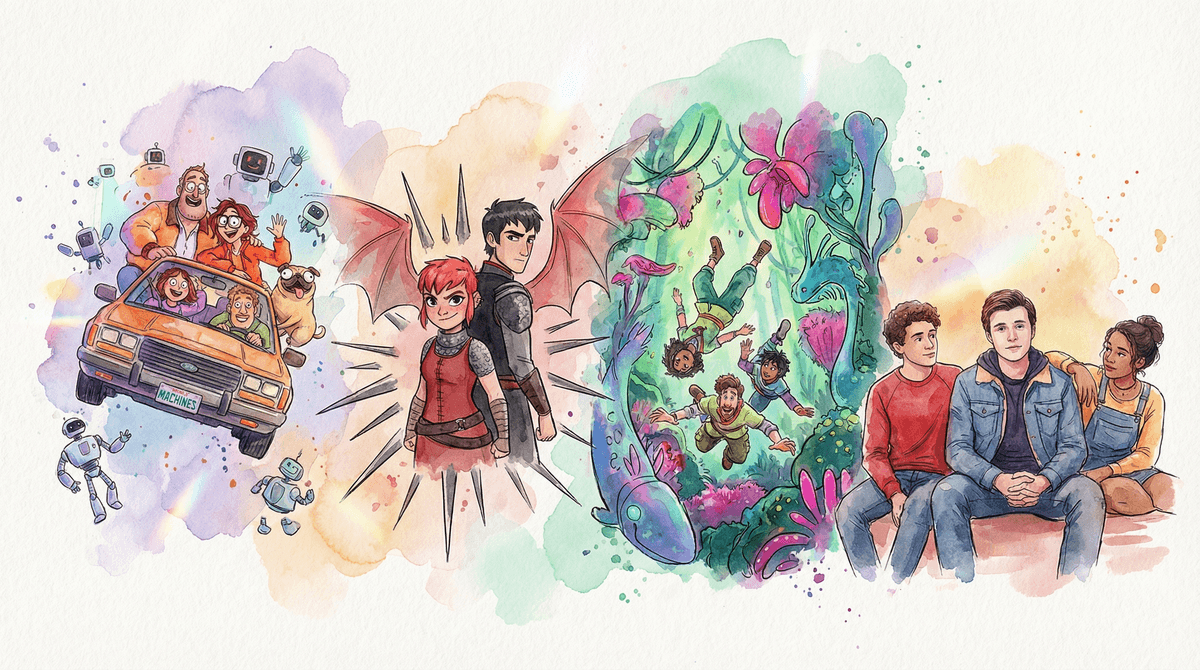
LGBTQ+ representation in movies has gone from basically nonexistent to... well, still pretty sparse, but definitely more visible. We're talking about films where characters who are lesbian, gay, bisexual, transgender, queer, or questioning show up as actual people with actual storylines—not just the "quirky best friend" or tragic backstory device.
Here's the thing: your kids are already seeing LGBTQ+ people in their lives. Teachers, coaches, friends' parents, maybe their own family members. The question isn't whether they'll encounter LGBTQ+ representation—it's whether you want them learning about it through thoughtful storytelling or through whatever random TikTok the algorithm serves up.
And look, this can feel complicated. Maybe you grew up in a different time, or your family has specific values, or you're just not sure how to talk about this stuff. That's okay. But here's what research shows: kids who see diverse representations of people and families grow up more empathetic and less anxious about difference. That's pretty much it.
Studios aren't doing this to be "woke" or whatever—okay, some marketing departments definitely lean into it—but mostly it's because LGBTQ+ people exist and telling stories about actual human experiences makes for better movies. Also, a huge percentage of creative people in Hollywood are LGBTQ+, so it's kind of wild it took this long.
The representation ranges from:
- Background/subtle: Two moms picking up a kid at school, a character mentioning their same-sex partner
- Secondary character: A supporting character who's openly LGBTQ+
- Central storyline: The main plot involves LGBTQ+ identity or relationships
Most kids' movies with LGBTQ+ content fall into that first category—it's just there, normalized, not a big deal. Which is honestly how most kids process it too, until adults make it weird.
Ages 4-8: Keep It Simple
At this age, kids accept "some families have two moms" or "some people are boys who were born girls" with the same energy they accept "some people are allergic to peanuts." It's just information.
Good picks:
- The Mitchells vs. The Machines - Katie is casually gay, it's mentioned once, moving on
- Strange World - The main character has a crush on a boy, it's adorable and handled exactly like any other Disney crush
- Lightyear - Two women are married, you see them for maybe 30 seconds total
These movies don't make a big deal of it, so your kids probably won't either unless you do.
Ages 9-12: They're Noticing More
Middle elementary kids are starting to understand relationships beyond "people who love each other." They're also picking up on social dynamics and might have questions about why some people think this stuff is controversial.
Good picks:
- Turning Red - Minor LGBTQ+ representation but great for talking about bodies, identity, and family expectations
- The Sea Beast - Two women are clearly a couple, it's normalized and sweet
- Luca - Okay, Disney says it's about friendship, but come on. Many kids (and adults) read it as a queer coming-of-age story. Either interpretation works.
Ages 13+: Real Conversations
Teens can handle—and often want—more complex narratives about identity, coming out, discrimination, and relationships.
Good picks:
- Love, Simon - The gold standard for teen coming-out stories. Sweet, funny, age-appropriate.
- Heartstopper (it's a show, but too good not to mention) - The most wholesome queer teen romance you'll find
- Nimona - Shapeshifting, found family, and a relationship between two men that's just... there. Also the movie absolutely slaps.
- Everything Everywhere All at Once - One of the main storylines involves a daughter's relationship with her girlfriend. Note: Rated R for language and some violence, but many parents find it fine for mature 14+
The Ones That Might Surprise You
Some movies have LGBTQ+ characters or themes that flew under the radar or were added subtly:
- Onward - A female cop mentions her girlfriend in one line
- Finding Dory - Two women with a baby in a stroller, blink and you'll miss it
- Frozen - Not explicitly LGBTQ+, but "Let It Go" became a queer anthem for a reason
"But My Kid Hasn't Asked About This"
Cool! That probably means they're processing it as normal, which is healthy. You don't need to make it a big sit-down conversation unless they bring it up or you sense confusion.
When they do ask, keep it age-appropriate:
- Young kids: "Some families have a mom and a dad, some have two moms or two dads, some have one parent. All families are different."
- Older kids: "People fall in love with different genders. Some boys like girls, some boys like boys, some people like both or neither. It's all normal."
- Teens: They probably know more than you think. Your job is to make sure they know your family is a safe place to talk about this stuff.
"What If My Family's Values Are Different?"
Here's the reality: you can't completely control what your kids see, especially as they get older. You can decide what plays in your home, but they'll encounter this content at friends' houses, school, online.
The choice isn't really "exposure or no exposure"—it's whether you're part of the conversation or not. Even if your family holds traditional views about relationships, teaching your kids to be respectful and kind to LGBTQ+ people isn't compromising your values—it's basic human decency.
That said, you're the parent. If you want to preview movies first or skip certain content, that's your call. Just know that avoidance often creates more curiosity and confusion than honest conversation.
The "Agenda" Question
Let's address the elephant in the room: Is there a "gay agenda" in kids' movies?
Honestly? If the agenda is "LGBTQ+ people exist and deserve to be treated like human beings," then... sure? But that's not really an agenda, that's just reality.
Here's what's actually happening: Studios are trying to reflect the actual diversity of families and people that exist. Sometimes they do it well, sometimes it feels forced or like box-checking. But the same is true for how they represent race, disability, or any other form of diversity.
Bad representation exists. Pandering exists. But most of these movies are just trying to tell good stories that include more kinds of people.
Ratings Aren't Always Helpful Here
The MPAA doesn't rate LGBTQ+ content differently than straight content, but some parents feel blindsided when it shows up. Common Sense Media is your friend here—they specifically call out LGBTQ+ representation in their reviews so you can make informed choices.
If Your Kid Asks "Why Does That Character Have Two Dads?"
Ages 4-8: "Some kids have two dads! Just like some kids have a mom and a dad, or just a mom, or live with their grandparents. Families can look different."
Ages 9-12: "People fall in love with who they fall in love with. Some men marry women, some men marry men, some women marry women. It's all normal and okay."
Ages 13+: They probably already know, but if they're asking, they might be testing whether you're a safe person to talk to about this. Keep it casual and affirming.
If Your Kid Says "That's Weird" or "That's Gross"
Don't panic. Kids often mirror language they've heard without understanding it.
Try: "What makes you say that? Have you heard other people say that?" Then: "In our family, we don't think people are gross or weird just because they're different from us. People love different people, and that's okay."
If Your Kid Says "Am I Gay?"
First: Take a breath. This might be genuine questioning, or they might be testing vocabulary, or processing what they've seen.
Try: "That's a great question. Some people know who they like when they're young, some people figure it out when they're older. You don't have to know right now. Whatever you figure out about yourself, I love you."
Then maybe learn more about supporting kids questioning their identity .
.
LGBTQ+ representation in movies isn't going away—it's increasing, and that's probably a good thing for everyone. Kids who see diverse representations grow up more empathetic, less anxious about difference, and more comfortable with themselves.
You don't have to be an expert. You don't have to have all the answers. You just have to be willing to have the conversation and make your home a place where questions are okay.
Most kids will process LGBTQ+ characters the same way they process any other characters: Are they funny? Brave? Annoying? The identity stuff is usually way less interesting to them than it is to adults.
- Preview if you need to: If you're unsure about a movie, watch it first or check Common Sense Media reviews
- Follow your kid's lead: If they don't bring it up, it might not be a big deal to them
- Keep communication open: Make sure your kid knows they can ask questions without judgment
- Remember: Representation in media doesn't change who your kid is—it just helps them understand the world they already live in
And hey, if you want to dig deeper into any specific movie or show, check out our media library where you can see ratings, WISE scores, and what other parents are saying.