

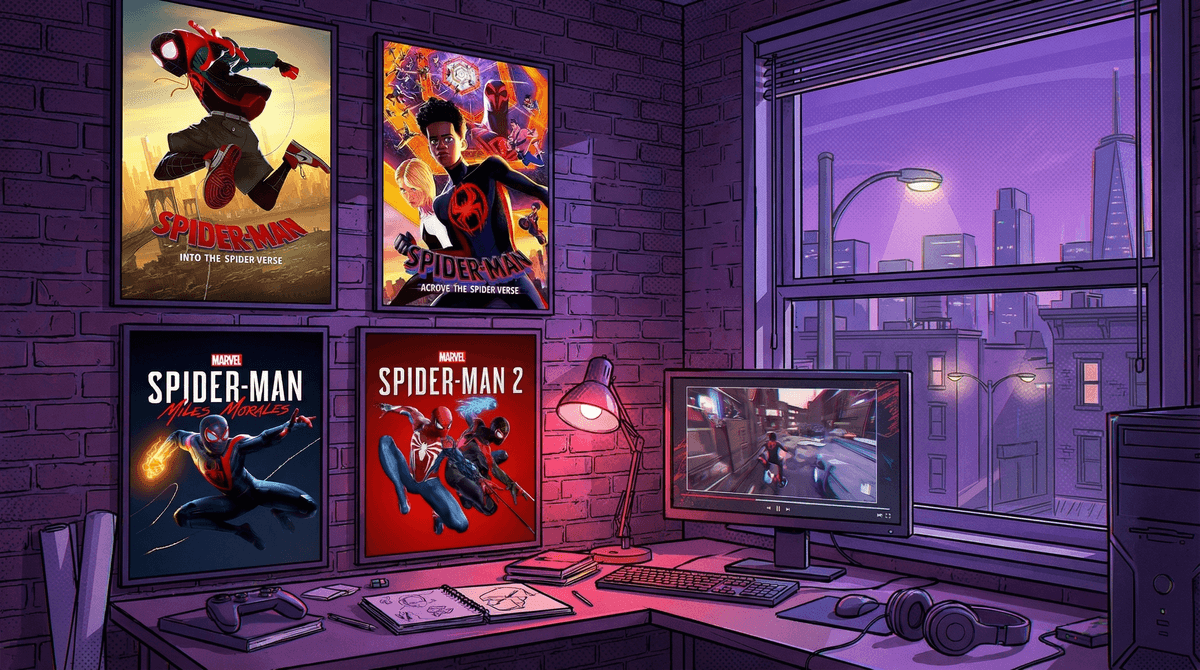
Miles Morales is a Spider-Man—but not the Spider-Man most parents grew up with. He's a Black-Latino teenager from Brooklyn who got his own spider bite and became a web-slinging superhero in his own right. Miles first appeared in Marvel comics in 2011, but he really exploded into mainstream consciousness with the 2018 animated film Spider-Man: Into the Spider-Verse, which won an Oscar and became a cultural phenomenon.
Since then, Miles has starred in the sequel Spider-Man: Across the Spider-Verse, two popular PlayStation video games (Marvel's Spider-Man: Miles Morales and Marvel's Spider-Man 2), and has become a major presence in kids' media. He's on backpacks, in Fortnite, and very much part of the current Spider-Man universe that kids are growing up with.
Miles resonates with kids in a way that feels different from Peter Parker. He's figuring things out as he goes, dealing with normal teenage stuff like disappointing his parents, not fitting in at his new school, and feeling like he's not good enough. His powers don't come naturally—he has to learn them, mess up, and try again.
The representation matters too. For Black and Latino kids, seeing a superhero who looks like them, speaks Spanish with his mom, and navigates code-switching between his Brooklyn neighborhood and his prep school is genuinely meaningful. But Miles also appeals broadly because his story is about feeling like you don't belong and learning to be yourself anyway—pretty universal middle school territory.
His unique powers are also just cool. Yes, he can do the classic Spider-Man stuff, but he also has invisibility (or "camouflage") and a venom strike that can stun enemies with bioelectric energy. Kids love debating whether Miles or Peter is the better Spider-Man, and honestly, that's part of the fun.
The Movies (Ages 7+): Both Spider-Verse films are rated PG and genuinely family-friendly, though the sequel is longer and more emotionally complex. The animation style is groundbreaking—it looks like a comic book come to life, which some younger kids find visually overwhelming at first. There's superhero action and peril, but it's not graphic. The themes about identity, family expectations, and choosing your own path actually give you great conversation starters with kids.
With about 40% of families in our community using Netflix regularly for kids' content, it's worth noting that while the Spider-Verse movies aren't always on streaming, they cycle through various platforms. Disney+ has other Spider-Man content, but the Miles-focused movies are Sony properties.
The Video Games (Ages 10+): The PlayStation Spider-Man games are rated T for Teen (13+), but many parents let 10-12 year olds play them. They're less violent than games like Call of Duty but do involve combat. You're fighting criminals and supervillains, but it's stylized superhero action rather than realistic violence. The games are single-player story experiences—no online interactions with strangers, which is a plus for parents worried about that aspect.
About 55% of families in our community have kids who game regularly, and the Spider-Man titles are popular choices because they feel "safer" than many alternatives while still being legitimately fun and well-made.
The Good Stuff: Miles's stories consistently emphasize responsibility, community, and family. His relationship with his parents—especially his mom Rio and his late uncle Aaron—drives much of his character development. The games and movies show him grappling with real consequences of his choices. He's not a perfect hero, and that's the point.
The Spider-Verse films in particular are sophisticated about themes like grief , identity, and the pressure to live up to expectations. They're the kind of movies that work on multiple levels—kids get the action and humor, while parents catch the deeper emotional beats.
Potential Concerns: The games involve more intense action than the movies. There's fighting, some mild language, and Miles deals with threats to his neighborhood and loved ones. The emotional stakes can be high—characters die, relationships are tested, and Miles faces genuine danger. For sensitive kids, this might be too much, especially in game form where they're controlling the action.
The sequel film, Across the Spider-Verse, ends on a cliffhanger that left some kids genuinely upset. Worth knowing before you commit to movie night.
Ages 6-8: The first Spider-Verse movie works for many kids this age, especially those already into superheroes. Preview it yourself first if your kid is sensitive to peril or sad moments. The games are probably too complex and intense.
Ages 9-12: This is the sweet spot for Miles content. The movies are accessible, the games become playable (with parental judgment on the Teen rating), and kids can really connect with Miles's coming-of-age story.
Ages 13+: Teens can engage with all the layers of Miles's stories, including the more complex themes about systemic issues, code-switching, and identity that the content explores.
Miles Morales represents something genuinely positive in kids' media—a superhero who's figuring out who he is while trying to do the right thing. The content is well-made, the themes are solid, and the representation matters.
If your kid is into Miles, you've got built-in conversation starters about responsibility, family, and staying true to yourself. That's not nothing in the landscape of kids' media. The movies are worth watching together, and if you have a PlayStation and a kid in the right age range, the games are actually pretty great too.
- Watch together: The Spider-Verse movies are genuinely enjoyable for adults too. Make it family movie night and talk about it after.
- Check out the games: If you're curious whether the PlayStation games are right for your kid, look up gameplay videos to see the actual content.
- Use Screenwise: Take our survey to see how your family's media habits compare with your community, and get personalized recommendations for what's next.
Want to dig deeper into superhero content for kids or compare Miles to other characters your kids love? Find superhero content for kids to get personalized guidance for your family.