

Mastering the Art of the Slow Movie Pitch
Your kid wants to watch Deadpool. You know they're not ready. Instead of a hard "no," try the slow pitch: acknowledge their interest, explain your reasoning without being preachy, and offer a bridge movie that gets them closer to what they want. This guide will teach you how to turn "Can I watch..." into a conversation about media literacy, patience, and building toward the good stuff together.
Quick wins:
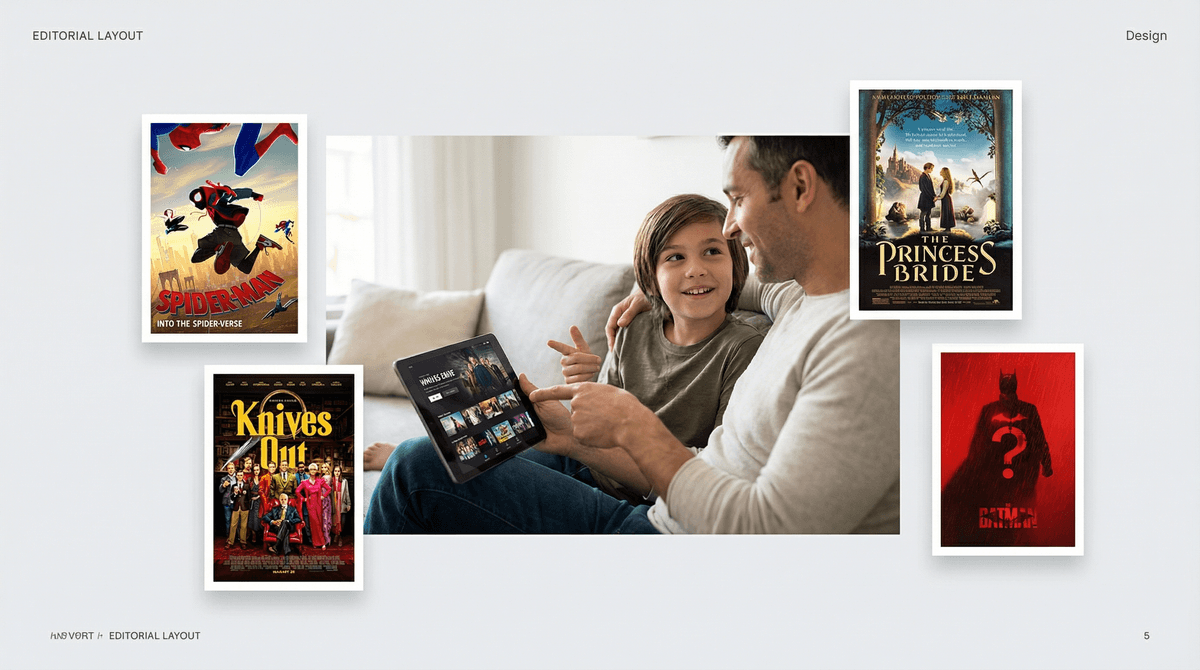
- Spider-Man: Into the Spider-Verse (bridge to superhero violence)
- The Princess Bride (bridge to adventure/romance)
- Knives Out (bridge to mature mysteries)
Every parent knows this moment. Your 10-year-old comes home from school buzzing because "everyone" is talking about some movie that's rated R, or PG-13 but really pushing it, or technically fine but you know in your gut they're not ready.
The easy move is to say no. The harder move—the one that actually teaches something—is to say "not yet, but here's what we can watch that gets you closer."
This is the slow movie pitch, and it's one of the most underrated parenting tools in your arsenal.
When you flat-out deny a movie request, you're technically winning the battle but potentially losing the war. Your kid learns that you're the gatekeeper, but they don't learn why certain content might not be right for them yet. They don't develop their own media literacy muscles. And honestly? They might just watch it at a friend's house anyway.
The slow pitch does something different. It:
Validates their interest - "I totally get why you want to see that. The trailers look amazing and your friends are talking about it."
Explains your reasoning - Not in a lecture-y way, but in a "here's what I'm thinking" way that treats them like a person capable of understanding nuance.
Offers a bridge - This is the magic. You're not saying "no, watch this baby movie instead." You're saying "let's watch this movie that has similar themes/humor/action, and we can talk about whether you're ready for the next level."
Creates shared experience - You're watching together, which means you can pause, discuss, and gauge their reactions in real time.
Let's say your 11-year-old wants to watch The Batman (2022). It's PG-13, but it's also three hours of genuinely dark, violent, and intense content. Here's how the conversation might go:
Step 1: Acknowledge "That movie looks incredible. The cinematography is supposed to be amazing, and I've heard Robert Pattinson is really good in it."
Step 2: Name the concern (without catastrophizing) "My hesitation is that it's really dark and violent—not in a gory way, but in a 'this might stick with you in an uncomfortable way' sense. It's also three hours, which is a lot of intensity."
Step 3: Offer the bridge "What if we start with Spider-Man: Into the Spider-Verse? It's got amazing visuals, real stakes, and some genuinely emotional moments. If you handle that well and want more, we can try The Batman in a few months."
Step 4: Make it collaborative "After we watch Spider-Verse, let's talk about it. If you feel like you're ready for something darker, we'll figure out the next step together."
For Kids Who Want R-Rated Action
They want: John Wick, Deadpool
Bridge with:
- Spider-Man: Into the Spider-Verse (Ages 8+) - Stylized action, real stakes, no gore
- The Incredibles (Ages 7+) - Superhero violence with consequences
- Mad Max: Fury Road (Ages 13+) - Intense but not gratuitous, incredible filmmaking
For Kids Who Want Horror
They want: A Quiet Place, Get Out
Bridge with:
- Coraline (Ages 9+) - Genuinely creepy, great for testing tolerance
- The Sixth Sense (Ages 11+) - Suspenseful without being traumatizing
- A Quiet Place (Ages 12+) - Actually a great family horror option if they handle the bridge movies well
For Kids Who Want Mature Comedy
They want: Superbad, The Hangover
Bridge with:
- The Princess Bride (Ages 8+) - Witty, sophisticated humor
- Galaxy Quest (Ages 10+) - Smart comedy that doesn't rely on raunch
- Ferris Bueller's Day Off (Ages 11+) - Teen comedy with minimal content issues
For Kids Who Want Complex Drama
They want: The Social Network, Parasite
Bridge with:
- Hidden Figures (Ages 10+) - Complex themes, sophisticated storytelling
- Knives Out (Ages 12+) - Smart, layered, treats the audience with respect
- The Truman Show (Ages 11+) - Raises big questions, appropriate content
Sometimes the answer really is just "no, not yet." If your 8-year-old wants to watch Saw, there's no bridge movie that makes sense. Some content is simply age-inappropriate, full stop.
The slow pitch works best when:
- The content is in the "maybe in a year or two" category
- Your kid has shown media literacy in the past
- You're willing to watch together and discuss
- There's actually a good bridge option available
It doesn't work when:
- The content is way outside their developmental range
- They're asking because they want to seem cool, not because they're genuinely interested
- You don't have time to watch together and debrief
After you watch the bridge movie, actually talk about it. Not in a "let me quiz you on the themes" way, but in a genuine conversation:
- "What did you think?"
- "Were there any parts that felt too intense?"
- "What did you notice about how they showed violence/conflict/romance?"
- "Do you feel ready for something more mature, or should we stay at this level for a bit?"
Their answers will tell you everything you need to know about whether they're ready for the next step.
Ages 8-10: Focus on PG movies that have real stakes. Kubo and the Two Strings, How to Train Your Dragon, Coco.
Ages 11-12: PG-13 becomes viable, but be selective. Spider-Man: Homecoming, The Hunger Games (with discussion), Ender's Game.
Ages 13-14: Some R-rated content becomes appropriate, depending on the kid. Ferris Bueller, The Martian, Knives Out.
Ages 15+: They can probably handle most mainstream R-rated content, but you should still watch together when possible and discuss themes.
This is the nuclear argument, and it's almost never true. When your kid says "everyone" has seen Squid Game, what they mean is "the three loudest kids in my class have seen it and won't shut up about it."
Your response: "I hear you, and I know it feels like you're missing out. But 'everyone' isn't actually everyone, and even if it were, we make decisions based on what's right for our family, not what other families are doing. Let's find something you'll actually enjoy that we both feel good about."
Then pivot to the bridge movie. If you're curious about what percentage of kids in your community are actually watching specific shows or movies, Screenwise can help you understand those patterns .
.
The slow pitch isn't just about this one movie. It's about teaching your kid that:
- Media literacy is a skill - You're not born knowing what you can handle; you build up to it
- Your opinion matters - You're including them in the decision-making process
- Patience pays off - The movie will still be there in six months, and they'll appreciate it more when they're ready
- You're on their team - You're not the fun-killer; you're the person helping them navigate toward the good stuff
By the time they're teenagers, they'll have internalized this process. They'll self-select appropriate content because they've learned to gauge their own readiness. They'll come to you with questions instead of just watching whatever at a friend's house.
The slow movie pitch takes more effort than just saying no. You have to watch movies with your kid. You have to have actual conversations. You have to be willing to reassess your position if they make a good case.
But the payoff is huge. You're not just controlling what they watch—you're teaching them how to think about what they watch. You're building trust. You're creating shared experiences that lead to deeper conversations.
And honestly? Some of these bridge movies are genuinely great. The Princess Bride holds up. Knives Out is a blast. Spider-Verse is a masterpiece.
You might find that the slow pitch isn't just good parenting—it's actually kind of fun.
- Make a list of movies your kid has been asking about
- Find bridge options using Screenwise's movie recommendations
- Schedule a watch session - Make it special, not a chore
- Debrief afterward - Their reaction will guide your next move
- Revisit the original request in a few months and see if they're ready