

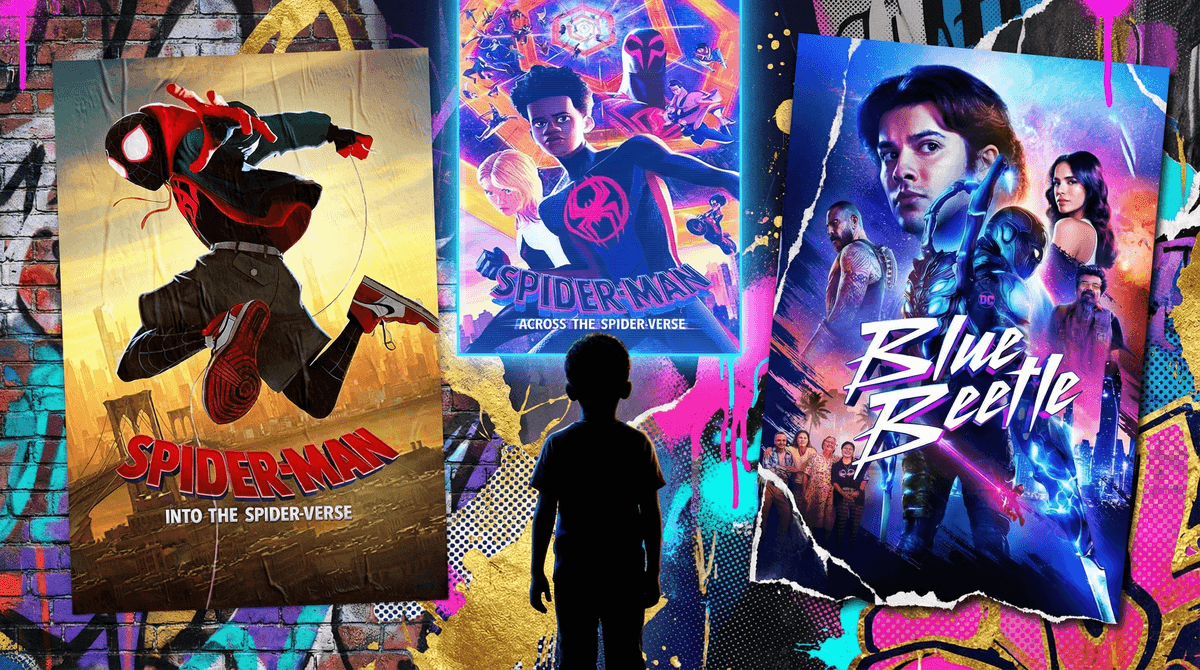
Look, we need to talk about something that's been happening at the box office lately—and it's actually pretty great. Latino superheroes are finally getting their moment on screen, and kids are noticing. From Blue Beetle's Jaime Reyes to Miles Morales in the Spider-Verse films, we're seeing a shift in who gets to wear the cape and save the world.
This matters more than you might think. For Latino kids, seeing someone who looks like them, speaks like their family, and navigates similar cultural experiences while also being the hero? That's huge. And for non-Latino kids? They're learning that heroes come in all backgrounds, which is exactly the kind of casual diversity that shapes how they see the world.
Blue Beetle (2023) was DC's first Latino-led superhero film, and while it didn't break box office records, it did something more important—it showed a Mexican-American family front and center, speaking Spanglish, dealing with immigration anxiety, and being unapologetically themselves. The Reyes family isn't a stereotype; they're just... a family. One that happens to be Latino and also has an alien scarab attached to their son.
Then there's Miles Morales in Spider-Man: Into the Spider-Verse and Across the Spider-Verse. Miles is Afro-Latino (Puerto Rican and Black), and the films don't shy away from that. His dad speaks Spanish, his uncle is from the neighborhood, and the cultural touchstones are woven throughout. These movies aren't "about" being Latino—they're about being Spider-Man while also being Latino, which is exactly how identity works in real life.
And let's not forget América Chavez in Doctor Strange in the Multiverse of Madness, or the fact that Encanto (while not a superhero film) showed Colombian culture and magical realism to massive audiences. Kids are growing up with a different baseline than we did.
Here's what's happening in your kid's brain when they watch these films:
Identity validation: For Latino kids, these characters say "you belong in these stories." They don't have to imagine themselves as someone else—they can just... be themselves and still be the hero. That's not small.
Cultural pride: Seeing Spanish spoken on screen without subtitles, seeing family dynamics that mirror their own, seeing food and music and humor that feels familiar—it normalizes their experience. They're not "other," they're just part of the story.
Expanded imagination: For non-Latino kids, this is how they learn that the world is bigger than their immediate experience. When a 7-year-old white kid thinks Miles Morales is the coolest Spider-Man (and many do), they're learning that heroes don't all look the same. That's the kind of casual exposure that builds empathy.
Not all representation is created equal, and it's worth being thoughtful about what your kids are consuming:
Blue Beetle (PG-13) is genuinely family-forward and culturally specific. It's also violent in the way superhero movies are—lots of fighting, some scary moments, explosions. Ages 10+ can probably handle it, but know your kid. Check out our full review for specifics.
The Spider-Verse films (PG) are visually intense and emotionally complex. Into the Spider-Verse is accessible for ages 8+, but Across the Spider-Verse gets darker and more existential. Some kids will love the depth; others might find it overwhelming. Here's our breakdown.
Encanto (PG) is the most accessible entry point for younger kids (ages 5+) to see Latino culture celebrated on screen. It's not a superhero movie, but the themes of family expectations, generational trauma, and finding your place are powerful—and the music slaps.
If your kid is connecting with these characters, lean into it:
Ask open-ended questions: "What do you like about Miles?" or "Why do you think Jaime's family is so important to the story?" Let them articulate what resonates.
Make cultural connections: If you're Latino, this is a chance to talk about your own family's experiences. If you're not, this is a chance to learn together. Want help navigating these conversations?
Expand the universe: If your kid loves these characters, introduce them to more. Miles Morales comics, other Latino-led shows like The Casagrandes, or even podcasts that explore Latino culture and history.
Latino heroes at the box office aren't just "representation for representation's sake"—they're expanding what kids think is possible. For Latino kids, it's validation. For everyone else, it's education through entertainment, which is honestly the best kind.
These films aren't perfect, and Hollywood still has a long way to go (we're still waiting for more than one Latino-led superhero franchise at a time). But the shift is real, and your kids are absorbing it whether you're actively talking about it or not.
So watch these movies with them. Ask questions. Let them see themselves—or see others—as heroes. That's the kind of screen time that actually matters.
- Watch Blue Beetle or the Spider-Verse films together
- Talk about what makes a hero—and whether it has anything to do with how they look or where they're from
- Explore more Latino-led content across different genres using Screenwise's recommendations
- If your kid is inspired, encourage them to create their own hero stories—representation starts with imagination