

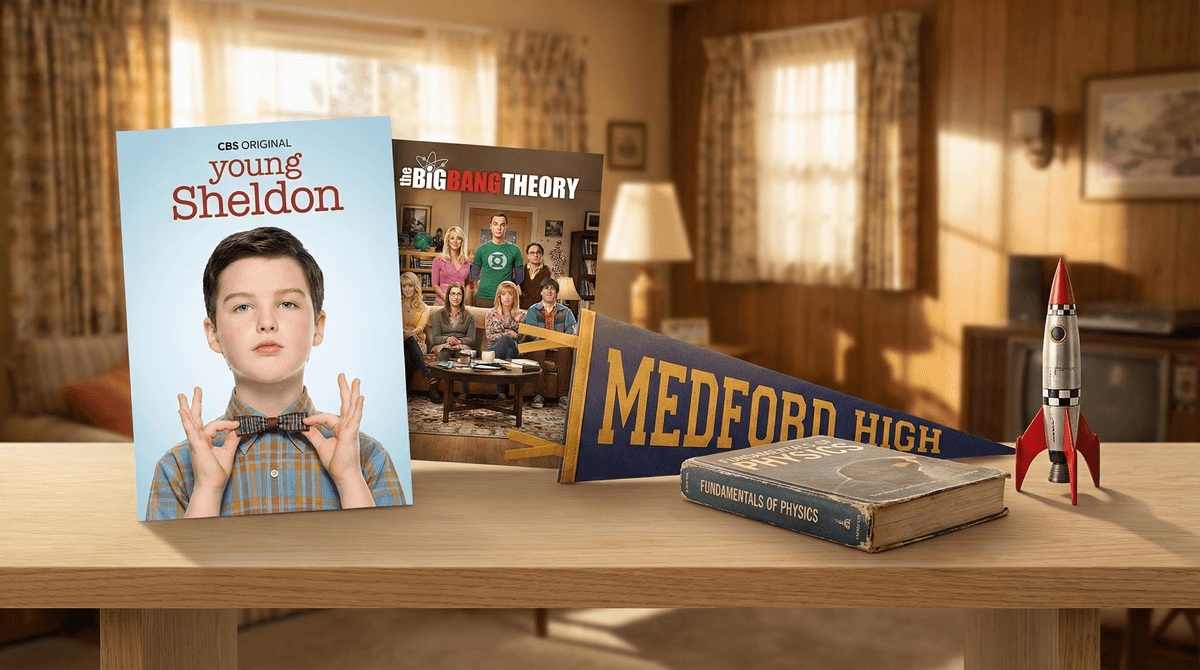
Is Young Sheldon Appropriate for Kids? What Parents Need to Know
TL;DR: Young Sheldon is rated TV-PG, but it skews older than that rating suggests. Best for ages 12+ due to occasional profanity, adult humor, and mature themes about religion, death, and family dysfunction. Younger kids (8-11) who loved The Big Bang Theory might enjoy it with parental guidance, but expect some awkward conversations.
Young Sheldon is the prequel series to The Big Bang Theory, following 9-year-old genius Sheldon Cooper as he navigates high school in East Texas during the late 1980s and early 90s. Unlike its parent show's laugh-track sitcom format, Young Sheldon uses single-camera storytelling with an adult Sheldon (voiced by Jim Parsons) narrating his childhood.
The show ran for seven seasons (2017-2024) and follows Sheldon's family: his football coach father George Sr., devoutly Christian mother Mary, rebellious older brother Georgie, sarcastic twin sister Missy, and beer-loving grandmother Meemaw. It's essentially a family dramedy that happens to star a child prodigy.
Young Sheldon has found an audience with middle schoolers for a few reasons:
The smart kid appeal. Sheldon is unapologetically brilliant and weird, which resonates with kids who feel different or don't fit in. He doesn't try to be cool, and that's actually what makes him compelling to watch.
Family dynamics feel real. The Coopers aren't a perfect TV family. They argue, they struggle financially, and they don't always understand each other. Kids recognize their own family chaos in the show.
Nostalgia factor for parents. Many families watch together because parents loved The Big Bang Theory. This creates a shared viewing experience, even if the humor lands differently for different ages.
It's actually funny. The writing is sharp, and Iain Armitage's performance as young Sheldon is genuinely charming. The show doesn't talk down to its audience.
Here's what you need to know before deciding if Young Sheldon works for your family:
Language
The show uses mild profanity more frequently than you'd expect from TV-PG. "Hell," "damn," and "ass" appear regularly. There's occasional use of "bitch" and religious exclamations like "Jesus Christ" used as profanity. The word "crap" gets heavy rotation.
Season 4 and beyond get progressively more casual with language as the characters age. If your family has strict rules about certain words, this will come up.
Sexual Content
Young Sheldon keeps sexual content mostly off-screen, but it's definitely present in the storyline:
- Georgie (Sheldon's teenage brother) has an active dating life, and later seasons deal with an unplanned pregnancy when he's 17
- Parents George and Mary have marital problems that include implied infidelity (a major plot point in later seasons)
- Teenage characters discuss dating, relationships, and occasionally make innuendo-laden jokes
- Meemaw has boyfriends and there are references to her adult relationships
Nothing graphic is shown, but the themes are mature and handled more like a drama than a kids' show.
Religious Themes
This is where Young Sheldon gets genuinely interesting and potentially uncomfortable, depending on your family's views:
Mary Cooper is a devout Christian who takes her family to church regularly. Sheldon, even as a child, is an atheist who questions religious teachings. The show doesn't mock Mary's faith, but it also doesn't shy away from Sheldon's scientific worldview.
Episodes tackle prayer, evolution vs. creationism, and what happens when a religious parent raises a non-religious child. These conversations are handled with more nuance than most sitcoms attempt, but they might spark questions from younger viewers.
Mature Themes
The show deals with some heavy topics:
- Death: Multiple characters die throughout the series, including George Sr. (though this happens in the final season)
- Alcoholism: George Sr.'s drinking is an ongoing concern
- Financial stress: The Coopers struggle with money regularly
- Academic pressure: Sheldon faces isolation and bullying for being different
- Marital problems: George and Mary's relationship deteriorates over time
These aren't treated as punchlines—they're real dramatic elements that give the show emotional weight.
Ages 12+: This is the sweet spot. Middle schoolers can appreciate the humor, understand the family dynamics, and process the more mature themes with context. They're old enough to get why certain situations are complicated without needing everything explained.
Ages 8-11: Possible with parental co-viewing. Kids in this range who loved The Big Bang Theory or shows like The Wonder Years might enjoy the fish-out-of-water storylines and Sheldon's social awkwardness. But be prepared to fast-forward through some scenes or pause for conversations about what's happening.
Younger elementary kids will miss most of the humor and might be confused by the adult storylines. The show's pacing and storytelling style aren't designed for short attention spans.
Is Young Sheldon OK for a 10-year-old?
For most 10-year-olds, yes — with you in the room. A 10-year-old will follow the story easily and probably love Sheldon, but the show treats them as a slightly older audience than the TV-PG label implies: the language is casual ("hell," "damn," "ass" land regularly, and more so from Season 4 on), and the family storylines run through infidelity, drinking, and religious doubt. If your 10-year-old already watches sitcoms with you and you're comfortable pausing to talk about what Georgie or Mary just did, it works. If you'd rather not field those questions yet, wait a year or two.
Under 8: Skip it. The content isn't age-appropriate, and frankly, they'll be bored. Check out Bluey or The Magic School Bus instead.
Young Sheldon isn't Full House or even Modern Family. It's more honest about family dysfunction and doesn't wrap everything up neatly in 22 minutes.
The show's willingness to let characters be flawed—sometimes deeply flawed—makes it feel more authentic, but also means it's not trying to model perfect behavior for kids. George Sr. isn't a role model dad. Mary can be controlling. Georgie makes terrible decisions. Sheldon is often insufferable.
This is actually one of the show's strengths as a piece of storytelling, but it means you can't just park your kids in front of it and assume they're absorbing positive messages.
Some parents appreciate that Young Sheldon celebrates intellectualism and scientific thinking. Sheldon's passion for physics, mathematics, and logic is central to his character, and the show doesn't make him "cool down" his interests to fit in.
Episodes incorporate real scientific concepts, historical events from the late 80s/early 90s, and occasionally explore academic ethics and the challenges gifted kids face in traditional school systems.
That said, this isn't an educational show. It's entertainment that happens to feature a smart protagonist. If you want actual science content for kids, check out shows like Bill Nye the Science Guy or podcasts like Brains On!.
If you decide Young Sheldon is appropriate for your family, here's how to make it work:
Start with Season 1. The early seasons are lighter in tone and easier to gauge whether your kids can handle the content. Later seasons get progressively more dramatic.
Co-view, especially at first. This lets you skip scenes that don't work for your family and answer questions in real-time. The show moves quickly, and younger kids might need context for jokes or situations.
Use it as a conversation starter. The religious discussions, family conflicts, and social challenges Sheldon faces can open up great conversations about how your family handles similar situations.
Know when to bail. If you get a few episodes in and realize it's not working, that's fine. There are plenty of other family-friendly shows that might be a better fit.
If Young Sheldon feels too mature but you want something with similar themes:
- The Mysterious Benedict Society: Smart kids solving problems, actually designed for middle-grade audiences
- A Series of Unfortunate Events: Dark humor and intelligent protagonists, but more age-appropriate for 8-12
- The Inbestigators: Australian series about kid detectives, lighter tone
- Odd Squad: Math-focused problem solving for elementary ages
For teens who can handle Young Sheldon's content, consider Gilmore Girls for fast-paced dialogue and family dynamics, or Derry Girls for coming-of-age stories with more edge.
Young Sheldon is a well-written, emotionally complex show that happens to center on a child character—but it's not really a kids' show. The TV-PG rating undersells the mature content, particularly in later seasons.
Best for ages 12+ who can handle mild profanity, mature themes, and complex family dynamics. Younger kids (8-11) might enjoy it with significant parental involvement, but you'll be doing some content management.
The show's greatest strength—its willingness to portray realistic family struggles—is also what makes it inappropriate for younger viewers. If your middle schooler loved The Big Bang Theory and you're okay with occasional language and adult themes being part of your viewing experience, Young Sheldon delivers smart, funny, heartfelt storytelling.
Just don't expect it to be as wholesome as the TV-PG rating suggests. This is a show about growing up different in a family that doesn't always understand you, and it doesn't sugarcoat that experience.
Next Steps: Want to explore more shows for tweens and teens? Or trying to figure out what's actually appropriate for your 10-year-old? Start with those guides to find content that matches your family's values and your kids' maturity levels.