

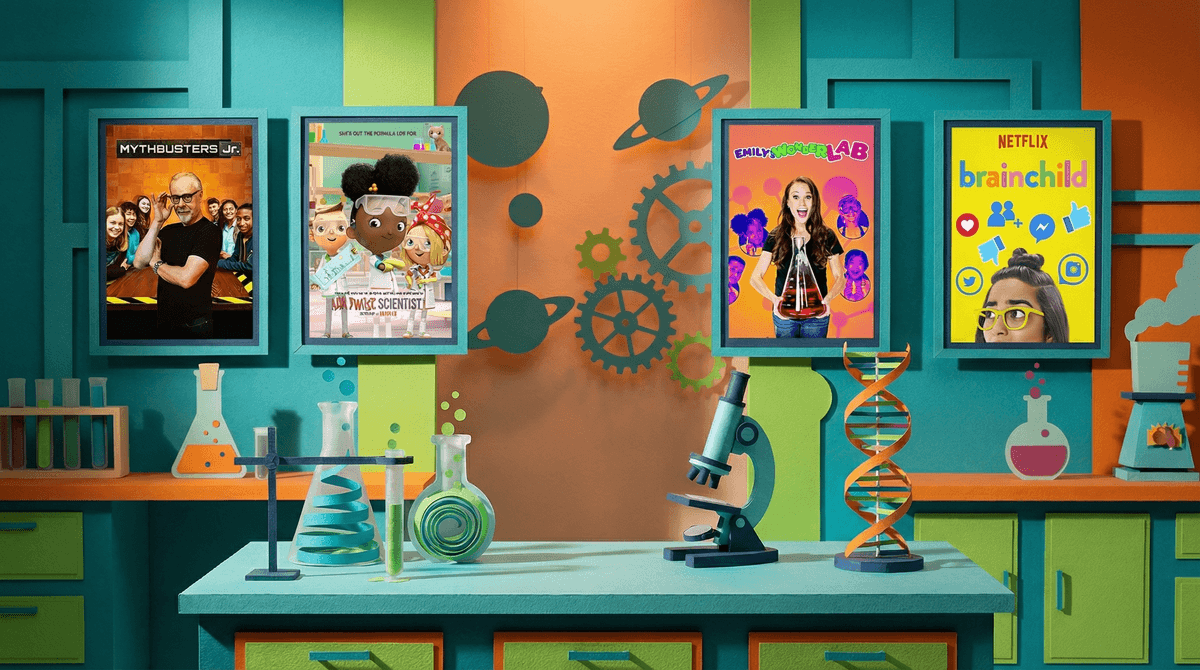
Science shows for kids are educational programs designed to make STEM concepts accessible, engaging, and—here's the magic—actually entertaining. We're talking about shows that explain photosynthesis, space exploration, engineering principles, and the scientific method without making kids feel like they're sitting through a lecture.
The landscape has evolved dramatically from the "Bill Nye in a bow tie" era (though let's be honest, that still holds up). Today's science shows range from Netflix originals with high production budgets to YouTube channels run by actual scientists who happen to be really good at talking to kids. Some are hosted by charismatic educators, others feature kid scientists doing experiments, and a few are straight-up animated adventures that sneak in real science concepts.
The best part? When your kid asks for "just one more episode," you can actually say yes without the screen time guilt spiral. This is the rare category where educational value and entertainment genuinely overlap.
Kids are naturally curious—they want to know why things work, not just that they work. Good science shows tap into that innate curiosity and make the process of discovery feel like an adventure rather than homework.
Shows like Emily's Wonder Lab and Brainchild feature hosts who are genuinely enthusiastic (not the condescending "aren't we having fun, kids?" energy). They do messy experiments, show things exploding or changing colors, and don't shy away from complex topics—they just explain them in age-appropriate ways.
The animation route works differently but equally well. The Magic School Bus (both the original and the Netflix reboot The Magic School Bus Rides Again) turns science concepts into literal adventures. Ada Twist, Scientist models the scientific method through storytelling that resonates with younger kids.
Here's what matters for parents: These shows can actually shape how kids think about learning. When science is presented as exciting and accessible, kids are more likely to see themselves as capable of understanding complex things. That's not just about future STEM careers—it's about building critical thinking skills and intellectual confidence.
Ages 3-6: The "Why?" Years
These kids need simple concepts, bright visuals, and repetition. They're building foundational vocabulary and learning that asking questions is good.
- Octonauts - Marine biology adventures with cute animal characters (Netflix/Disney+)
- Ada Twist, Scientist - Problem-solving through the scientific method (Netflix)
- Elinor Wonders Why - Nature and observation skills (PBS Kids)
Ages 6-9: The Experiment Age
They're ready for more complex explanations and love seeing things happen. This is prime "try this at home" territory.
- Emily's Wonder Lab - Hands-on experiments with real kids (Netflix)
- The Magic School Bus Rides Again - Updated classic with solid science (Netflix)
- SciShow Kids - Short YouTube videos on everything from why leaves change color to how robots work
Ages 9-12: The Deep Dive Phase
These kids can handle nuance, longer attention spans, and are starting to think more abstractly. They want to understand the real science, not the dumbed-down version.
- Brainchild - Each episode tackles one big concept like creativity or germs (Netflix)
- Bill Nye the Science Guy - Yes, it's from the '90s, but the science holds up and the nostalgia factor is real (various streaming)
- Crash Course Kids - YouTube series covering physical science, chemistry, and engineering
Ages 12+: The "Actually Make Me Think" Stage
Tweens and teens need shows that respect their intelligence and tackle real-world applications.
- Mythbusters Jr. - Kid scientists testing myths with actual scientific rigor (Discovery+)
- Project MC² - STEM concepts wrapped in a spy adventure (Netflix)
- Regular Crash Course - The full series covers everything from chemistry to computer science (YouTube)
Production Quality Varies Wildly
Netflix shows like Emily's Wonder Lab have budgets that allow for impressive experiments and slick production. PBS shows are educational gold but might look less flashy. YouTube channels range from professionally produced to "science teacher with a decent camera." None of this necessarily correlates with educational value, but it does affect whether your kid will actually watch.
The YouTube Rabbit Hole Is Real
Channels like Mark Rober (former NASA engineer who does incredible builds) and SciShow are fantastic, but YouTube's autoplay will inevitably lead to... less fantastic content. Here's how to set up YouTube Kids if you want more control, or use YouTube's restricted mode and approved channels only.
Some Shows Inspire Expensive Requests
Be prepared for your kid to want supplies for experiments after watching these shows. The good news: most science experiments use household items (baking soda, vinegar, food coloring). The potentially annoying news: they might want a microscope, telescope, or chemistry set. Find age-appropriate science kits if you're going down that road.
Educational Doesn't Mean Perfect
Even great science shows sometimes oversimplify concepts or use outdated information. The Magic School Bus, beloved as it is, has some scientific inaccuracies from the '90s. That's okay—these shows are starting points for curiosity, not comprehensive textbooks.
The Diversity Factor
Representation matters in STEM. Shows like Emily's Wonder Lab (hosted by a woman scientist of color), Ada Twist, Scientist (Black female protagonist), and Project MC² (diverse cast of girls in STEM) actively work to show kids that scientists look like everyone. This isn't just nice—it's important for helping all kids see themselves in these roles.
Science shows for kids are genuinely one of the best screen time categories out there. They satisfy the "educational content" box while actually being engaging enough that kids want to watch them. The key is matching the show's complexity and style to your kid's age and interests.
Start here:
- Under 7: Try Ada Twist, Scientist or Octonauts
- 7-10: Emily's Wonder Lab or The Magic School Bus Rides Again
- 10+: Brainchild or explore YouTube channels like Mark Rober
And honestly? If your kid gets obsessed with one topic—whether it's space, animals, chemistry, or engineering—lean into it. Let me help you find more resources specific to their interests. That's how you turn screen time into genuine learning time.
The goal isn't to eliminate screens—it's to make the screen time they do have actually worth something. Science shows deliver on that promise.