

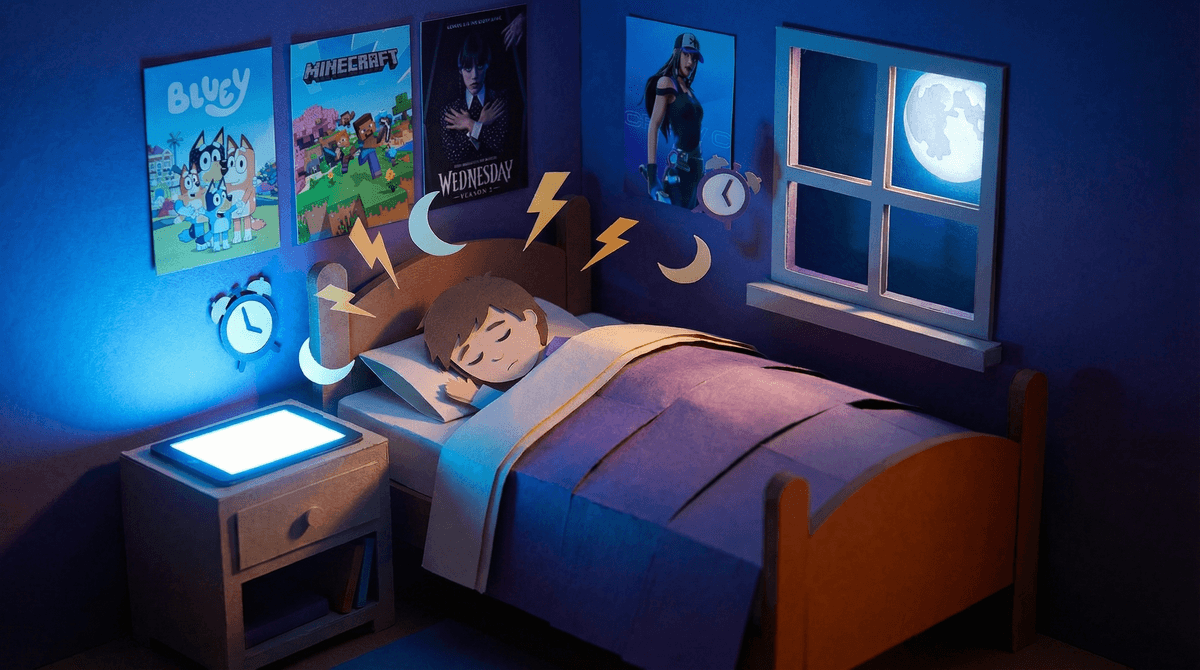
Look, we all know screens and sleep don't mix. But let's get past the vague "blue light bad" thing and talk about what's actually going on when your kid is watching Bluey at 8:47 PM or playing Minecraft until their eyes glaze over.
The science is pretty clear: screens mess with sleep in multiple ways, and blue light is just one piece of the puzzle. Yes, the blue wavelengths from devices suppress melatonin production (that's the hormone that makes us sleepy). But honestly? The content itself is often a bigger problem than the light.
Think about it: a tense round of Fortnite or a cliffhanger episode of Wednesday gets their brain firing on all cylinders. Their nervous system is activated, their heart rate is up, and their brain is processing exciting or stressful content. Then we expect them to just... turn off and sleep? That's not how brains work.
Sleep-deprived kids aren't just tired. The research shows they're more anxious, more emotionally reactive, have worse impulse control, and struggle with focus and memory. Basically, everything we want to help them with during the day gets harder when they're not sleeping well at night.
And here's the kicker: kids need more sleep than we think they do. Elementary schoolers need 9-12 hours. Middle schoolers need 8-10 hours. High schoolers? Still need 8-10 hours, even though they act like they're fully grown.
The screen-sleep connection isn't just about bedtime either. Kids who have TVs or devices in their bedrooms sleep less overall, have more irregular sleep schedules, and are more likely to be tired during the day. And yes, this includes that iPad they swear they only use for reading.
Blue light filters and "night mode": These help a little, but they're not magic. They reduce some of the melatonin suppression, but they don't address the content stimulation problem. Use them, sure, but don't think they're a free pass for late-night scrolling.
The "one hour before bed" rule: This is the gold standard recommendation, and yeah, it's hard. But it works. Giving their brains time to wind down without screens makes a measurable difference. If one hour feels impossible, start with 30 minutes and work your way up.
Screens out of bedrooms: This is non-negotiable if you can manage it. Charge all devices in a central location overnight. Yes, even for teenagers. Yes, even though they'll tell you they need their phone as an alarm clock . Buy them an actual alarm clock. They're like $12.
What about audiobooks and podcasts?: This is where it gets nuanced. Audio-only content doesn't have the blue light issue, and for some kids, it actually helps them fall asleep. Podcasts like Stories Podcast or Brains On! can be great wind-down options. But if your kid is staying awake to hear the ending? That's not helping.
Ages 5-8: These kids are still building sleep habits, and consistency is everything. No screens in the hour before bed, period. They might push back, but they also adapt quickly. Trade screen time for books, quiet play, or connection time with you.
Ages 9-12: This is when the negotiations start. They're old enough to understand cause and effect, so talk about how they feel after a good night's sleep versus a bad one. Set clear boundaries, but let them have some input on the routine. Maybe they can choose between reading or drawing before bed, but screens are off.
Ages 13+: Teenagers' circadian rhythms actually shift later (they naturally want to stay up and sleep in). But that doesn't mean screens at midnight are fine. The challenge here is that their social life often happens on screens at night. You might need to compromise: devices out of bedrooms by 10 PM on school nights, but they can stay up reading or listening to music. And yes, you'll need to enforce this consistently because they will test it.
Here's the thing: every family is different, and what works for your neighbor might not work for you. Maybe you have a kid who genuinely falls asleep better with white noise from an app. Maybe you have a co-parent who doesn't agree with your screen rules. Maybe you're a single parent working late and screens are how your kid winds down while you finish work.
That's all real. The goal isn't perfection—it's being intentional about the trade-offs.
If you're going to bend the rules, bend them consciously. "Tonight's special, we're watching a movie late" is different from "we've lost control of bedtime and everyone's exhausted." One is a choice, the other is a problem.
Screens affect sleep through multiple mechanisms: blue light suppression of melatonin, stimulating content that activates the nervous system, and the displacement of other wind-down activities. The one-hour buffer before bed isn't arbitrary—it's based on how long it takes the brain to actually settle.
Start here:
- Set a screen curfew one hour before target bedtime
- Get devices out of bedrooms (yes, really)
- Create an actual wind-down routine that doesn't involve screens
- Be consistent, especially on weeknights
And if you're thinking "but my kid won't sleep without YouTube"—they will. It might take a few rough nights to adjust, but they will. Kids are resilient, and their brains want to sleep. We just need to stop getting in the way.
If you want to dig deeper into specific situations, Get help with your family's bedtime routine. Every kid is different, and sometimes you need to troubleshoot the details.