

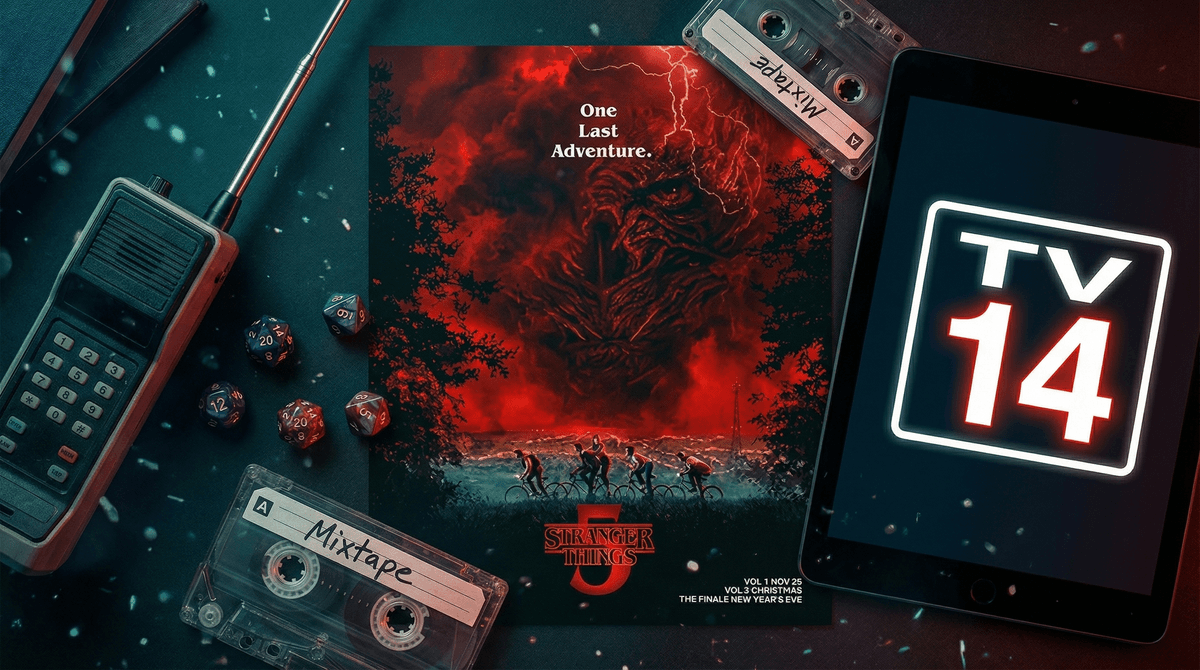
How Old Should You Be to Watch Stranger Things? The Parent Guide to the TV-14 Rating
TV-14 means different things for different 14-year-olds. Stranger Things has genuine scares, body horror, teen sexuality, and kids in constant mortal danger. Most kids 13+ can handle it emotionally, but sensitive 15-year-olds might struggle while mature 11-year-olds breeze through. The real question isn't "what does TV-14 mean?" but "does my specific kid do well with sustained dread, gore, and nightmare fuel?"
Quick age guidance:
- Ages 11-12: Probably too intense for most, but some mature preteens who love horror will be fine
- Ages 13-14: Right in the sweet spot if they're into the genre
- Ages 15+: Should be totally fine unless they're particularly sensitive to horror
If you want alternatives: Check out Ghostwriter on Apple TV+ (ages 8-12), Locke & Key (ages 12-14), or The Umbrella Academy (ages 14+) for supernatural vibes with different intensity levels.
The TV-14 rating is basically the television equivalent of PG-13 for movies, but here's the thing: it's a wildly broad category. It means "parents strongly cautioned" and that "some material may be inappropriate for children under 14."
But that umbrella covers everything from The Flash (superhero action with minimal consequences) to Stranger Things (kids getting eaten by interdimensional monsters while their faces melt off). Not exactly the same vibe.
The rating system uses additional letters to give you more info:
- V = Violence
- L = Language
- S = Sexual content
- D = Suggestive dialogue
Stranger Things typically carries TV-14 with L, V, and sometimes S depending on the episode. Translation: there's swearing, there's violence (sometimes graphic), and there's teen romance that goes beyond hand-holding.
Let's be specific about what we're talking about, because "is it appropriate?" means nothing without context.
The Scary Stuff (It's Really Scary)
This isn't Goosebumps. The horror in Stranger Things is legitimately frightening and often disgusting:
- Body horror: People's bodies twist, break, and explode in graphic detail. Season 3's "meat monster" is nightmare fuel. Season 4 has victims' bones snapping one by one while their eyes cave in.
- Jump scares: Plenty of them, and they're well-executed (which means effective).
- Sustained dread: Long sequences of kids hiding from monsters in dark spaces. It's not just a scary moment—it's 10 minutes of your heart racing.
- Gore: Blood, guts, and viscera. Not gratuitous, but definitely present. The Demogorgon doesn't politely kill people off-screen.
If your kid still gets nightmares from Coraline or had to leave the room during A Quiet Place, they're probably not ready for this.
The Violence (Kids in Real Danger)
The core cast are children and teens who face actual mortal peril every episode. They get hurt—bloody noses, broken bones, concussions. Adults die trying to protect them. Other kids die, period.
This isn't superhero violence where everyone walks away fine. When Eleven uses her powers, she bleeds. When the kids fight monsters, they're terrified and often injured. The show doesn't shy away from showing that danger has consequences.
The Language (Pretty Tame, Actually)
There's swearing, but it's mostly PG-13 level. You'll hear "shit," "ass," "bitch," and the occasional "fuck" (usually bleeped or in later seasons). Steve Harrington has a mouth on him. If your kid rides the school bus, they've heard worse.
The Sexual Content (Age-Appropriate Teen Stuff)
The teens in Stranger Things act like actual teenagers:
- Making out in cars and bedrooms
- Talking about sex and relationships
- Season 3 has jokes about porn magazines
- Season 4 deals with teen sexuality more directly
Nothing graphic—no nudity, no sex scenes—but there's definitely sexual tension and romance. It's handled pretty realistically for how teens actually behave, which means it might prompt questions.
The Themes (Heavy But Important)
Beyond the monsters, Stranger Things deals with:
- Trauma and PTSD: Characters process serious emotional damage
- Bullying: Realistic and sometimes brutal social dynamics
- Loss and grief: Major character deaths that hit hard
- Government conspiracy and abuse: Kids being experimented on, adults lying and covering up harm
These are actually some of the show's strengths—it doesn't talk down to its audience about real emotional complexity.
Ages 8-10: Nope
Even if they're begging because their older sibling watches it, this is too much. The sustained tension and graphic imagery will likely cause nightmares, and the emotional themes are beyond what most kids this age can process.
Try instead: Ghostwriter, The Mysterious Benedict Society, or Gravity Falls for mystery-adventure without the trauma.
Ages 11-12: Probably Not, But Maybe
This is where it gets individual. Some mature 11-12 year-olds who actively seek out horror content and handle scary stuff well will be fine. But most kids this age aren't ready for the intensity level, even if they think they are.
Questions to ask yourself:
- Do they currently choose to watch scary content?
- How did they handle A Quiet Place or Jaws?
- Can they separate fiction from reality easily?
- Do they still get nightmares from scary content?
If you're on the fence, watch the first episode together and check in frequently. If they're hiding behind a pillow or seem genuinely distressed (not just excited-scared), pump the brakes.
Alternatives in this age range: Locke & Key is supernatural mystery with horror elements but less graphic. The Spiderwick Chronicles has fantasy danger without the gore.
Ages 13-14: The Target Audience
This is who the show is made for. If your 13-14 year-old likes horror, science fiction, or 80s nostalgia, they'll probably love it and handle it fine. The main cast is their age, dealing with relatable problems (plus, you know, interdimensional monsters).
That said, not every 13-year-old is the same. If your kid is sensitive to scary content or gets anxious easily, their age doesn't automatically make them ready. There's no shame in waiting.
Co-viewing tip: Even if they don't need you there for emotional support, watching together gives you natural opportunities to talk about the themes, check in about what they're seeing, and bond over a genuinely great show.
Ages 15+: You're Good
At this point, unless your teen is particularly sensitive to horror or has specific triggers around the content, they can handle Stranger Things. They're probably watching stuff that's more intense anyway (looking at you, Euphoria parents—that's a whole different conversation).
The Show Gets Darker as It Goes
Season 1 is the tamest. By Season 4, the horror is significantly more intense and graphic. If your kid breezes through early episodes, don't assume the later seasons will be the same experience.
It's Actually Really Good
This isn't empty calories screen time. Stranger Things has strong character development, smart writing, and genuine emotional depth. The kids are dealing with friendship, loyalty, growing up, and trauma in ways that resonate. It's also a love letter to 80s pop culture, which is fun to share across generations.
The Nostalgia Is Lost on Kids
Your 13-year-old doesn't care about the Spielberg references or get excited about the Ghostbusters homages. They're watching for the characters and story, not the retro aesthetic. That's fine—it works on multiple levels.
It's a Cultural Touchstone
Whether that matters to you or not, Stranger Things is one of those shows that a huge chunk of middle and high schoolers have seen and reference constantly. "Going full Vecna" means something in 2026. There's social currency in being able to participate in those conversations.
That doesn't mean your kid has to watch it—FOMO is not a good reason to expose kids to content they're not ready for—but it's worth acknowledging that being the only 14-year-old who hasn't seen it can feel isolating.
You Can Skip Episodes
If your kid is ready for most of it but you want to avoid the most intense stuff, you can skip around. The show is serialized so they'll miss plot points, but you could theoretically skip the most graphic episodes if you're trying to find a middle ground. (Though honestly, if you're doing that much editing, they might not be ready.)
Before watching:
- "This show has some really scary moments with monsters and people getting hurt. If it's too much, we can turn it off—no judgment."
- "Some of the violence is pretty graphic. Let's check in as we watch."
- "The characters go through some heavy stuff emotionally. We can talk about any of it if you want."
While watching:
- Check in during intense scenes: "You doing okay?"
- Pause if they seem distressed: "Want to take a break?"
- Talk about the effects: "That looked so real, but here's how they filmed it..."
After watching:
- "What did you think of [character's] choice?"
- "That scene where [thing happened] was intense. How are you feeling about it?"
- "Want to look up how they made that monster? The behind-the-scenes stuff is cool."
TV-14 is a guideline, not a hard rule. You know your kid better than a rating system does.
Stranger Things is an exceptionally well-made show with genuine scares, real emotional stakes, and some graphic content. Most kids 13 and up who like the genre will be fine. Many 11-12 year-olds won't be, even if they're begging to watch it. And that's okay.
The question isn't "should a 12-year-old watch this?" It's "should my 12-year-old watch this, given what I know about how they handle scary content, process emotions, and separate fiction from reality?"
If you're unsure, watch it yourself first. You'll know within two episodes if it's right for your kid. And if it's not? There are plenty of other great shows that'll scratch the mystery-adventure itch without the nightmare fuel.
- Watch the first episode yourself to gauge the intensity level
- Check out alternatives to Stranger Things if you want similar vibes with different content levels
- Talk to your kid about what they know about the show and why they want to watch it
- Plan to co-view at least the first few episodes so you can check in and discuss
- Have an exit strategy: Make it clear they can tap out anytime without it being a "failure"
Want to dig deeper into how horror affects kids at different ages? Ask about age-appropriate horror content or explore how to talk to kids about scary media.