

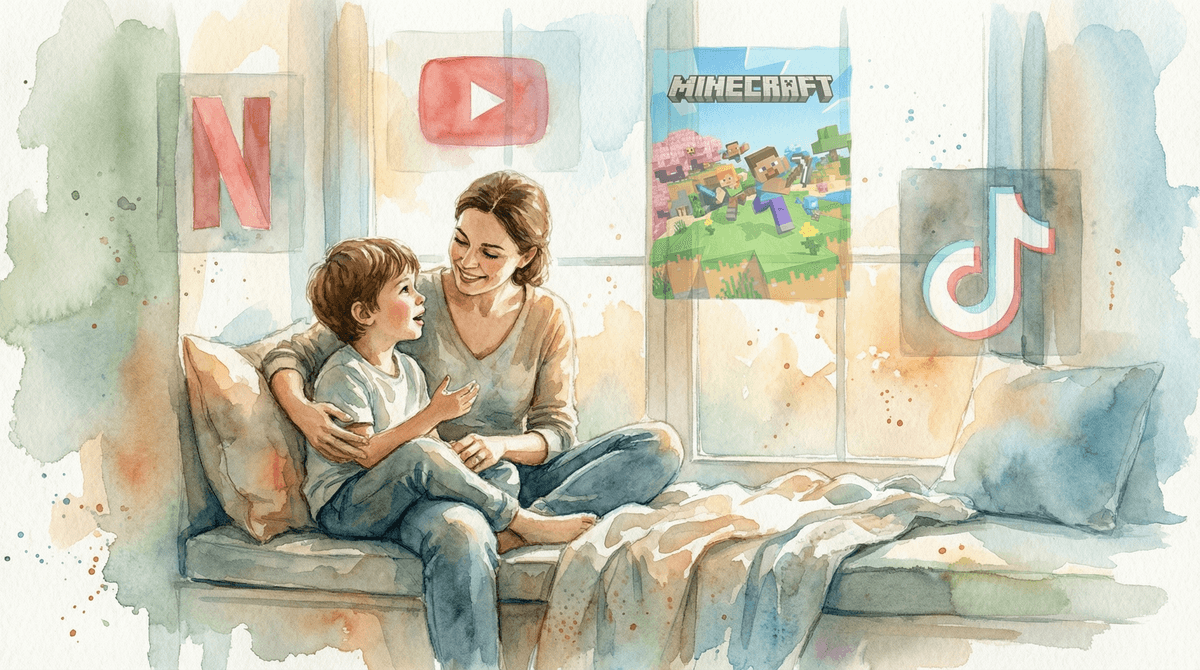
You know that feeling when you're scrolling through your phone and suddenly there's footage of something devastating? Maybe it's a natural disaster, breaking news about violence, or even just an unexpectedly intense scene in what you thought was a kid-friendly show. Now imagine experiencing that without the emotional tools to process it—that's what our kids are dealing with.
Scary media moments aren't just the news anymore. They're YouTube videos that take a dark turn, TikTok clips of real-world tragedy, intense scenes in Netflix shows, or even disturbing content that slips through filters. With 92% of families in our community using TV and streaming services, and 42% of kids using YouTube solo (without supervision), these moments are practically inevitable.
The tricky part? Kids are encountering this content at younger ages and in more fragmented ways than previous generations. They might see a 15-second clip without context, or stumble onto something while looking for Minecraft tutorials. And unlike the evening news our parents could turn off, today's scary content can pop up anywhere, anytime.
Here's what's changed: the average family in our community reports 4.2 hours of screen time daily during the week, jumping to 5 hours on weekends. That's a lot of opportunities to encounter something upsetting. And because only 38% of kids use YouTube with supervision, many are processing these moments alone—or with their equally-confused friends.
The other challenge? Kids don't always tell us when something scared them. They might not want to lose screen privileges, might feel embarrassed, or genuinely might not know how to articulate what bothered them. Sometimes you only find out days later when the nightmares start or they suddenly don't want to be alone.
And let's be honest—sometimes WE don't know how to talk about this stuff either. How do you explain a school shooting to a 7-year-old? What do you say about climate disasters? How much detail is too much?
Ages 5-8: Keep It Simple and Close
Young kids need concrete reassurance more than information. When they encounter something scary:
- Acknowledge what they saw without adding details: "That video showed something that can feel scary"
- Focus on safety and proximity: "That happened far away" or "We have plans to keep you safe"
- Limit exposure—don't replay the content or dive into news coverage together
- Redirect to comforting routines: "Let's read a book" or "Want to help me make dinner?"
At this age, they're still developing the ability to distinguish between real and pretend, especially in animated content. Something that seems obviously fake to us can feel very real to them.
Ages 9-12: Add Context, Invite Questions
Older elementary kids can handle more nuance, but they're also more likely to encounter scary content on their own:
- Ask what they already know: "What did you see?" (Kids often fill in gaps with worse scenarios than reality)
- Provide factual context: "Yes, that happened, and here's what people are doing to help"
- Acknowledge their feelings: "It makes sense that scared you"
- Discuss media literacy: "Sometimes videos are edited to make things seem more dramatic"
- Create ongoing conversation: "You can always ask me about things you see"
This is also the age where kids start seeing scary content their friends share. Talk about what to do when someone shares something upsetting —it's okay to look away, tell an adult, or ask friends not to share that stuff.
Ages 13+: Process Together, Respect Their Developing Views
Teens are definitely seeing scary content—8% of families in our community report their kids using TikTok, where news and tragedy spread rapidly. They need:
- Space to share their perspective first
- Help distinguishing reliable information from misinformation
- Discussion about why media shows what it shows
- Acknowledgment of their legitimate concerns about the world
- Tools for managing their own media consumption
This is less about shielding and more about building critical thinking skills. They're going to see this stuff. The question is whether they'll process it alone or with your guidance.
The goal isn't to prevent all exposure to scary content—that's impossible and arguably not even helpful for building resilience. The goal is to be the trusted person they come to when they encounter something disturbing.
Watch for these signs something's bothering them:
- Sudden changes in sleep patterns or new fears
- Reluctance to be alone
- Asking seemingly random questions about safety
- Avoiding previously enjoyed activities
- Increased clinginess or irritability
Create an environment where they'll actually talk to you:
Don't overreact. If your first response is "WHAT WERE YOU WATCHING?!" they'll hide things next time. Try: "That sounds really upsetting. I'm glad you told me."
Share your own feelings appropriately. "Yeah, that news made me feel sad too" helps them understand emotions are normal. Just don't make them responsible for comforting YOU.
Have a plan for "too much" moments. Establish a family code word or signal for "I need to stop watching this." No questions asked, no judgment.
Check in regularly without interrogating. "Anything interesting/weird/confusing you saw today?" during dinner opens the door.
When professional help makes sense:
If scary media exposure leads to persistent anxiety, intrusive thoughts, or significant behavior changes lasting more than a few weeks, talk to a counselor. Some kids—especially those with anxiety or trauma histories—need more support processing disturbing content.
Right now:
- Have a casual conversation about scary media moments—not as a reaction to something specific, but as a general "here's what to do" discussion
- Review supervision settings for the 42% of solo YouTube users in our community—even older kids benefit from some guardrails
- Check your own media habits—are you watching intense news with kids in the room? (We all do it, but it's worth noticing)
This week:
- Set up YouTube Kids for younger children if you haven't already
- Talk through what "age-appropriate" means for your family's Netflix viewing (40% use regular Netflix, which includes mature content)
- Create a family media plan that includes "what to do when something scares you"
Ongoing:
- Do periodic "media check-ins" where you ask about concerning content without making it feel like an interrogation
- Model healthy media boundaries yourself—taking breaks from upsetting news, talking about why you're turning something off
- Explore media literacy resources together as kids get older
Scary media moments are part of growing up in a digital world. You can't prevent all exposure, and honestly, you shouldn't try—kids need to gradually build the skills to navigate an imperfect media landscape.
What you CAN do is be the safe person they come to when something freaks them out. The one who doesn't freak out in return, who helps them make sense of confusing content, and who gives them tools to protect themselves when you're not there.
Your kids will encounter disturbing content. The question is whether they'll process it alone in their room at 11pm, or whether they'll know they can come to you. That's the work—not perfect content filtering, but building trust so they actually tell you when something scared them.
And when they do? Take a breath, thank them for telling you, and figure it out together. That's the real digital parenting skill.