

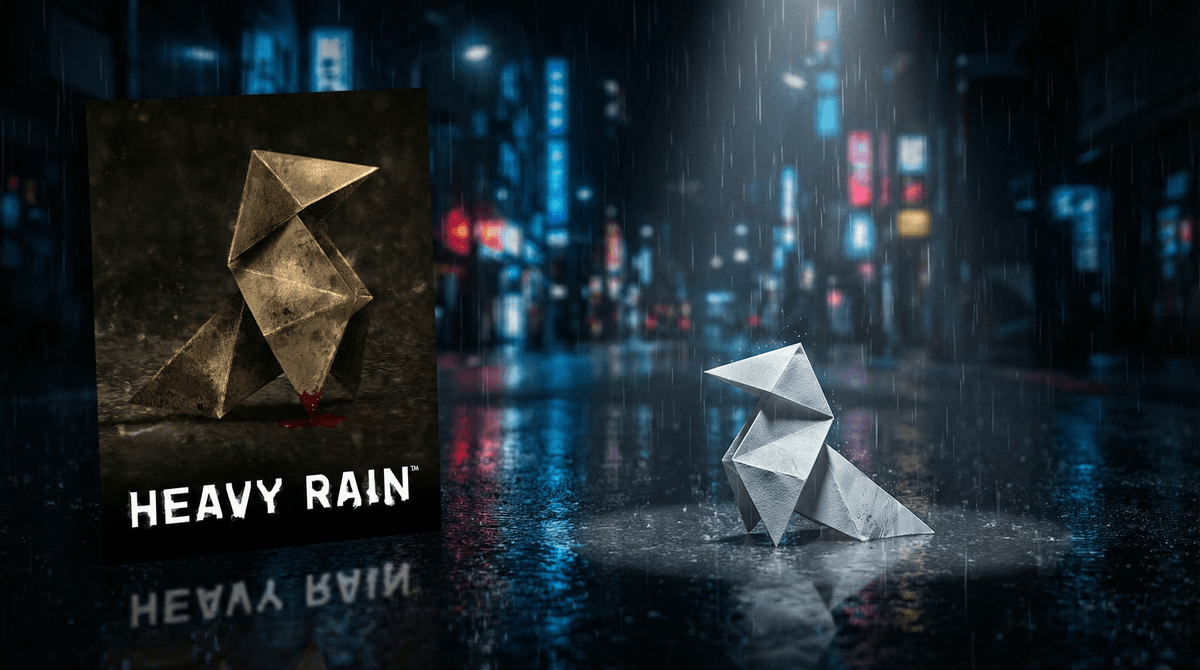
Heavy Rain: When a Video Game Feels Like an R-Rated Thriller
Heavy Rain is an interactive drama that plays more like a dark crime thriller than a traditional video game. Think Seven meets Prisoners with controller in hand. This is absolutely not for kids — we're talking child abduction, torture scenes, drug use, sexual content, and suicide themes. It's rated M (17+) for very good reasons. If your teen is asking about it because they heard it's "just choices and story," they need to understand this is legitimately disturbing content that even many adults find hard to watch.
Released in 2010 by Quantic Dream (the same studio behind Detroit: Become Human), Heavy Rain is what's called an "interactive drama" or "narrative adventure game." You're not shooting aliens or collecting coins — you're controlling multiple characters through a dark crime story using quick-time events (button prompts) and dialogue choices that genuinely affect how the story unfolds.
The plot centers on the Origami Killer, a serial killer who kidnaps children during rainy periods. You play as four different characters — a father whose son is kidnapped, an FBI profiler, a private investigator, and a photojournalist — each trying to solve the case before time runs out. The game spans about 10 hours and can end in radically different ways depending on your choices. Characters can actually die permanently based on your decisions.
It was groundbreaking for its time because of how cinematic it felt and how much your choices mattered. But it's also intensely dark in ways that go beyond typical video game violence.
When parents hear "M-rated game," they often think of something like Call of Duty — shooting and violence, sure, but fairly abstract. Heavy Rain is different. The mature content here is emotionally and psychologically intense in ways that feel much closer to disturbing cinema than gaming.
What you're actually dealing with:
-
Child endangerment as the central plot — The entire game revolves around children being kidnapped, drowned, and killed. You witness a child's death in the opening sequence. The main character's son is kidnapped and you're racing to save him before he drowns in a flooding chamber.
-
Torture and self-harm sequences — One character must complete a series of "trials" to get clues, including cutting off his own finger, driving the wrong way on a highway, and drinking poison. These aren't quick cutscenes — you actively participate through button prompts.
-
Sexual content — There are multiple scenes with nudity and sexual situations, including a strip club scene and an optional sex scene between characters. While not pornographic, it's explicit enough to earn that M rating.
-
Drug use and addiction — One character struggles with addiction and uses an inhaler drug throughout the game. There are detailed sequences in a drug dealer's apartment.
-
Suicide themes — Multiple characters contemplate or attempt suicide. These scenes are depicted seriously and can be genuinely upsetting.
-
Graphic violence — Beyond the child-focused crimes, there are scenes of people being shot, stabbed, and beaten in realistic ways.
The game doesn't glorify any of this — it's actually quite well-written and treats these themes seriously. But that's almost the problem for younger players. This isn't cartoonish violence you can dismiss. It's meant to make you uncomfortable and think about impossible moral choices.
Your teen might argue that Heavy Rain is basically just an interactive movie where you make choices, so it's not like they're "doing" anything violent. They're not wrong that it's more narrative than action — but that actually makes the mature content more impactful, not less.
When you're actively making the choice to have a character cut off his finger to save a child, or deciding whether someone lives or dies, you're emotionally invested in a way that passive movie-watching doesn't require. The game is designed to make you feel the weight of these decisions. That's its whole point.
Several of the game's most disturbing moments require you to complete quick-time button sequences to proceed. You're not just watching torture happen — you're participating in the mechanics of it. For many players, this creates a visceral discomfort that stays with them. That's intentional design, but it's not appropriate for younger teens who are still developing their ability to process and contextualize dark content.
The official rating is M (17+), and honestly, that's the floor, not a suggestion.
Even for 17-year-olds, this should come with a conversation. Some things to consider:
For ages 13-15: No. Full stop. The themes of child endangerment, the graphic self-harm sequences, and the sexual content make this inappropriate. If they're interested in choice-based narrative games, point them toward Life is Strange (which has its own mature themes but is rated T) or Telltale's The Walking Dead (M-rated but less graphically disturbing).
For ages 16-17: Maybe, depending on the kid and your family values. Questions to ask yourself:
- Have they watched R-rated thrillers like Seven or Prisoners and handled them maturely?
- Can they contextualize fiction vs. reality, especially around violence?
- Are they in a good mental health space? (This game deals heavily with grief, loss, and suicide)
- Does your family have any history with child loss or kidnapping that might make this particularly triggering?
For ages 18+: Still worth a heads-up about the content. This game has made grown adults cry and feel genuinely disturbed. It's well-made, but it's heavy (pun unfortunately intended).
The game is designed to be disturbing. This isn't gratuitous violence for shock value — director David Cage wanted players to feel the desperation and moral complexity of impossible situations. But that doesn't make it appropriate for younger audiences. In fact, it makes it more intense because the game wants you to sit with your discomfort.
There are multiple endings. Depending on your choices, characters can die, the killer might escape, the child might not be saved. This means if your teen plays it, they might want to replay it multiple times to see different outcomes, extending their exposure to the disturbing content.
The controls are deliberately clunky. This is by design — the awkward quick-time events are meant to make you feel the tension and stress of the situations. But it also means younger players might fail sequences and have to repeat disturbing scenes multiple times.
It's actually pretty well-written. Despite some translation issues (the game was made by a French studio), Heavy Rain tells a compelling story that makes you think about moral philosophy, justice, and how far you'd go to save someone you love. For mature audiences who can handle the content, it's a meaningful experience. But that maturity threshold is real.
If your kid is interested in narrative choice-based games but isn't ready for Heavy Rain's intensity:
-
Life is Strange (T, ages 14+) — Time-travel story about a high school student. Has mature themes (suicide, bullying) but handles them more appropriately for teens.
-
The Walking Dead by Telltale (M, ages 15+) — Zombie apocalypse with tough choices. Violent, yes, but more traditional game violence and less psychologically disturbing than Heavy Rain.
-
Detroit: Become Human (M, ages 16+) — From the same studio as Heavy Rain. Still mature but focuses on android rights and philosophical questions rather than child endangerment. Has violence and some disturbing scenes but generally less traumatic.
-
What Remains of Edith Finch (T, ages 13+) — Beautiful narrative game about family stories. Deals with death but in a more poetic, less graphic way.
-
Oxenfree (T, ages 13+) — Supernatural mystery with dialogue choices. Spooky but not traumatizing.
Check out more narrative adventure games for teens if you want additional options.
Heavy Rain is a landmark game in interactive storytelling, and for mature audiences who can handle intense psychological content, it's a powerful experience. But it absolutely earns its M rating and then some.
If your teen is asking about it, have a real conversation about why they're interested. Are they into crime thrillers? Do they understand what they're signing up for? Are they just curious because they heard it's different from typical games?
The fact that it's "just" story choices doesn't make it less intense — it makes it more intense because you're actively participating in disturbing scenarios. The themes of child endangerment, the graphic self-harm sequences, and the overall psychological darkness make this inappropriate for anyone under 17, and even then it requires maturity and good mental health.
For context: our community data shows that about 55% of families allow some gaming, with an average of 4.2 hours of total screen time daily. But M-rated games with this level of psychological intensity? That's a much smaller percentage, and usually reserved for older teens who've demonstrated they can handle complex, dark content maturely.
If you do decide your older teen is ready, consider playing it together or at least being available to process it with them afterward. This isn't a game you play and forget — it sticks with you.
Ask our chatbot about age-appropriate thriller games or explore more games with meaningful choices that might be better fits for your family.