

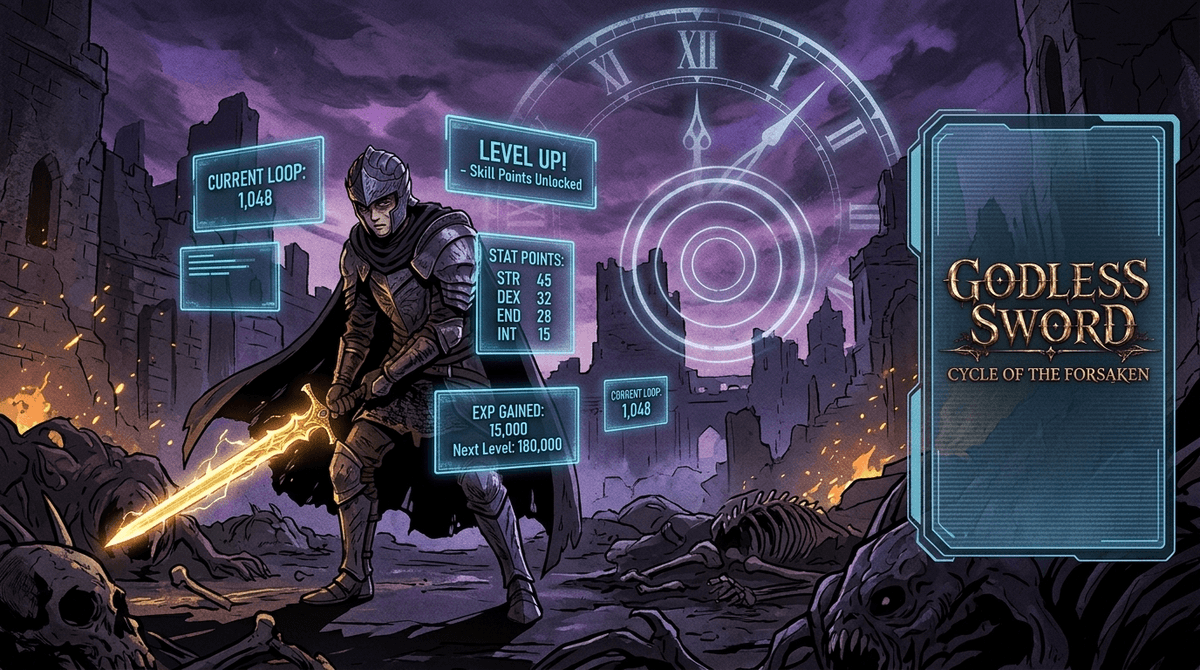
Godless Sword is a gritty, time-loop LitRPG web serial that has become a staple for teens who have graduated from basic fantasy and want something that feels like a high-stakes survival horror game. It is a "progression fantasy" story where the protagonist is trapped in a cycle of violent resets, forced to die and restart until they become powerful enough to break the loop.
TL;DR: Godless Sword is an addictive web serial on Royal Road that blends "Groundhog Day" mechanics with the "leveling up" logic of a video game. It’s gritty, frequently violent, and focuses heavily on the psychological toll of repeating the same tragic events. If your teen is into Solo Leveling or Mother of Learning, this is likely their current obsession.
If you aren't familiar with Royal Road, it’s the Wild West of web fiction—a platform where authors post chapters daily or weekly, and the audience provides real-time feedback. Godless Sword sits in a subgenre called LitRPG (Literary Role Playing Game). This means the story literally includes game mechanics: the protagonist sees stat screens, gains "experience points," and unlocks skills.
The "Time-Loop" part is the engine. Every time the main character fails or dies—which happens often and sometimes quite brutally—they wake up at a "save point" in the past. They keep their memories and their skills, but the world resets. It’s a masterclass in iterative problem-solving, but it’s also a story about the trauma of watching your friends die over and over again.
The appeal here isn't just the action; it's the competence porn. There is something deeply satisfying to a teen brain about a character who starts as a "nobody" and, through sheer repetition and grit, becomes the most dangerous person in the room.
Unlike traditional "chosen one" stories where the hero is born special, Godless Sword emphasizes that the protagonist earns every single point of strength through pain and failure. It mirrors the experience of playing a difficult game like Elden Ring or Hades—you die to the boss, you learn the pattern, you try again.
This isn't a "wholesome" read. The author doesn't pull punches when it comes to the resets. Because the character can "just restart," the deaths are often graphic. You’ll see descriptions of sword fights that don't go well, the physical agony of the loop resetting, and the mental fatigue of a character who has lived the same week a thousand times while everyone else is experiencing it for the first time.
The "Godless" part of the title isn't just flavor text. The world is bleak. There’s a sense that the traditional "gods" or systems of the world are either absent or actively hostile. It’s a cynical setting that rewards pragmatism over idealism. If your kid is looking for a story where the power of friendship saves the day on the first try, this isn't it.
The most interesting thing to discuss with a teen reading Godless Sword isn't the violence—it's the ethics of the loop.
When you know you can just "reset" the world, do other people still matter? Does a conversation count if the person you're talking to won't remember it in an hour? The protagonist often struggles with "dehumanizing" the people around them because they’ve seen them die so many times. That’s a heavy, fascinating topic for a 15-year-old to chew on.
Conversations to start
- The "Save Point" Morality: If you could restart your day every time you made a mistake, would you eventually stop caring about how you treated people?
- The Grind: What’s the difference between "working hard" and the kind of "grinding" the protagonist does? Is it actually rewarding, or is it just an obsession?
- The Psychological Toll: How do you think the main character stays sane when they are the only person who remembers the "previous" lives?
Web serials are a gateway drug to longer, more polished series. If they’ve caught up on the latest chapters and need a fix, point them toward these:
- Mother of Learning: The gold standard for time-loop fantasy. It’s less "gritty" than Godless Sword but much more intricate in its magic system and world-building.
- Solo Leveling: If they like the "weak-to-strong" progression and the game-like interface, this is the most famous example of the genre.
- Dungeon Crawler Carl: For a teen who likes the grit but wants a side of dark, satirical humor. It’s a LitRPG where the stakes are a galactic reality show.
- The Beginning After The End: Another massive web-to-print success that handles the "reincarnation/reset" trope with a focus on high-fantasy combat.
Q: Is Godless Sword appropriate for a 13-year-old?
It depends on their tolerance for "gritty" content. It’s essentially a PG-13 or "TV-MA" experience in text form. There is significant violence and some heavy psychological themes, but it generally avoids explicit sexual content. If they handle modern shonen anime or Stranger Things, they’ll be fine.
Q: Where is my kid reading this?
Most likely on Royal Road, which is a free hosting site for web fiction. Some authors eventually move their work to Kindle or Patreon, but the "community" happens in the Royal Road comments section.
Q: Is the story finished?
Web serials like this are often ongoing for years. Authors post chapters in "books" or "volumes." It’s less like a novel and more like a long-running TV show with no set end date.
Godless Sword is high-octane brain food for teens who love gaming logic and dark fantasy. It’s not "educational" in the traditional sense, but it builds incredible narrative literacy—understanding complex timelines, character motivations, and system-based problem solving. Just be prepared for them to start talking about "stat builds" and "optimal loops" at the dinner table.
- Check out our best books for kids list for more progression fantasy recs.
- If they are more into the visual side of these stories, browse our best shows for kids list for anime with similar vibes.
- Get help picking a next book series
