

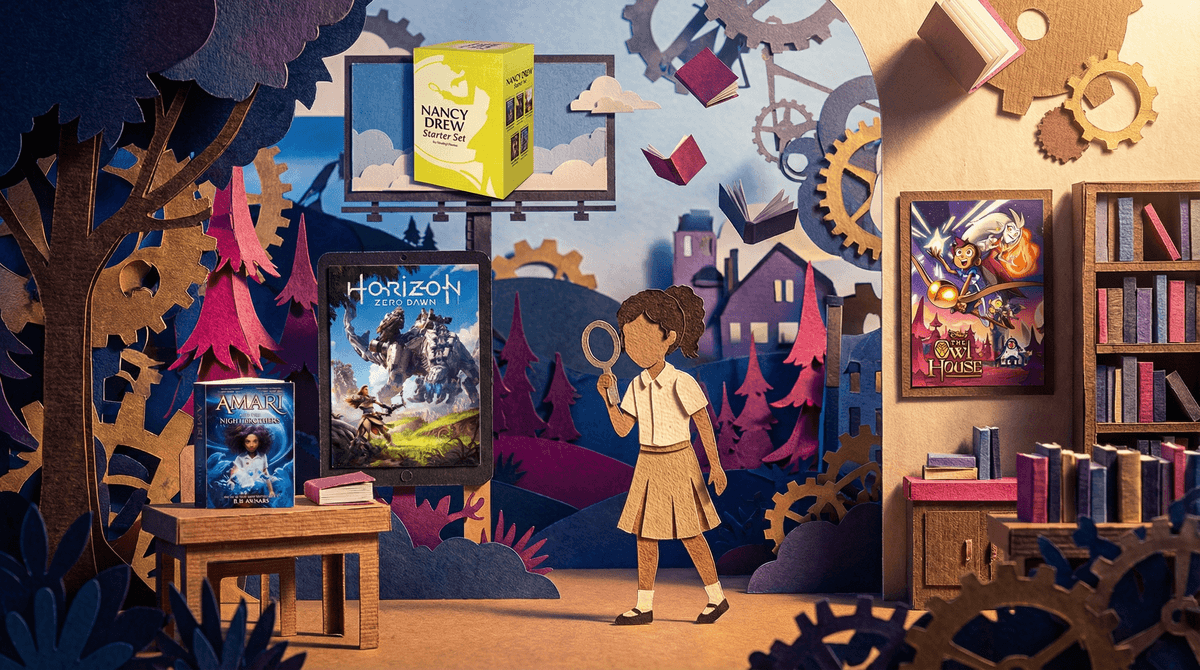
We're talking about that powerful lineage of fictional girls and women who solve mysteries, save the day, and refuse to wait around to be rescued. From classic sleuths like Nancy Drew to magical heroes like Hermione Granger, from Elsa freezing her way through self-discovery to Moana navigating the ocean with zero princes required.
These characters span books, TV shows, movies, and games—and they're doing something important for kids of all genders. They're modeling curiosity, problem-solving, bravery, and the kind of competence that doesn't need a love interest to validate it.
The modern landscape is honestly pretty incredible. We've gone from "strong female character" being a novelty to it being table stakes. Your kids can watch The Owl House where Luz is a nerdy girl who becomes a witch, play Horizon Zero Dawn as Aloy hunting robot dinosaurs, or read Amari and the Night Brothers about a Black girl who discovers she has magical powers.
They're competent. These characters don't stumble into solutions by accident—they think, investigate, and figure things out. Nancy Drew doesn't wait for someone to solve the mystery for her. Enola Holmes literally outsmarts Sherlock. Kids respond to characters who are good at things.
They're curious. Girl detectives and heroes ask questions. They poke around. They don't accept "because I said so" as an answer. This is modeling exactly the kind of critical thinking we want kids to develop, especially in our current digital landscape where media literacy is basically a survival skill .
.
They have agency. These characters make choices that matter. They're not sidekicks or supporting characters in someone else's story. Whether it's Meg Murry tessering through space-time or Korra mastering the Avatar state, these girls are driving the narrative.
They're flawed and real. Modern girl heroes aren't perfect. Anne Shirley has a temper. Luz from The Owl House makes mistakes. Mirabel doesn't have powers and struggles with feeling like she doesn't measure up. This complexity makes them relatable, not just aspirational.
Ages 5-8:
- Ada Twist, Scientist (Netflix) - Problem-solving through science
- Ivy + Bean books - Friendship and everyday adventures
- Bluey (yes, really) - Bluey models creativity and problem-solving constantly
- Spirit Riding Free - Adventure and independence
Ages 8-12:
- Nancy Drew books (the originals or the updated versions)
- Enola Holmes movies - Mystery-solving with fourth-wall breaks
- The Wild Robot by Peter Brown - Survival and adaptation
- Hilda (Netflix) - Adventurous, curious, brave
- A Wrinkle in Time - Classic sci-fi with Meg as the hero
- The Mysterious Benedict Society - Puzzle-solving kids (including standout girls)
Ages 12+:
- The Legend of Korra - Complex, flawed Avatar
- Veronica Mars - Teen noir detective work
- Horizon Zero Dawn - Post-apocalyptic adventure game
- The Hunger Games - Survival and resistance
- Ms. Marvel - Superhero origin story with cultural depth
This isn't just "girl stuff." Boys benefit enormously from seeing girls as competent leaders and heroes. It normalizes girls in positions of power and intelligence. If your son only sees male heroes, that's a problem worth addressing. These stories work for everyone.
Representation matters, but quality matters more. Not every piece of media with a girl protagonist is good. some stuff is just poorly written with "girl power" slapped on top. Look for complex characters with real arcs, not just "she's tough and that's her personality."
The detective/mystery angle is sneakily educational. Mystery stories teach logical thinking, pattern recognition, and persistence. Kids learn to gather evidence, test theories, and revise their thinking. It's basically the scientific method in narrative form.
Watch for the "not like other girls" trap. Some "strong female character" media accidentally implies that being feminine is weak—that a girl is only valuable if she rejects traditionally feminine things. The best stories let girls be smart AND like pink, be brave AND care about relationships, be heroes AND be vulnerable.
These characters can spark real conversations. Use these stories as jumping-off points. "What would you have done in that situation?" "Why do you think she made that choice?" "What clues did you notice that she missed?"
Girl heroes and detectives aren't a trend—they're a correction. For too long, stories centered boys as the default adventurers, and girls as the prizes or sidekicks. The current landscape is giving kids (of all genders) a much richer menu of role models.
The best part? You don't have to force-feed this stuff. Kids are naturally drawn to competent, curious characters who solve problems. Whether your kid connects with Hermione's love of learning, Elsa's journey to self-acceptance, or Nancy Drew's tenacity, these characters are modeling skills and mindsets that translate way beyond the screen or page.
Start with what your kid already likes. If they're into magic, try The Owl House. If they like mysteries, go classic with Nancy Drew. If they're gamers, Horizon Zero Dawn or Celeste might be the entry point.
Watch or read together. These stories are way more powerful when you can talk about them. Ask questions. Point out moments of bravery or smart thinking. Let your kid teach you about the character.
Expand the definition. Heroes don't always wear capes or solve crimes. Sometimes they're Raya learning to trust again, or Matilda standing up to injustice with books and telekinesis.
Looking for more recommendations tailored to your kid's age and interests? The Screenwise list maker can help you find exactly what fits your family.