

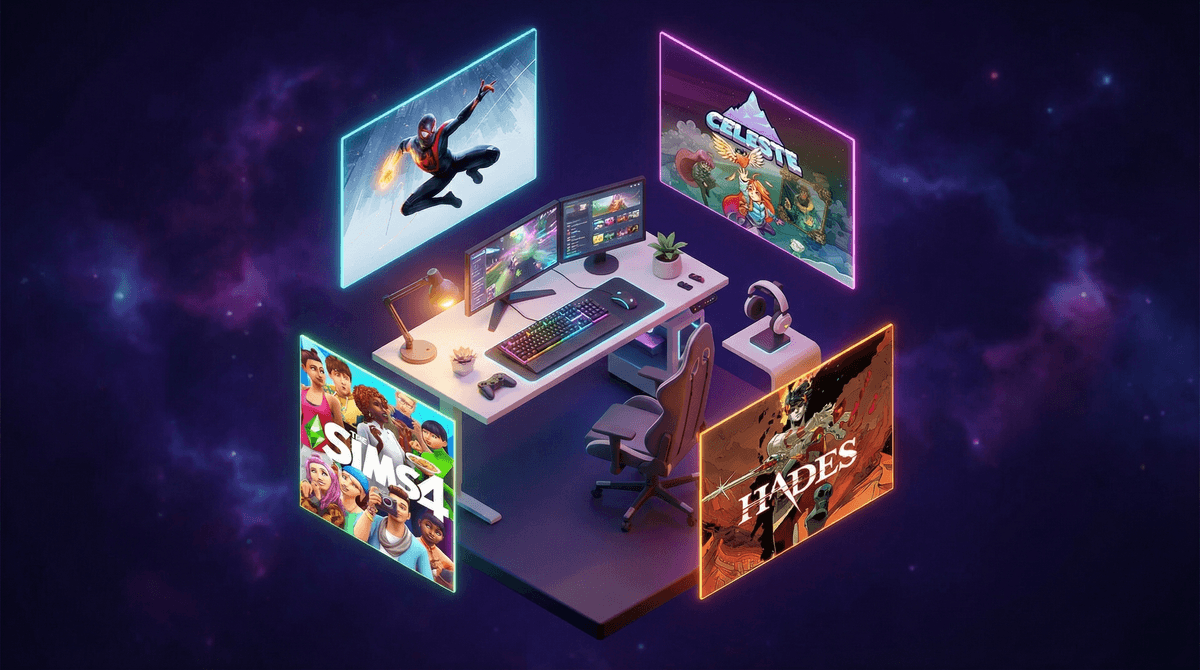
We're talking about games where the cast isn't just variations of the same white dude protagonist. Games with diverse characters feature people of different races, ethnicities, genders, body types, abilities, and backgrounds—both as playable characters and NPCs (non-player characters). Think Spider-Man: Miles Morales where you play as an Afro-Latino teen, The Sims 4 where you can create literally anyone, or Celeste featuring a protagonist dealing with anxiety and depression.
The landscape has genuinely improved. Twenty years ago, your options were basically "gruff white guy" or "gruff white guy with a beard." Now? We've got games like Hades reimagining Greek gods as diverse and queer, Stardew Valley letting you romance anyone regardless of your character's gender, and Overwatch 2 with a roster that looks like the actual world we live in.
Here's the thing: kids spend an average of 1-2 hours gaming daily, and for tweens and teens, that number jumps even higher. That's a lot of time inhabiting virtual worlds and seeing who gets to be the hero, the sidekick, the villain, or just... there.
For kids who see themselves represented: It's validating. It says "you belong in this story." A Black girl seeing herself as a powerful character, a kid with a disability seeing someone navigate challenges that reflect their reality, a trans kid finding characters whose journeys resonate—this stuff matters for identity development.
For kids who don't see themselves represented: It builds empathy and normalizes diversity. When your kid plays as characters different from themselves, they're literally practicing perspective-taking. Research on this is pretty clear—exposure to diverse characters in media correlates with more positive attitudes toward people from different backgrounds.
Plus, let's be honest: diverse games are just more interesting. Different cultural perspectives bring fresh storytelling, new aesthetics, and gameplay mechanics we haven't seen a thousand times before.
Not all representation is created equal. Here's what to look for:
Surface-level diversity: Characters look different but have identical personalities, backstories, and dialogue. It's better than nothing, but it's basically just reskinning.
Thoughtful representation: Characters whose backgrounds actually inform their story, personality, and role in the game. Life is Strange: True Colors features an Asian-American protagonist whose identity isn't her whole story, but it's woven naturally into the narrative.
Diverse development teams: Games made by diverse creators tend to have more authentic representation because, shocker, people write what they know. A Memoir Blue tells a beautiful story about a mother-daughter relationship that draws from the creator's own background.
Ages 6-10:
- Animal Crossing: New Horizons - Customize your character however you want, no judgment
- Sackboy: A Big Adventure - Play as customizable fabric creatures
- Pokémon Legends: Arceus - Choose from diverse player avatars
Ages 10-13:
- Spiritfarer - Features a Black female protagonist in a gorgeous game about death and letting go
- Roblox - Despite its issues, kids can create avatars that truly represent themselves
- Minecraft - With skin customization, your kid can be anyone
Ages 13+:
- The Last of Us Part II - Complex characters including LGBTQ+ representation (note: mature content, violence)
- Apex Legends - Diverse cast with varied abilities, orientations, and backgrounds
- Immortality - Mature mystery game with nuanced female characters
Your kid's avatar choices are telling you something. When kids spend 20 minutes customizing their character to look just right, they're experimenting with identity. Some kids always choose characters that look like them. Others specifically choose characters that don't. Both are normal and healthy forms of exploration.
"Why does representation matter? It's just a game." You might hear this from kids (or partners). Here's a simple response: "If it doesn't matter, why were almost all characters white dudes for 40 years?" Representation matters because it shapes who we think gets to be heroic, interesting, and important.
Diverse doesn't mean "perfect role model." Good representation includes flawed, complex characters. A Latina character can be the villain. A disabled character can be annoying. Diversity means people get to be fully human, not walking after-school specials.
Watch for tokenism. One diverse character in a sea of sameness isn't really representation—it's checking a box. Look for games where diversity is the default, not the exception.
Games with diverse characters aren't some special category that requires extra vetting—they should be the baseline. We live in a diverse world, and our kids' digital worlds should reflect that.
The good news? The gaming industry is slowly getting it. Major franchises are adding character customization, indie developers are telling stories from their own perspectives, and kids are increasingly expecting to see themselves and their friends represented.
Your move: Next time your kid wants a new game, check out the character roster. Ask them who they plan to play as and why. Use these questions as conversation starters about representation that don't feel like a lecture.
And hey, if you're looking for more specific recommendations based on your kid's interests and your family's values, check out our game recommendation guide or find games with specific types of representation.