

TL;DR: The EQ Starter Pack
If you’re just looking for the "buy now" list to help your kid trade mindless scrolling for actual character growth, here are the heavy hitters:
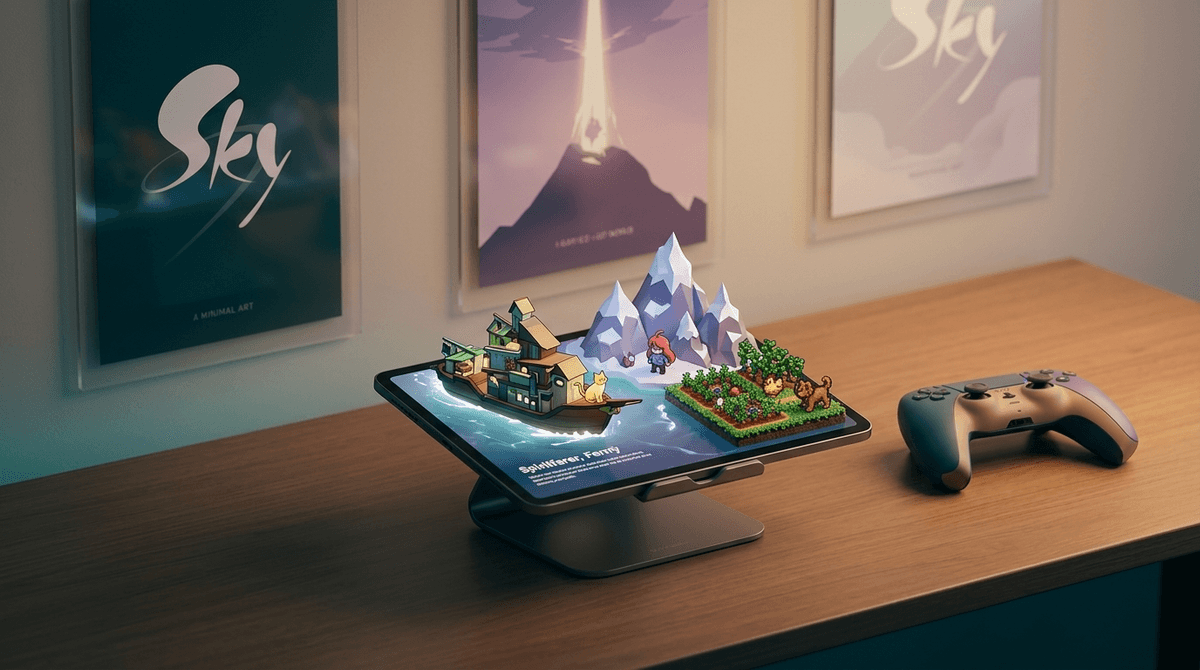
- For Empathy & Story: Spiritfarer and Unpacking
- For Social Skills & Kindness: Sky: Children of the Light and Kind Words
- For Resilience & Frustration Management: Celeste
- For Younger Kids (Ages 4-7): Toca Life World and Daniel Tiger's Grr-ific Feelings
We’ve all been there: you walk into the living room and your kid is watching a "Skibidi Toilet" compilation for the fourteenth time, or they’re calling their dinner "Ohio" because the broccoli looks weird. It’s easy to feel like their brains are just... melting. We worry that every hour spent behind a screen is an hour lost to the "brain rot" void, where social skills and empathy go to die.
But the truth is more nuanced. While some games are basically digital slot machines designed to drain your wallet and your kid’s dopamine reserves, others are effectively "emotional gyms." They provide a safe space for kids to practice the big, messy human stuff: navigating grief, managing a "rage-quit" level of frustration, and learning how to actually collaborate with another human being without screaming.
Emotional Intelligence (EQ) isn’t just a buzzword; it’s the ability to identify and manage emotions, both in ourselves and others. In a world where Roblox is the new playground, we need to be intentional about which digital spaces we’re letting our kids inhabit.
When we talk about digital wellness, we often focus on what to avoid. But intentional parenting is also about what we invite in.
Games that build EQ allow kids to:
- Practice Perspective-Taking: Stepping into the shoes of a character whose life looks nothing like theirs.
- Develop Resilience: Learning that failure isn't the end—it's just a data point.
- Navigate Social Nuance: Understanding that behind every avatar is a real person with real feelings.
These games aren't about "winning" in the traditional sense. There are no leaderboards. Instead, the goal is to understand a narrative and the people within it.
This is, quite literally, a game about saying goodbye. Your kid plays as a "ferrymaster" to the deceased. They have to build a boat, care for their spirit friends, and eventually let them go. It’s beautiful, it’s heartbreaking, and it teaches kids about the "care" part of caretaking. If you want to talk to your child about grief or compassion, start here.
It sounds boring—you’re just taking items out of boxes and putting them in a room. But as the years progress in the game, your kid learns the story of a person’s life through their belongings. It’s a masterclass in "show, don't tell" empathy. They’ll see the character move into a tiny apartment, then move in with a partner (and have to make space for them), and then deal with life's changes. It’s quiet, meditative, and deeply human.
This one is unique because it uses the player's webcam to track their blinking. Every time you blink, time jumps forward. It’s a powerful metaphor for how fast life moves and the importance of being present. Best for older tweens and teens who can handle a heavy emotional payoff.
Most parents hear "multiplayer" and think of Fortnite lobbies filled with toxic 12-year-olds. But some games are designed to foster connection rather than competition.
This is the gold standard for pro-social gaming. Created by the same team behind the legendary Journey, Sky is a world where players help each other progress. You can’t even talk to other players until you’ve built a certain level of "friendship" through shared actions. It’s a beautiful, safe way to practice being part of a community.
The premise is simple: you write anonymous letters to real people expressing your worries, and other real people write back with "kind words." It’s heavily moderated and incredibly wholesome. For a teen struggling with anxiety or feeling isolated, it’s a powerful reminder that there is goodness on the internet.
Wait, the "sus" game? Yes. While it’s about deception, Among Us is actually a complex exercise in social deduction and conflict resolution. When played with a group of real-life friends (avoid public lobbies!), it forces kids to argue their points, read "tells," and handle the fallout of a betrayal in a low-stakes environment.
Learn more about setting up safe private lobbies for your kids
We’ve all seen the "gamer rage." A kid loses a level and suddenly the controller is flying. Instead of just banning the game, we can use specific titles to teach them how to breathe through the frustration.
On the surface, it’s a platformer about climbing a mountain. In reality, it’s a metaphor for struggling with anxiety and depression. It’s hard, but the game is incredibly encouraging. It tells the player that it’s okay to die a thousand times as long as they keep trying. It’s the perfect game for the kid who gives up the moment things get difficult.
While not "hard" in terms of reflexes, Stardew Valley teaches the resilience of delayed gratification. You can't have the big fancy farm on day one. You have to plant the seeds, water them every day, and wait. It’s a great antidote to the "instant hit" culture of TikTok and YouTube Shorts.
Emotional intelligence looks different at 5 than it does at 15. Here’s how to pivot:
Ages 4-7: The "Feeling" Foundation
At this age, it’s all about identifying emotions.
- Daniel Tiger's Grr-ific Feelings is basically EQ 101.
- Toca Life World is great for digital "dollhouse" play where they can act out social scenarios.
Ages 8-12: The Social Nuance Phase
Tweens are starting to navigate complex friendships.
- Animal Crossing: New Horizons is perfect for learning how to maintain relationships with NPCs (and real friends who visit their island).
- Minecraft (on a private server) is the ultimate test of "Who gets to decide what we build?" and "What do we do when someone accidentally breaks my house?"
Ages 13+: The Ethics & Identity Phase
Teens can handle moral ambiguity.
- Life is Strange deals with heavy themes like bullying and friendship, forcing players to make choices with no "right" answer.
- Detroit: Become Human (Note: This is a game, but plays like a movie) explores prejudice and what it means to be human.
You don’t have to be a "gamer" to help your kid build EQ through games. In fact, the most powerful thing you can do is just sit next to them and ask questions.
- "Why do you think that character reacted that way?"
- "That level looked really frustrating. How did you keep yourself from throwing the controller?"
- "What would happen if you chose the other dialogue option?"
If you’re worried about whether Roblox is helping them or just turning them into a mini-consumer, read our deep dive on Roblox culture.
Not all screen time is created equal. We can spend our energy fighting the "Skibidi" tide, or we can steer our kids toward games that actually make them better humans.
A kid who learns to care for a digital spirit in Spiritfarer or manages their heart rate during a tough level of Celeste is building muscles they’ll use for the rest of their lives.
It’s not about getting the high score anymore; it’s about what happens after they put the controller down.
- Pick one game from the list above that fits your kid's age and interests.
- Download it and play the first 20 minutes yourself (or watch a "Let's Play" on YouTube).
- Sit down and play with them. Don't lecture—just observe and ask.
- Take the Screenwise Survey to see how your family's gaming habits compare to your community's.
Find games for a 10-year-old who loves animals but gets frustrated easily