

TL;DR
Fortnite Ranked Mode is a competitive ladder where players move through tiers from Bronze to Unreal. While it builds grit and strategic thinking, it also introduces "rank anxiety"—a very real stress where a kid’s self-worth is tied to a digital badge. If your kid is "sweating" (playing intensely) and getting tilted (angry) over losing their Diamond status, it’s time to talk about digital status vs. actual fun.
Quick Recommendations for Lower-Pressure Play:
- Rocket League – Competitive but matches are fast (Ages 10+).
- Fall Guys – Pure, chaotic fun without the "tough guy" ego (Ages 8+).
- Splatoon 3 – High skill, but the aesthetic keeps it from feeling like a job (Ages 10+).
- Minecraft (Creative Mode) – The ultimate "decompress" game (Ages 7+).
In the old days (like, 2018), Fortnite was mostly about the "Victory Royale." You won or you lost, and you did a silly dance either way. But in 2026, the game has shifted toward a sophisticated ranking system.
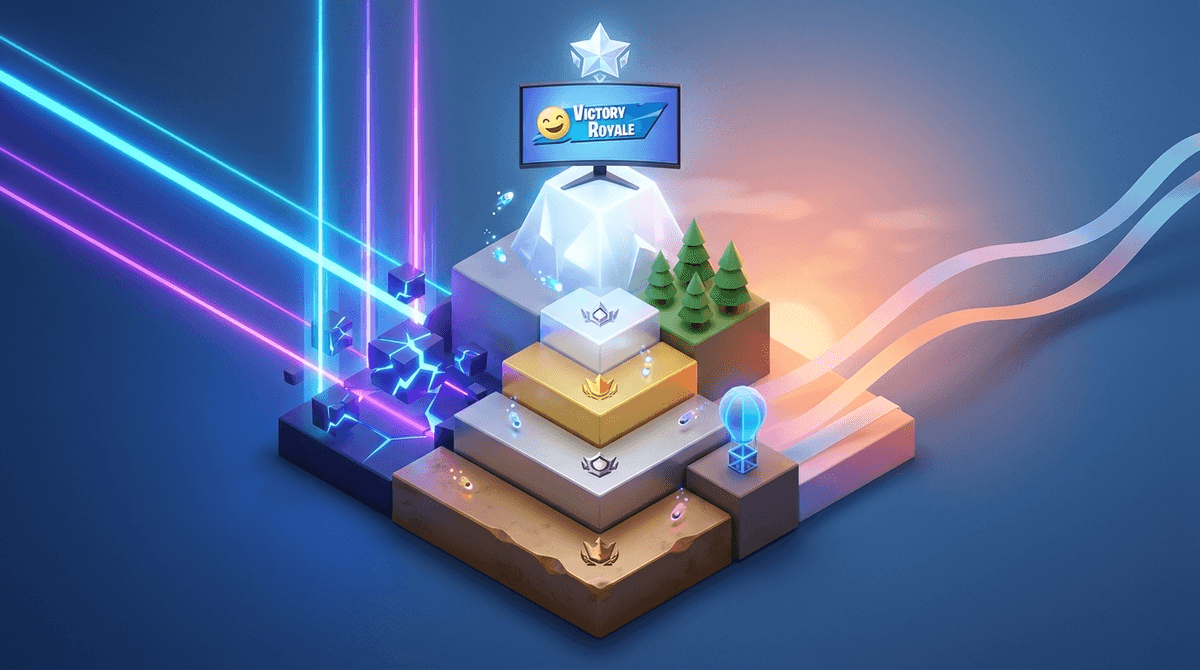
When a player toggles on "Ranked," every action—kills, placement, and how early they die—calculates a progress bar. They start in Bronze, move through Silver, Gold, Platinum, Diamond, Elite, and Champion, until they hit the holy grail: Unreal. Once you hit Unreal, you can’t be demoted for the rest of the season. It’s the ultimate digital varsity jacket.
Ask our chatbot for a breakdown of the current Fortnite season's rank requirements
For a middle schooler, being "Hardstuck Gold" is the modern equivalent of being picked last for dodgeball. It’s not just a game; it’s social currency. If their friend group is all in Platinum and they’re stuck in Silver, they feel like they have "negative aura" (basically, they aren't cool).
The thrill comes from the stakes. In a normal "Unranked" match, dying is a minor inconvenience. In Ranked, dying early can actually subtract progress. This creates a high-pressure environment where kids are "sweating"—leaning forward, hands shaking, heart rate spiking—because one bad move could cost them hours of progress.
We’re seeing a shift where gaming is no longer a way to unwind after school; it’s a second shift of labor. Your kid might be saying a play was "so Ohio" (weird or cringe) because they missed a shot, but behind the slang is a genuine fear of failure.
In a world where kids are already tracked by grades, sports stats, and social media likes, Fortnite Ranked adds another metric to the pile. When they lose a rank, it doesn't feel like "I played a game poorly"; it feels like "I am a Bronze-tier person." This is where the "brain rot" concerns actually hold weight—not because the content is bad, but because the emotional toll is disproportionate to the activity.
Check out our guide on managing gaming-induced anger
If the pressure of Fortnite is turning your household into a war zone, you don't necessarily have to ban gaming. You just might need to diversify the "portfolio."
It’s "car soccer." It has a ranked mode, but the games are five minutes long. If you lose rank, you can win it back in ten minutes. It’s high-skill but lacks the "survival pressure" of a Battle Royale. Learn more about Rocket League
This is the "anti-Fortnite" for parents who hate the gritty military vibe. You’re an ink-shooting squid. It’s incredibly competitive and fast-paced, but the vibe is "streetwear and pop music" rather than "survival of the fittest." Read our guide to Splatoon 3
Believe it or not, a lot of kids who love Fortnite Ranked are actually "Elo junkies"—they love watching a number go up. Chess.com provides that same rush of competitive ranking but in a format that builds patience and logic rather than just twitch reflexes. Check out Chess.com
When the "sweating" gets to be too much, every kid needs a "cozy game." Stardew Valley is the gold standard. There is no ranking. There is only farming, fishing, and making friends with villagers. It’s the digital equivalent of a weighted blanket. Why Stardew Valley is the perfect decompress game
Ages 8-10: At this age, Ranked Mode is often too much. The emotional regulation required to handle a "derank" (dropping from Silver to Bronze) isn't usually there yet. Stick to "Creative" maps or "Team Rumble" where the stakes are zero.
Ages 11-13: This is the peak of "Ranked" obsession. Community data shows that about 65% of middle school boys play Fortnite regularly, and a huge chunk of their social talk revolves around their rank. This is the time to set "Ranked Windows"—maybe they only play competitive on weekends when they aren't already drained from school.
Ages 14+: Teens can usually handle the pressure, but they might start looking into "wagers" or "competitive tournaments." Be wary of any third-party websites promising to "boost" their rank for money—these are almost always scams or violations of the game's terms of service.
Ask our chatbot about the dangers of "Rank Boosting" services
If you hear your kid yelling into their headset about "Skibidi" teammates or calling someone a "Silver scrub," they are participating in rank shaming. It’s a form of digital hierarchy.
As parents, we need to remind them that Ranked Mode is designed to keep you playing. The "grind" is an algorithm. Epic Games (the creators of Fortnite) wants you to stay in that Diamond-to-Elite loop because it keeps you logged in. The moment the game feels like a "grind" or a "job," it has stopped being a game.
How to Talk About It
Instead of saying "It's just a game" (which is the fastest way to get a teenager to roll their eyes), try these:
- "I noticed you're pretty 'tilted' after that match. Is the rank grind actually fun today, or is it just stressful?"
- "What rank are your friends? Do you feel like you have to be at their level to play with them?"
- "Let's do a 'Casual Friday'—no Ranked mode, just silly Creative maps or Roblox for an hour."
Fortnite Ranked Mode isn't inherently "bad." It can teach kids how to perform under pressure, how to analyze their mistakes, and how to practice a skill to see tangible improvement.
However, when the quest for "Unreal" status starts affecting their sleep, their mood, or their self-esteem, the digital wellness balance has shifted. Status in a video game is temporary; their nervous system's ability to handle stress is permanent.
- Check their rank: Ask them to show you their career tab. If they are Diamond or higher, they are in the top percentage of players—acknowledge that skill!
- Watch a "sweaty" match: Sit with them for 10 minutes. You’ll see how intense it is. You might even understand why they’re so stressed.
- Diversify: Introduce a "low-stakes" game like Fall Guys or Minecraft into the rotation to break the cycle of performance pressure.
Check out our full guide on Fortnite parental controls
Ask our chatbot about how to set time limits for competitive gaming