

TL;DR: The Quick Take
Firewatch is a stunning, narrative-driven mystery set in the Wyoming wilderness. It’s effectively an interactive "adult" novel—and I don't mean adult in the "NSFW" sense, but adult in its themes of grief, failing marriages, and isolation. While there is no combat or "traditional" gameplay, it is rated M for Mature primarily due to heavy profanity and complex emotional situations.
- Best for: Ages 15+
- Genre: Narrative Adventure / "Walking Simulator"
- Vibe: Moody, beautiful, lonely, and suspenseful.
- Alternative if they want something younger: Alba: A Wildlife Adventure or Stray.
Firewatch is what the gaming world calls a "walking simulator," though that term feels a bit reductive for something this well-written. You play as Henry, a man who takes a job as a fire lookout in the Shoshone National Forest in 1989. He’s not there because he loves trees; he’s there because his life back home is falling apart. His wife has early-onset Alzheimer’s, and he’s essentially running away from the pain of watching her disappear.
The entire game revolves around your relationship with your supervisor, Delilah, who is just a voice on the end of a handheld radio. You explore the woods, report small fires, and eventually get pulled into a mystery that feels increasingly paranoid and dangerous.
There are no high scores, no boss fights, and no "game over" screens. It’s all about the choices you make in your conversations with Delilah and how you choose to process Henry’s messy reality.
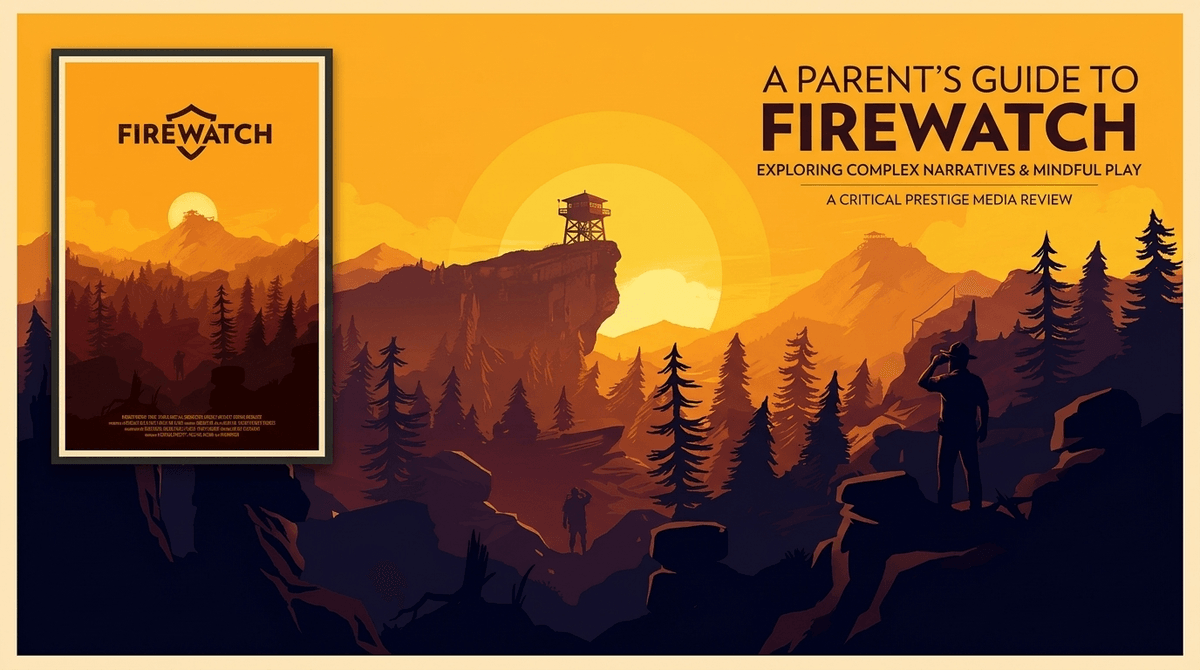
If your teen is asking to play Firewatch, it’s probably because they’ve seen it on TikTok or YouTube. It has a very specific "aesthetic"—the sunset oranges and deep purples of the Wyoming sky are iconic.
But beyond the looks, teens are often drawn to it because it treats them like adults. It’s a "prestige" game. In a world of Roblox and Fortnite, Firewatch feels like the indie movie of the gaming world. It’s sophisticated, it’s quiet, and it deals with "real" stuff. For a 16-year-old trying to navigate their own complex social lives, Henry’s struggles can be surprisingly relatable, even if the context is totally different.
Check out our guide on why teens are drawn to moody narrative games
Let’s talk about why this game is rated M. It’s not because of gore or sexual violence.
- The Language: The characters talk like real people under stress. That means a lot of F-bombs. If you are a "no swearing in the house" family, this game will be a shock to the system. The profanity isn't "edgy" for the sake of it; it’s conversational, but it is constant.
- Adult Themes: The game starts with a text-based prologue about Henry’s wife getting sick. It’s heartbreaking. The game also deals with themes of emotional infidelity (Henry and Delilah’s flirtation while his wife is in a care facility) and the heavy weight of guilt.
- Mild Nudity: There is a moment where you find some teenagers' clothes by a lake, and there are some very non-explicit sketches/posters in the world. It’s very minor, but it’s there.
If your teen is already watching shows like Stranger Things or The Last of Us, the content in Firewatch likely won't phase them. But if they are still in the Minecraft phase of life, this is a massive jump in maturity.
If your teen has finished Firewatch and is looking for that next "vibe" or a similar storytelling experience, here are a few directions to go:
For the Mystery Lovers
- What Remains of Edith Finch: This is the gold standard of narrative games. You explore a cursed family home. It’s beautiful, tragic, and deeply creative. (Ages 13+)
- Outer Wilds: A space exploration mystery where you’re stuck in a 22-minute time loop. It’s more "gamey" than Firewatch but has that same sense of lonely wonder. (Ages 10+)
- Return of the Obra Dinn: A stylized detective game where you have to figure out what happened to the crew of a ghost ship. Very smart, very rewarding. (Ages 14+)
For the "Cozy Wilderness" Vibe
- The Long Dark: If they liked the Wyoming setting but wanted more "survival," this is it. It’s much harder and can be stressful, but the atmosphere is unmatched. (Ages 13+)
- A Short Hike: This is like the "junior" version of Firewatch. It’s short, sweet, and all about hiking up a mountain to get cell phone reception. Zero stress, all vibes. (Ages 6+)
Under 12: Skip it. Not because it will traumatize them, but because they’ll likely be bored or confused. The emotional nuance of a failing marriage and the nuance of the ending (which is infamously divisive) will probably go right over their heads. Plus, the constant swearing is a lot for this age.
13-14: Parental Discretion. This is the "maybe" zone. If you have a mature kid who loves reading and can handle heavy themes, it might be a great "co-play" experience where you sit on the couch while they play. It opens up a lot of doors for conversation.
15+: Green Light (with a heads-up). At this age, they can handle the themes. It’s a great piece of media to consume. Just be prepared for them to ask you what "Alzheimer's" actually looks like or why Henry would leave his wife to go live in a tower.
Firewatch is a "conversation starter" game. If your teen is playing it, here are three questions to ask them over dinner that aren't "is it fun?":
- "Do you think Henry is a good guy for taking this job, or is he just a coward running away?" (This hits on the core theme of the game: escapism vs. responsibility.)
- "Do you trust Delilah?" (The game plays with your perception of people when you can't see their faces. It’s a great talk about online relationships and "perceived" intimacy.)
- "What do you think about the ending?" (Without spoiling it: the ending is grounded and realistic, which frustrates many players who expect a big "Hollywood" payoff. It’s a great lesson in how real life doesn't always have a neat resolution.)
Firewatch is a masterpiece of environmental storytelling, but it’s not for little kids. It’s a game about the "messy middle" of adulthood. If you have a teen who is into art, writing, or atmospheric experiences, this is one of the best things they can play—provided you’re okay with them hearing a lot of swearing and thinking about some pretty heavy life stuff.
It’s the kind of game that stays with you. Don't be surprised if your teen finishes it in one or two sittings (it’s only about 4-5 hours long) and then wants to talk about it for a week.
Learn more about how to navigate "Walking Simulators" and narrative games