

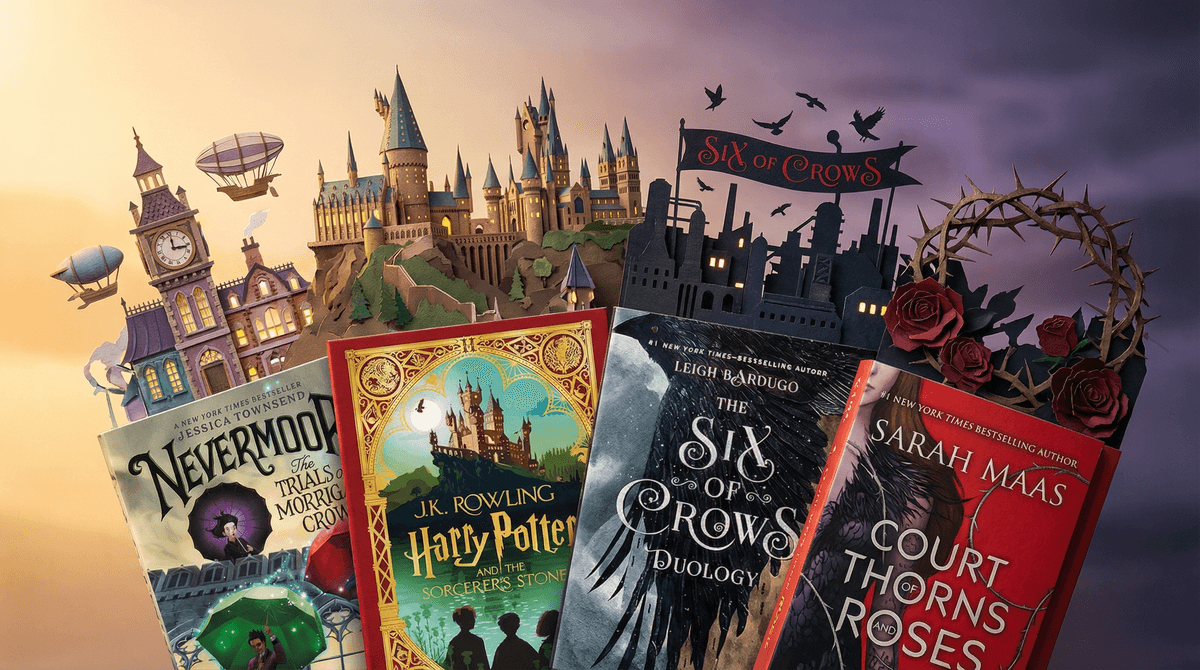
We're talking about the genre that's dominated YA reading for the past two decades: magical worlds, chosen ones, dragons, fae courts, and increasingly complex romance subplots. From Harry Potter to A Court of Thorns and Roses, fantasy has evolved from innocent wizarding schools to morally gray antiheroes and what BookTok affectionately calls "spice."
The fantasy genre for teens spans everything from middle-grade-adjacent adventures to books that are basically adult romance with a fantasy coat of paint. And here's the thing: the YA label doesn't mean what it used to. Publishers slap "Young Adult" on books with explicit sexual content, graphic violence, and dark themes because that's where the market is. Your 13-year-old and your 17-year-old should not be reading the same fantasy books, but they're often shelved together.
Let's be real: fantasy offers everything adolescence craves. Escape from the mundane reality of algebra homework. Characters who discover they're special and powerful. Romance that feels epic and all-consuming. Found family dynamics when real family feels complicated. Plus, the stakes are literally world-ending, which somehow feels more manageable than social anxiety.
The genre also offers representation that contemporary fiction sometimes struggles with. LGBTQ+ characters can exist without the story being "about" being gay. Disabled characters can be heroes with magical accommodations. The fantasy setting creates permission for authors to reimagine social structures entirely.
And then there's the community aspect. Fantasy readers are intense in the best way. They create fan art, write theories, debate character choices, and build entire online communities. Reading fantasy isn't just consuming a book—it's joining a conversation.
Here's where it gets tricky. The fantasy genre has basically split into three tiers that don't align neatly with publisher categories:
Ages 11-13: Gateway Fantasy Think Percy Jackson, The School for Good and Evil, early Throne of Glass. Adventure-focused, romance is hand-holding and first kisses, violence is present but not graphic. Death happens but isn't dwelled on. These books respect that middle schoolers can handle complex themes without needing explicit content.
Ages 14-16: True YA Fantasy Six of Crows, Children of Blood and Bone, The Cruel Prince. More morally complex characters, romance includes making out and fade-to-black scenes, violence can be intense, themes include trauma and oppression. This is where fantasy starts grappling with real-world parallels through magical metaphors.
Ages 17+: "YA" That's Actually Adult A Court of Thorns and Roses (especially books 2+), Fourth Wing, anything Sarah J. Maas writes after book one of a series. These books contain explicit sexual content, graphic violence, and mature themes. They're marketed as YA because that's where the passionate readers are, but they're adult fantasy romance. Full stop.
The problem? BookTok doesn't distinguish between these tiers. A 13-year-old searching for fantasy recommendations will find ACOTAR at the top of every list, right next to Percy Jackson.
The "fade to black" line keeps moving. What used to mean "they kissed and we skipped to morning" now often means "they had sex but we didn't describe genitals." You need to know where your teen's books fall on this spectrum, and that requires either reading them yourself, checking detailed parent reviews, or having honest conversations with your teen about what they're encountering.
Trigger warnings are now standard in the community. Many fantasy readers share detailed content warnings for books—not to cancel them, but to help readers make informed choices. Your teen might actually appreciate you asking "hey, do you know what content warnings this book has?" rather than banning books blindly.
The romance subplot has become the main plot. Modern YA fantasy is often fantasy romance, not romantic fantasy. The difference? In fantasy romance, the relationship is the central story arc. The magic and worldbuilding are the setting for the love story. If your teen is reading for dragons and getting detailed sex scenes instead, that's a mismatch worth discussing.
Fantasy tackles real issues through metaphor. Many YA fantasy books deal with colonialism, oppression, genocide, sexual assault, and systemic injustice through magical allegory. This can be a powerful way for teens to process heavy topics, but it also means "just a fantasy book" might be exploring trauma in depth.
Instead of trying to police every book, try this approach:
For younger teens (11-14): Start with established gateway series. Percy Jackson and its spinoffs, Nevermoor, Keeper of the Lost Cities, Fablehaven. These series respect that middle schoolers want adventure without needing adult content.
For mid-teens (14-16): Look for fantasy with complex plots and characters but appropriate content. Six of Crows is the gold standard here—morally gray characters, intense themes, but romance stays PG-13. The Hunger Games handles violence and oppression without being gratuitous.
For older teens (16+): This is where you're having conversations about adult content rather than preventing access. If your 17-year-old wants to read Fourth Wing, the question isn't "should they" but "are they ready for explicit content and can we talk about it?"
Fantasy books offer incredible opportunities for teens to explore complex themes, build reading stamina, and engage with passionate communities. But the YA fantasy genre is not monolithic, and age recommendations matter.
The good news? Most teens are pretty self-regulating if given honest information. A 13-year-old who picks up ACOTAR expecting Percy Jackson will probably put it down themselves if they know it's okay to say "this isn't for me yet." The goal isn't to ban books or create forbidden fruit—it's to help your teen find fantasy that matches their maturity level and interests.
Start by asking what they're interested in: Dragons? Romance? Adventure? Morally gray characters? Then guide them toward age-appropriate options in that vein. And if they're already reading outside their age range? Have a conversation about what they're encountering rather than reacting with panic.
Want specific recommendations for your teen's age and interests? Check out our guide to age-appropriate fantasy series or Find book suggestions based on what your teen loves based on what they already love.
And if you're wondering whether a specific series is appropriate? Common Sense Media has detailed reviews, but honestly, the fantasy reader community on Reddit and Goodreads often provides more nuanced content breakdowns. Search "[book title] content warnings" and you'll find detailed discussions from readers who actually care about helping others make informed choices.