

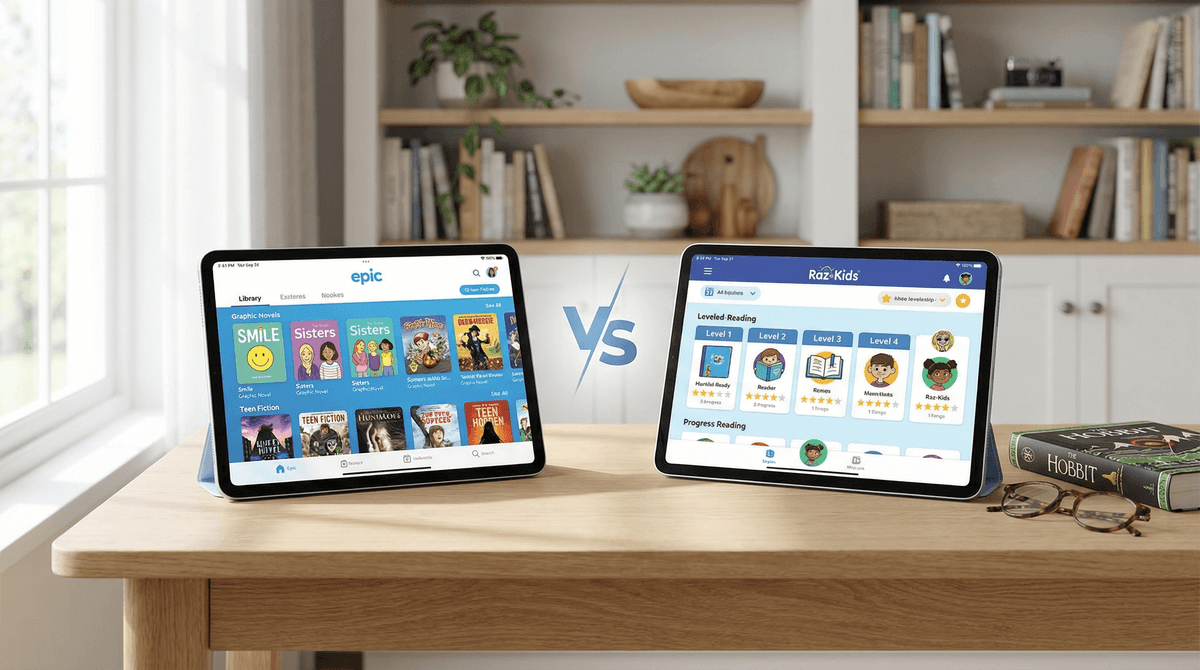
Epic vs Raz-Kids for Middle School: Which Reading App Grows With Your Teen?
TL;DR: Raz-Kids is designed for elementary readers working on fundamentals. Epic offers 40,000+ books including graphic novels, manga, and teen-interest titles that middle schoolers will actually want to read. For middle school? Epic wins, hands down.
Quick picks for middle school readers on Epic:
- Percy Jackson series
- Diary of a Wimpy Kid
- Smile by Raina Telgemeier
- National Geographic content
- Popular manga titles
If your middle schooler is still using Raz-Kids, they've probably outgrown it. Raz-Kids tops out around 5th grade reading level and is built around leveled reading practice with comprehension quizzes. It's fantastic for elementary kids learning to decode and building fluency. For middle school? It feels babyish, the content isn't engaging, and the gamification (earning stars to buy virtual fish food) stops working around age 11.
Epic, on the other hand, is a digital library with actual books your middle schooler wants to read. Think graphic novels, popular series, manga, science magazines, and books about YouTubers they follow. The interface feels more mature, there's real choice, and kids can explore interests beyond "reading level Q."
Raz-Kids is a structured literacy program typically used in schools. Kids are assigned a reading level (aa through Z), read books at that level, and take comprehension quizzes. Teachers can monitor progress, assign specific books, and track fluency.
The books are written specifically for the program—they're not published children's literature. They're designed to reinforce phonics patterns and vocabulary at each level. Kids earn stars for completing books and quizzes, which they can spend in a virtual reward zone.
Who it's for: K-5 students working on decoding, fluency, and basic comprehension. It's a teaching tool, not a library.
Epic is a digital library with over 40,000 books, audiobooks, and videos. It includes real published books from major publishers—everything from Dog Man to The Hunger Games. Kids can browse by interest, read recommendations, create collections, and earn badges for reading streaks.
There are reading quizzes and comprehension questions available, but they're optional. The focus is on volume and choice—getting kids to read a lot because they want to, not because they're chasing a level.
Epic has both a free version (with ads) and a premium family subscription ($10/month or $80/year). Schools often provide free access through Epic School.
Who it's for: Ages 2-12 officially, but the content library extends well into middle school interests. Kids who read independently and want variety.
Here's the thing about Raz-Kids: it's not designed for middle school, and trying to stretch it there doesn't work.
The content is too young. Even at the highest levels (W-Z, roughly 5th-6th grade), the books are short, simple, and written for instruction. A 7th grader reading at grade level will blow through these in minutes and feel like they're being treated like a little kid.
The leveling system becomes demotivating. By middle school, kids are painfully aware of social comparison. Being "on level Q" while a classmate is "on level Z" feels like public ranking. Plus, leveled readers don't reflect the messy reality of reading—a kid might crush a 600-page fantasy novel but struggle with a dense social studies article.
The rewards are juvenile. Earning stars to decorate a virtual aquarium works for 2nd graders. For middle schoolers? It's embarrassing.
It doesn't build reading identity. Raz-Kids tells kids what to read based on level. Middle schoolers need to discover what they like to read—whether that's graphic novels, sports biographies, horror, or manga. That exploration doesn't happen in a leveled system.
Epic isn't perfect (more on that below), but it solves most of Raz-Kids' middle school problems.
The content is actual books. Your middle schooler can read the same Wings of Fire or Guts by Raina Telgemeier their friends are reading. There's manga, graphic novels, National Geographic articles, and books about Minecraft, sports, and social justice. The library feels current and relevant.
Choice matters. Kids can browse by interest, follow recommendations, or search for specific titles. This builds reading agency—the sense that they're in charge of their reading life, not just completing assignments.
It meets kids where they are. A reluctant reader can start with graphic novels or short nonfiction. A voracious reader can binge an entire series. There's no public level assignment creating shame or pressure.
Audiobooks are included. For kids with dyslexia, ADHD, or just slower processing speed, audiobooks are a game-changer. Epic includes thousands of them, and kids can follow along with the text highlighted.
Epic's Limitations
Epic isn't a miracle cure for reluctant readers. Some middle schoolers find the interface too busy or struggle with the sheer volume of choice. The recommendations algorithm can be hit-or-miss, especially for kids with niche interests.
The age range is officially 2-12, which means some mature middle schoolers will outgrow it. You won't find YA novels like The Hate U Give or Ender's Game on Epic. For 7th-8th graders reading at high school level, you'll need to supplement with Libby (library app) or physical books.
Screen time is still screen time. Reading on a tablet is better than watching YouTube, but it's not the same as reading a physical book. Some kids get distracted by the app's other features (videos, games) or struggle with eye strain.
When to Stick with Raz-Kids
If your middle schooler is significantly below grade level and still working on decoding or fluency, Raz-Kids might still be appropriate—especially if it's part of their school's intervention program. Talk to their teacher about whether the leveled structure is helping or hurting.
Some kids also genuinely like the structure and rewards of Raz-Kids. If your 6th grader is happily reading through levels and not complaining, don't fix what isn't broken. But if they're avoiding it or rushing through just to earn stars, it's time to move on.
Making Epic Work
Set up profiles carefully. Epic lets you create profiles for each kid with age-appropriate content filters. For middle schoolers, set the age to 9-12 to avoid picture books but still filter out mature content.
Curate collections. You can create custom collections of books you want your kid to try. If they loved Wonder, make a collection of similar books about empathy and difference.
Use it alongside physical books. Epic is great for volume and convenience, but don't abandon the library or bookstore. Physical books still matter for deep reading and building a home library.
Talk about what they're reading. The best part of Epic is discovering what your kid actually likes. Ask about their current book, read the same series, or explore nonfiction topics together. Check out our guide on talking to kids about their reading.
6th grade: Epic is perfect. Most 6th graders are still in that sweet spot of loving graphic novels, series books, and high-interest nonfiction. Popular picks: Amulet, I Survived series, sports biographies.
7th-8th grade: Epic still works, but you'll need to supplement for advanced readers. Look for the more mature content (there are some books that deal with middle school social issues, mental health, etc.). Consider adding Libby for access to YA titles.
Struggling readers (any age): Epic's audiobooks and graphic novels are fantastic scaffolds. A kid who "hates reading" might love listening to Percy Jackson while following along, or reading Smile in 30 minutes and feeling successful.
For middle school, Epic is the clear winner. Raz-Kids is an excellent tool for elementary readers building foundational skills, but it doesn't translate to the kind of reading middle schoolers need—volume, choice, and engagement with real books.
Epic isn't perfect, and it won't replace physical books or library visits. But if you're choosing between these two apps for your middle schooler, Epic offers the content, flexibility, and respect for growing readers that Raz-Kids simply can't match.
-
If you have Epic through school: Make sure your kid knows how to access it at home. Many families don't realize school Epic accounts work on home devices.
-
If you're considering paying: Try the free version first (with ads) to see if your kid actually uses it. If they're reading regularly after two weeks, the $80/year is worth it.
-
If your kid is on Raz-Kids at school: Don't fight it—it's part of their curriculum. But add Epic at home for reading that feels like choice, not homework.
-
If your middle schooler has outgrown Epic: Time to set up Libby with your library card and explore books for middle school readers.
The goal isn't to find the perfect app. It's to help your kid become someone who reads—because they want to, not because they're earning stars.