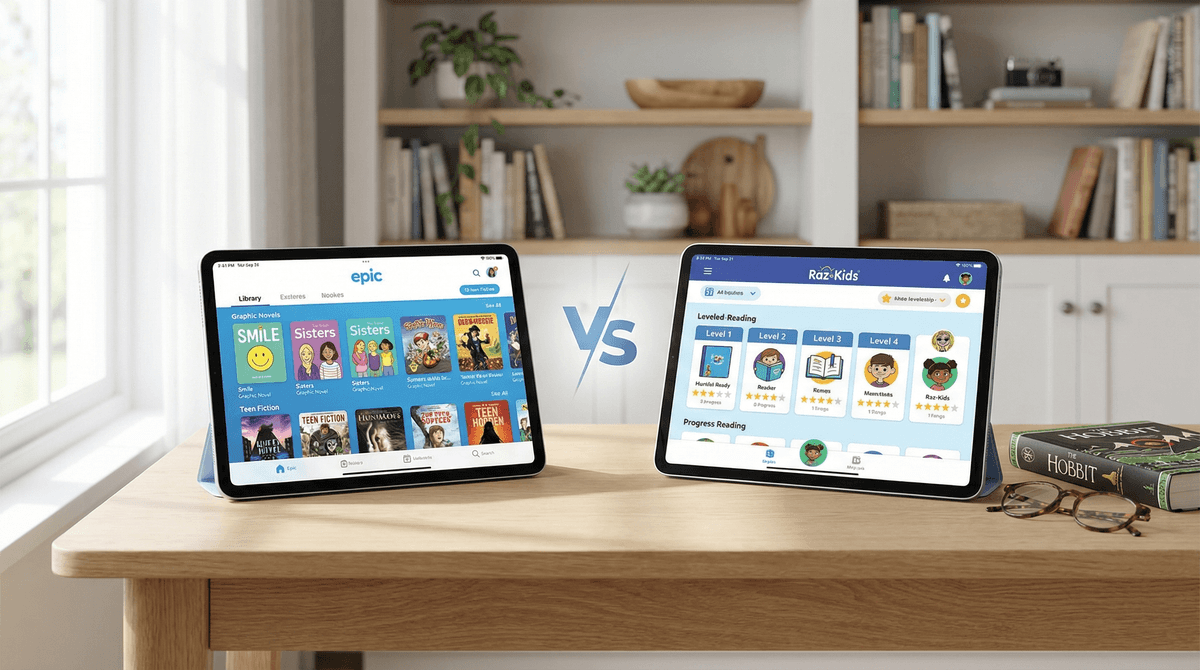
Raz-Kids is the digital equivalent of that bin of leveled readers in the back of a first-grade classroom. It’s a workhorse, not a thoroughbred. It’s incredibly safe and technically sound, especially if you subscribe to the idea that listening counts as literacy.
However, it can easily turn into a 'set it and forget it' babysitter. If your kid is just clicking through quizzes to get to the robot-building mini-game, the educational value evaporates. It’s best used as a supplement to physical books, not a replacement for them. It’s a great tool for accessibility, but don't expect it to spark a lifelong love of literature on its own.
Age Fit
Perfect for the K-5 crowd (ages 5-11). Once kids hit middle school, the space-themed rewards feel babyish, and they'll likely migrate to more mature reading platforms.
WISE Breakdown
Wholesome
68
It’s clean and school-appropriate, but the heavy reliance on 'star' rewards can turn reading into a transactional grind rather than a joyful habit.
Imaginative
45
The 'Raz-Rocket' and 'Robot Builder' are dated, shallow customization loops. The books themselves are standard educational fare, rarely pushing creative boundaries.
Safe
98
Closed-loop system managed by teachers or parents. No ads, no strangers, and no algorithmic rabbit holes. It’s a walled garden that actually stays walled.
Enriching
76
Strong support for both decoding and language comprehension through audio-syncing and recording features. However, it often serves as 'digital busywork' in classrooms.
Parent Info
✓
Why It Might Be Great
Just-right leveling ensures kids aren't hitting a wall of frustration or coasting on books that are too easy.
Audio-syncing builds the 'Reading Rope' by letting kids hear complex vocabulary and syntax while following along, which is genuine literacy practice.
Self-recording allows kids to listen back to their own voice, which is a massive (and often overlooked) tool for building fluency.
Independence booster for kids who want to 'read' books that are slightly above their current decoding level using the listen-first mode.
⚠
What to Watch For
The 'Star Grind' is real: kids will often speed-read or guess on quizzes just to earn stars for their virtual rocket, completely bypassing the actual reading.
Robot Builder distraction: The incentive system can become the main event, with kids spending more time decorating a digital room than looking at text.
Dated UI: Compared to modern apps, the interface feels like 2012. It’s functional, but it won’t win any beauty contests and might feel like 'school work' to tech-savvy kids.
Conversation Starters
"Which book did you choose to listen to first, and what made the narrator sound interesting?"
"I noticed you're spending a lot of stars on your robot—what's the coolest thing you've added to the rocket lately?"
"When you recorded yourself reading, did you notice any words that sounded different than when the computer read them?"
"If you could write a quiz for me about that book, what's one trick question you'd include?"