

TL;DR: The Quick Hits
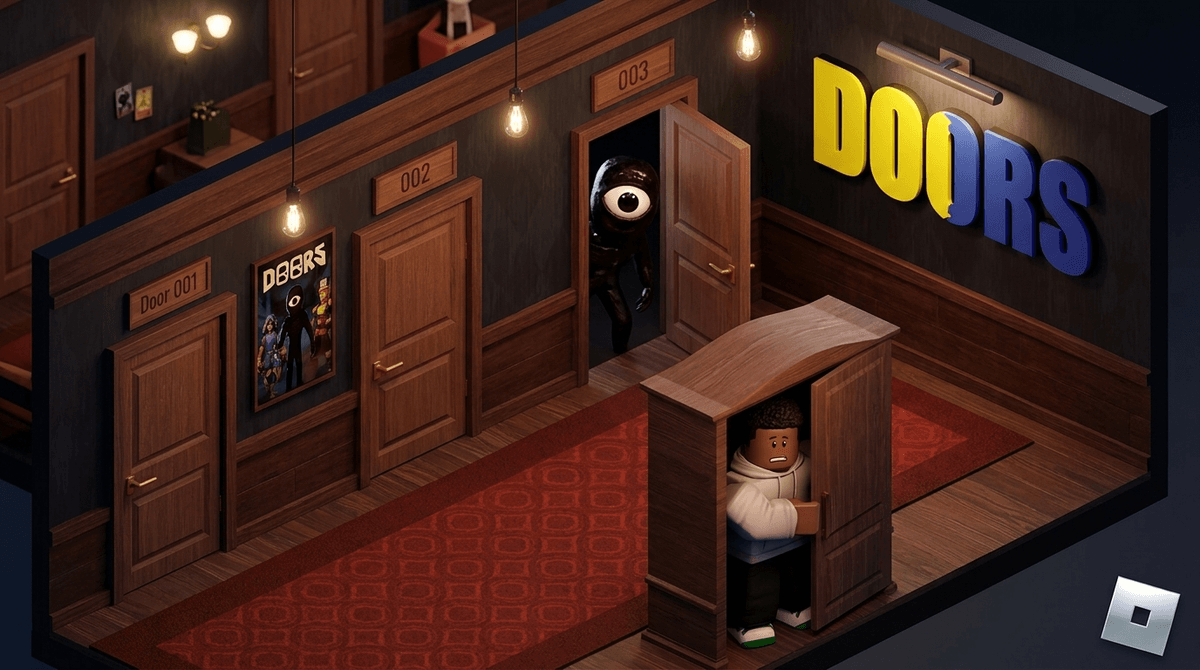
If your kid is suddenly terrified of closets or talking about a giant eyeball named "Seek," they’ve found Doors on Roblox. It’s a first-person horror "roguelike" (meaning you start over when you die) where players navigate 100 rooms in a haunted hotel. It’s heavy on atmosphere and jump scares, but light on actual gore.
Quick Links for the Busy Parent:
- Is it safe? Generally, yes, but it’s intense. Check out our guide on horror games for kids.
- The Cost: Free to play, but "Revives" cost Robux (real money). Learn more about how Robux is in fact real money
 .
. - The Vibe: Think Stranger Things meets a high-stakes escape room.
- Age Recommendation: Screenwise community data suggests Ages 9+ is the sweet spot, though many 7 and 8-year-olds play with friends.
Doors is currently one of the most polished experiences on the Roblox platform. Unlike the low-effort "obby" (obstacle course) games that used to dominate the site, Doors has incredible sound design, lighting, and genuine tension.
The premise is simple: You and up to three friends enter a hotel. You have to open doors (1 through 100) to escape. Along the way, you find coins, lighters, and vitamins in drawers. But every few rooms, the lights flicker, a strange sound echoes, and a "monster" (called an Entity) tries to kill you.
If you die, you go back to Room 0. This "permadeath" mechanic is why your kid might get frustrated or beg for Robux to buy a "Revive" mid-run.
It’s easy to dismiss Doors as "brain rot" or just another jump-scare simulator, but there’s actually a lot of strategy involved. It’s not just about being scared; it’s about mastery.
- The Adrenaline Rush: Kids (and adults) love a controlled scare. It’s the same reason we go on rollercoasters. Doors provides that "safe" fear where the stakes feel high but the physical danger is zero.
- The Lore: The monsters aren’t just random; they have names, specific behaviors, and "lore." Kids love memorizing that "Rush" makes the lights flicker and you have to hide in a closet, while "Halt" requires you to walk backward and forward in a hallway. It’s like a spooky version of Pokémon stats.
- Teamwork: Playing Doors solo is terrifying. Playing with three friends from school? That’s a bonding experience. They have to communicate: "Hide!" "Don't look at it!" "I have a skeleton key!"
- Social Currency: If everyone at the lunch table has reached Room 100 and beaten "The Figure," your kid wants to be part of that club. It’s a badge of courage.
If you want to impress your kid, learn these three names. They are the "main characters" of your child's current nightmares:
A giant, oily black figure with a single eyeball. Seek triggers a high-intensity chase sequence where the player has to run through hallways, crawl under fallen furniture, and choose the right doors. It feels very cinematic and is usually the part of the game that gets kids the most hyped.
A blind, humanoid monster with a giant mouth for a head. You encounter him in the Library (Room 50) and the final room (Room 100). Because he’s blind, players have to crouch and stay silent. It turns the game from a sprint into a stealth mission.
The most common entity. When the lights flicker, Rush is coming. Players have about three seconds to find a closet or a bed to hide under. If they miss the window, it’s game over.
Is Doors too scary? That depends entirely on your kid’s "scare threshold."
Ages 5-7: Use Caution
For most kids this age, the jump scares are a bit much. The sound of "Screech" (a monster that whispers "psst" in your ear in dark rooms) can lead to actual bedtime anxiety. If they really want to play, suggest they watch a "Let's Play" video on YouTube first to see if they can handle the tension. Check out our guide on YouTube vs. YouTube Kids
Ages 8-11: The Sweet Spot
This is the primary demographic for Doors. They are old enough to understand the mechanics and young enough to still find the "spookiness" thrilling. Community data shows that about 45% of 4th graders have played or watched someone play Doors.
Ages 12+: The Mastery Phase
Older kids usually play Doors to try and get "Badges" or complete "Modifiers" (settings that make the game harder). At this age, the horror is secondary to the challenge.
1. The "Jump Scare" Factor
This game is built on jump scares. If your child is prone to nightmares or has a sensitive nervous system, Doors might be a "daytime only" game. The monsters don't look realistic (they are stylized and "Roblox-y"), but the sudden loud noises are designed to startle.
2. The Robux Drain
Doors is clever with its monetization. When a player dies at Room 90 after 30 minutes of effort, the game offers a "Revive" for about 30 Robux. It’s a classic "sunk cost" trap. Learn how to set up Roblox parental controls to prevent accidental spending
3. Community and Chat
Like all Roblox games, there is a public chat. While Doors is mostly focused on the gameplay, players can be salty if a teammate messes up a run. We always recommend setting "Chat with Friends Only" in the Roblox settings.
If your kid is a fan of the "spooky but not scarring" genre, here are a few other recommendations:
- A survival horror game with a deep story. It’s a bit older but still a massive hit. It’s less about jump scares and more about solving puzzles while being chased.
- Think Sesame Street meets a horror movie. It’s more colorful and slightly less intense than Doors, making it a good "entry-level" horror game.
- The grandfather of modern kid-horror. If they like the lore of Doors, they will fall down the FNAF rabbit hole immediately.
- A similar "mascot horror" vibe that’s very popular with the elementary school crowd.
Don't be the parent who just says "that looks scary, turn it off." Instead, try asking these questions to get a feel for their digital wellness:
- "What's the furthest room you've made it to?" (Shows interest in their progress).
- "Which monster is the hardest to beat?" (Encourages them to explain the mechanics/logic).
- "How do you feel when you lose a long run? Does it make you want to keep playing or take a break?" (A subtle way to talk about emotional regulation and gaming frustration).
- "Do you prefer playing with your school friends or by yourself?" (Checks on their social habits).
Doors is a well-made, high-intensity game that rewards focus, memory, and teamwork. While the jump scares are real, it’s a relatively "clean" horror experience compared to some of the darker corners of the internet.
If your child is handled it well, it can actually be a great way for them to develop resilience—learning how to "stay calm under pressure" (like when the Figure is sniffing around the Library) is a surprisingly useful life skill. Just keep an eye on the Robux balance and maybe leave a hall light on.
- Watch them play for 10 minutes. You'll quickly see if the tension is "fun-scary" or "anxiety-scary" for your specific child.
- Check their Roblox settings. Ensure they can't spend money without a PIN. Read our guide on Roblox safety.
- Set a "Cool Down" period. If they play Doors right before bed, their adrenaline might be too high to sleep. Try a 30-minute "no-screen" buffer before lights out.