

Look, I get it. You're scrolling through Amazon Prime at 7pm on a Tuesday, trying to find something that's not another episode of whatever animated series your kids have watched seventeen times, but also not wanting to default to "educational content" that makes everyone groan. Good news: Amazon Prime actually has some genuinely compelling documentaries that kids will want to watch.
The thing about documentaries is they hit different than typical "educational" content. When done well, they're just... good stories. Real stories. And kids are naturally curious about the world—they just need content that respects their intelligence and doesn't talk down to them.
Amazon Prime's documentary selection is honestly pretty solid for families, though you do have to dig a bit. Unlike Netflix which tends to heavily promote its originals, Prime's interface can feel like a garage sale. But once you know what to look for, there's gold in there.
Here's something I've noticed: kids who grow up watching quality documentaries develop a different relationship with screens. Instead of just passive consumption, they start asking questions. They want to learn more. They develop critical thinking skills about what they're watching.
And in 2026, when AI-generated content is everywhere and "fake news" is a phrase even kindergarteners know, teaching kids to engage critically with media isn't just nice—it's essential.
Plus, documentaries are one of the few types of content where sitting together as a family actually enhances the experience. You pause to discuss. You look things up together. You debate. It's the opposite of everyone zombified on their individual devices.
Ages 6-9: Gateway Documentaries
Greta - Yes, it's about climate activism, but before you worry it's too heavy: this documentary about Greta Thunberg is surprisingly accessible for younger kids. It's really about a teenager who decided to do something, and kids that age love seeing young people take action. Fair warning: it will make your kid want to organize something. Maybe a lemonade stand for ocean cleanup. Maybe a protest about bedtime. You've been warned.
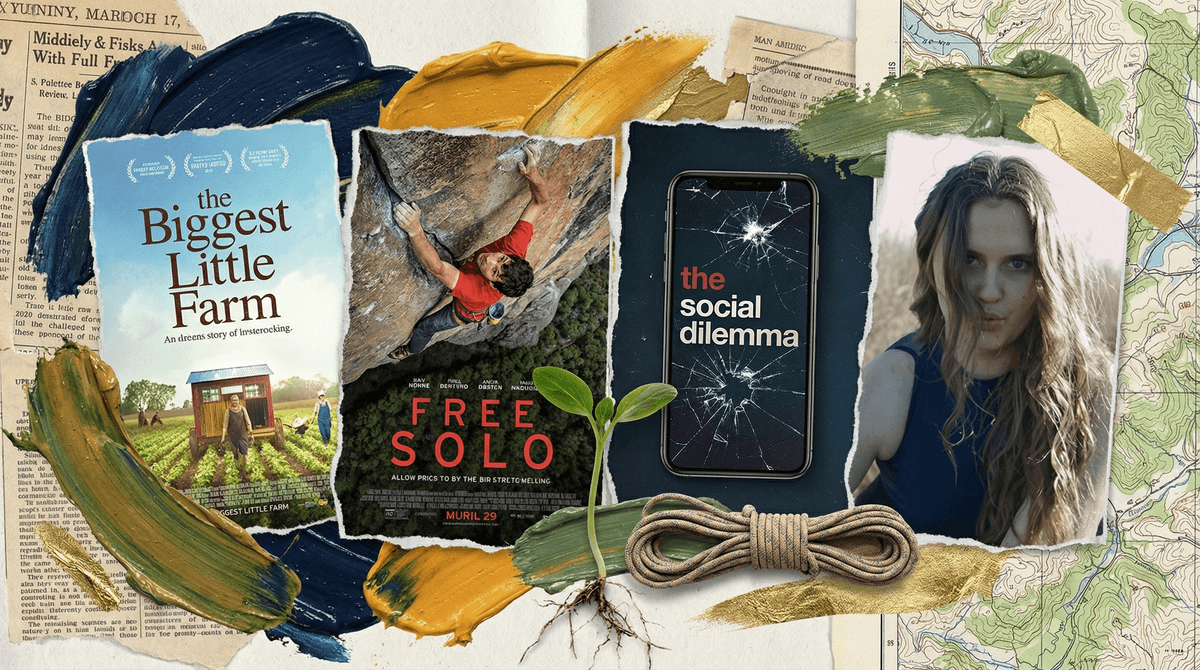
The Biggest Little Farm - This one is chef's kiss for elementary-aged kids. It follows a couple trying to build a sustainable farm, and it's got everything: baby animals, problem-solving, natural science, and genuine humor. It's beautifully shot, genuinely educational, and I've never met a kid who didn't get invested in whether the farm would survive. Bonus: might inspire interest in gardening, which means less screen time. Win-win.
Ages 10-13: Building Critical Thinking
The Social Dilemma - Okay, this one's technically on Netflix, but if you're looking for something similar on Prime, check out Screened Out. It's less polished than The Social Dilemma but covers similar ground about screen addiction and social media's impact. Perfect for tweens who are begging for Instagram. Watch it together, then have the conversation about why you're saying "not yet." Learn more about when kids are ready for social media .
.
Free Solo - The documentary about Alex Honnold climbing El Capitan without ropes. Is it stressful to watch? Absolutely. Will your kids be glued to the screen? 100%. It's a masterclass in determination, risk assessment, and pursuing excellence. Also great for discussions about calculated vs. reckless risk-taking. Just maybe don't watch it right before they ask to go to the climbing gym unsupervised.
Ages 14+: Real Talk Territory
All In: The Fight for Democracy - Voter suppression isn't exactly light viewing, but for teens who are starting to pay attention to politics (or should be), this is essential. Stacey Abrams is compelling, the history is important, and it's the kind of thing that makes teens realize their vote will actually matter soon.
LuLaRich - This one's technically a docuseries about the LuLaRoe MLM scheme. Why is it great for teens? Because it's a perfect case study in how people get manipulated, how social media can be weaponized, and how something that seems fun and empowering can actually be predatory. Plus, they probably know someone whose mom sold LuLaRoe leggings. It's relevant.
Not every documentary on Prime is family-friendly, even if it seems like it should be. Always check the rating and read the content warnings. Some documentaries about seemingly kid-appropriate topics (animals, sports, nature) include graphic footage, strong language, or mature themes that might not be obvious from the title.
Also, Amazon's "included with Prime" selection rotates. A documentary that's free today might require rental tomorrow. If you're planning a family movie night, double-check availability beforehand to avoid the "but you PROMISED" meltdown.
Let them pick (from your pre-approved list). Nothing kills engagement faster than forcing content. Give them 2-3 options you've vetted, let them choose.
Have snacks. This shouldn't need saying, but documentary night without popcorn is just homework.
Build in discussion time. Pause when someone has a question. Talk about it after. The conversation is honestly more valuable than the documentary itself.
Don't make it feel like school. The second you turn it into "and now write three things you learned," you've lost them. Let learning be organic.
Follow their curiosity. If they get obsessed with something from a documentary, lean into it. Library books, related YouTube channels (Crash Course is great for deeper dives), relevant board games—whatever extends the interest.
Amazon Prime's documentary selection isn't as curated as some other platforms, but that's actually kind of perfect. You're not just getting algorithm-fed content—you're discovering things together. And in a digital landscape where everything is personalized and optimized and targeted, there's something refreshing about that.
Start with one documentary night a month. See what lands. Some will flop (not every doc will resonate with every kid), but when you find one that clicks? That's when the magic happens. That's when screens become tools for curiosity instead of just entertainment.
And honestly, if you can get your kid excited about learning through a screen, you've basically won digital parenting.
Explore more educational content recommendations or check out our guide to Netflix documentaries for kids if you want to expand beyond Prime.
And if you're trying to balance documentary night with the seventeen hours of Roblox your kid wants to play, let's talk about healthy screen time balance.