

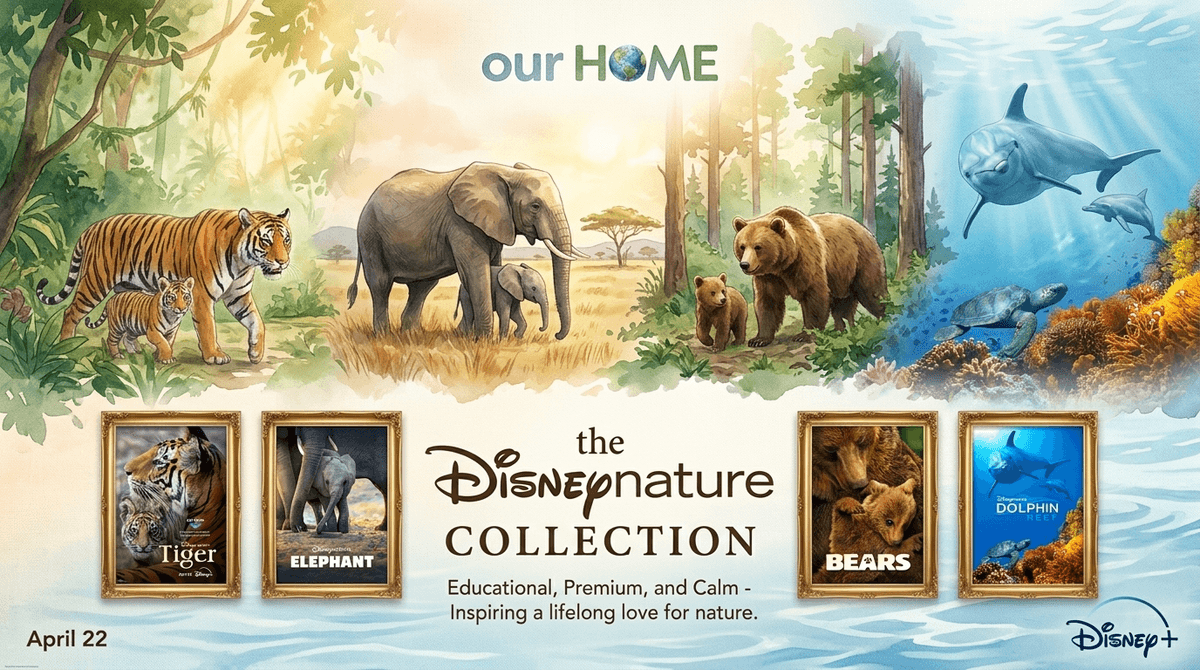
TL;DR: If you’re tired of the YouTube algorithm feeding your kids "brain rot" or finding yourself stuck in a Roblox loop, Disneynature is your best friend. These are high-budget, stunningly beautiful nature documentaries that use storytelling to keep kids engaged without the overstimulation of modern cartoons. They are the ultimate "guilt-free" screen time—educational, empathetic, and actually interesting for parents, too.
Quick Picks:
- Best for animal lovers: Tiger
- Best for high-stakes drama: African Cats
- Best for younger kids: Bears or Dolphin Reef
- Best overall scope: Earth
We’ve all been there. It’s 4:30 PM, you’re trying to get dinner started, and the kids are vibrating at a frequency that suggests they’ve been watching Skibidi Toilet for forty minutes too long. You want to turn the TV off, but you also need fifteen minutes of peace.
Enter the "guilt-free" pivot: Disneynature.
If you grew up on those dry, 1980s classroom filmstrips where a monotone narrator talked about tectonic plates, forget everything you know about nature docs. Disneynature is essentially the Marvel Cinematic Universe of the animal kingdom. We’re talking 4K resolution, sweeping drone shots, and A-list celebrity narrators (think Natalie Portman, John Krasinski, and even Meghan Markle) telling a cohesive "story" about a specific animal family.
In a world where kids are increasingly fluent in "Ohio" memes and digital slang but might not know a monarch butterfly from a moth, these films provide a necessary bridge to the real world.
Screen time doesn't have to be a passive drain. When kids watch a Disneynature film, they aren't just seeing "cool animals"; they are learning about conservation, biodiversity, and the "Circle of Life" (which, fair warning, is occasionally brutal). It sparks questions that lead to actual conversations—the kind of "real talk" about the environment that feels organic rather than like a lecture from a textbook.
Learn more about the benefits of educational media for different age groups
Not all nature docs are created equal. Some are relaxing, while others are basically a Shakespearean tragedy with fur. Here is how to navigate the library on Disney+.
The newest entry in the franchise, narrated by Priyanka Chopra Jonas. It follows Ambar, a young tigress raising her cubs in the forests of India. It’s visually breathtaking and does a great job of showing the tension of parenthood in the wild. It’s a great "hook" for kids who like big cats.
Narrated by Meghan Markle, this one follows a family of elephants across the Kalahari Desert. Elephants are famously intelligent and emotional, which makes this a powerhouse for teaching empathy. When the herd has to rely on the matriarch's memory to find water, it’s a great moment to talk to kids about the importance of elders and community.
If you have younger kids (ages 4-7), this is usually the safest bet. It follows a mama bear and her two cubs, Amber and Scout. It has plenty of "aww" moments and the stakes feel manageable. It’s less about the "red in tooth and claw" aspect of nature and more about the struggle to find enough salmon to survive the winter.
This one is basically a social satire. It follows a low-ranking monkey named Maya who has to navigate the strict social hierarchy of her troop in Sri Lanka. It’s funny, fast-paced, and honestly, the social dynamics aren't that different from a middle school cafeteria. It's a great pick for the 8-12 age range.
Narrated by Natalie Portman, this is the "visual ASMR" of the group. If your kids are stressed or overstimulated from a long day of school or playing Fortnite, put this on. The underwater footage is incredibly calming, even when the sharks show up.
Let’s be real: Nature is not always "Disney-fied." While Disneynature does a lot to soften the blows (they often give the animals names and focus on the "family" aspect), predators still have to eat.
- Ages 3-5: They will love the visuals, but be ready to fast-forward. When a cheetah starts chasing a gazelle, a preschooler might not be ready for the reality of that interaction. Stick to Bears or Born in China.
- Ages 6-9: This is the sweet spot. They understand that animals eat other animals, but they might still get teary-eyed if a "character" they’ve been following gets lost or hurt. Use these moments to talk about how the ecosystem works.
- Ages 10+: They might start to notice the "manipulation" of the storytelling (e.g., "Wait, how do they know what the monkey is thinking?"). This is a great opening to talk about media literacy. You can discuss how filmmakers use music and editing to make us feel certain emotions.
Check out our guide on teaching media literacy to elementary students
Here is the thing: Disneynature films are technically "documentaries," but they are heavily edited to create a narrative. Sometimes the "family" you see on screen is actually footage of several different animals edited together to look like one story.
Is this "fake"? Not exactly. But it's worth knowing that Disney prioritizes engagement over pure scientific observation. If you want 100% hard science, you might prefer Planet Earth on the BBC. But if you want your 7-year-old to actually sit still and care about a sea turtle, Disneynature is the way to go.
Safety Considerations:
- Predation: Yes, animals die. It’s usually handled off-camera or through "implied" action, but it can be upsetting for sensitive kids.
- Environmental Anxiety: Some films touch on climate change and habitat loss. For some kids, this can trigger "eco-anxiety." Always frame these discussions around what people are doing to help (conservation) rather than just the doom and gloom.
Instead of just scrolling on your phone while the movie is on, try asking a few "bridge" questions to move the experience from passive to active:
- "Why do you think the mama elephant is leading the group instead of the biggest male?" (Social structures)
- "What would happen to the forest if the tigers weren't there to hunt?" (Apex predators and balance)
- "The narrator said the monkey was 'feeling sad.' Do you think animals feel the same way we do, or is the movie just making it seem that way?" (Anthropomorphism and empathy)
Disneynature is the rare "win-win" in the digital parenting world. It satisfies the kids' craving for high-def entertainment and a good story, while satisfying your desire to give them something that isn't Cocomelon or a mindless unboxing video.
It’s not "brain rot." It’s "brain food" disguised as a blockbuster. Next time you’re staring at the Disney+ home screen wondering if you can handle another viewing of Frozen, pivot to Elephant. Your kids might just surprise you by how much they care about a matriarch's journey across the desert.
- Host a "Nature Night": Pick one movie, grab some popcorn, and commit to watching it together.
- Compare and Contrast: Watch a Disneynature film and then look up the "real" animal on National Geographic Kids to see what facts the movie highlighted.
- Check the Stats: Use your Screenwise dashboard to see how your family’s consumption of educational content compares to your community norms. Are you the "Documentary Family" yet?
See how your family's media habits compare to your community